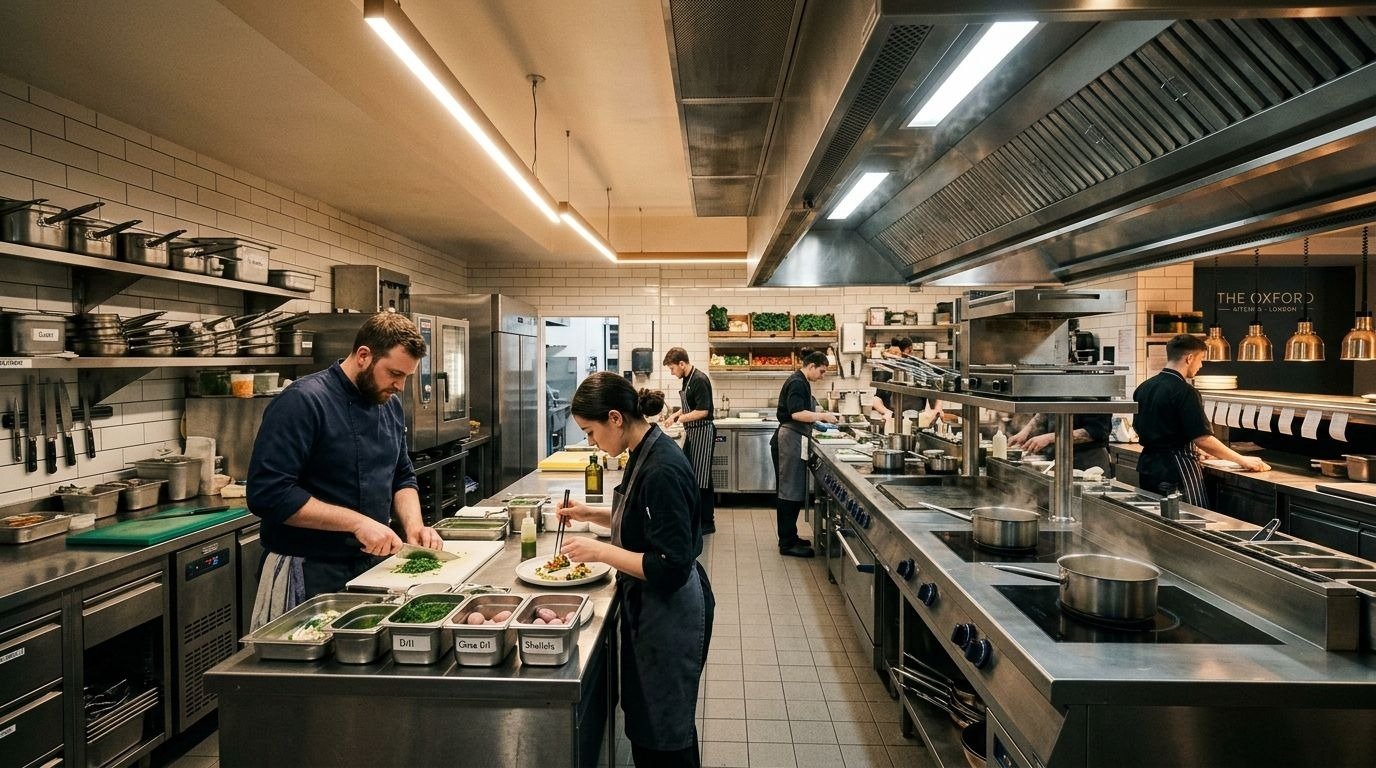
Opening a professional kitchen is one of those projects where mistakes only show up once service begins. That’s when the real problems appear.
A missing probe thermometer. Gastronorm lids that don’t fit properly. A colour-coded chopping board system that no one has been trained to follow.
Small issues like these quickly turn into big ones. They can lead to failed inspections and stressful, disorganized service. This checklist is designed to prevent that.
It breaks down exactly what a UK restaurant, café, or catering kitchen actually needs, and in the right order. It also includes key compliance points so you stay inspection-ready from day one.
Start With Your Menu, Not a Product List

Most people start the wrong way. They begin by browsing equipment. That’s a mistake. Your menu should always come first. Everything depends on it.
A café serving coffee and sandwiches needs a very different setup compared to a full à la carte restaurant. The equipment, storage, and prep flow are not the same.
Before you spend anything, do this first: Write down your full menu. Then list every cooking method you will use.
For example:
- ▸ Grilling
- ▸ Frying
- ▸ Baking
- ▸ Cold preparation
Once you know this, you can choose equipment that actually fits your kitchen. Not what just looks good in a catalogue.
Two Things You Must Check First
Before ordering anything, there are two important factors.
1. Kitchen space and workflow
Measure your kitchen properly. Think about movement, prep areas, and storage.
Some equipment looks perfect on paper, but blocks your workflow in real life.
2. Legal registration
You must register your food business with your local council at least 28 days before opening.
This is a legal requirement under UK food hygiene rules. It is free, and it is not optional.
Now You’re Ready to Build
Once your menu, space, and registration are clear, everything becomes easier. Now you can move on to building your kitchen step by step. Here is your full checklist by category.
Commercial Cooking Equipment
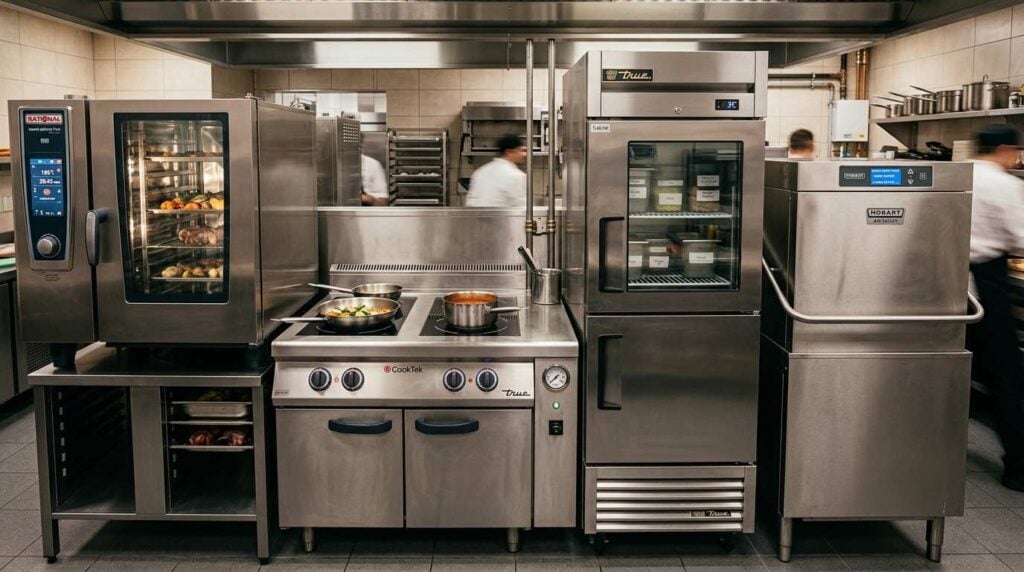
This is the most expensive part of setting up a kitchen. It also has the biggest impact on everything else. One key rule comes first:
Never use domestic appliances in a commercial kitchen.
They are not built for constant use. They break faster. And they may fail an Environmental Health inspection.
Core Cooking Equipment
Here’s what most UK professional kitchens need:
Oven
A combi oven is the most flexible choice for small to mid-sized kitchens. It combines convection, steam, and mixed cooking modes in one unit. You can use it for roasting, baking, and pastry work. Always size it based on real peak demand, not ideal expectations.
Hob or range
Induction hobs are becoming more common in UK kitchens. They are energy-efficient, easy to clean, and offer precise control. Gas hobs are still widely used where strong heat and fast response are needed.
Commercial refrigeration and freezer
UK food safety rules require chilled food to stay at 8°C or below. Best practice is 5°C or lower.
Commercial fridges are designed to maintain this temperature even in busy kitchens. Domestic fridges are not.
Always plan storage for:
- ▸ Mise en place
- ▸ Daily deliveries
- ▸ Backup stock
Commercial dishwasher
A pass-through dishwasher can clean crockery and glassware in 90–120 seconds. This is essential for service speed. Without it, your entire operation slows down. Smaller kitchens can use an undercounter model.
Handwash basins
These are a legal requirement in every kitchen.
They must be:
- ▸ Easy to access
- ▸ Used only for handwashing
- ▸ Never used for food or equipment cleaning
Cookware and Kitchen Prep Supplies
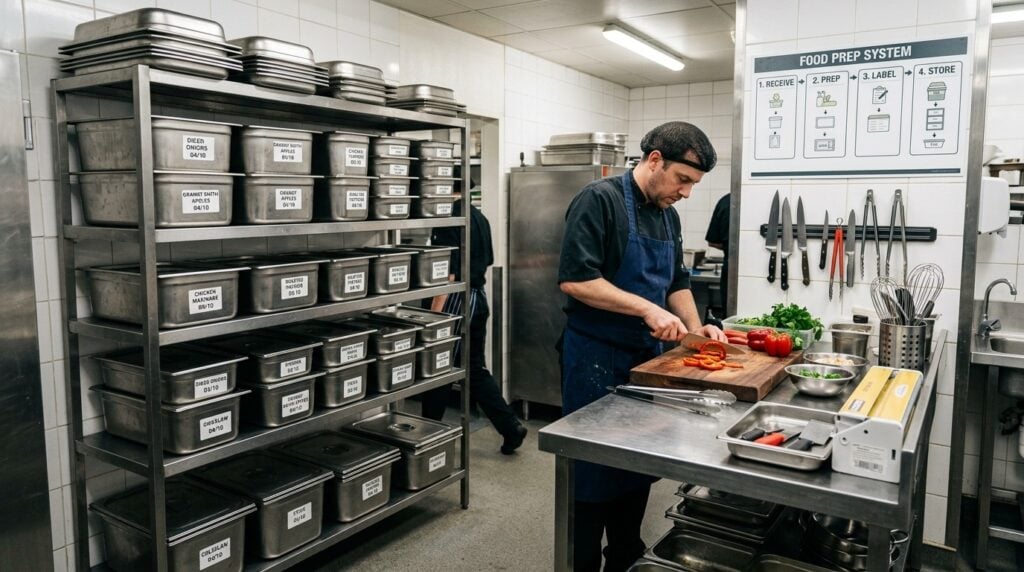
Standardisation matters more than most people think. Gastronorm containers are the backbone of a professional kitchen. They work across ovens, fridges, and bain-maries, keeping everything consistent and efficient.
Start with matched sizes and lids. Build your storage system around them.
Core sizes to buy first:
- ▸ 1/1
- ▸ 1/2
- ▸ 1/3
Kitchen Prep Checklist
- ▸ Stock pots – two sizes (large for bulk cooking, medium for sauces)
- ▸ Sauté and frying pans – minimum three per section
- ▸ Roasting trays – full and half size
- ▸ Gastronorm containers with lids – 1/1, 1/2, 1/3
- ▸ Mixing bowls – at least six in graduated sizes
- ▸ Commercial hand blender – for soups and sauces
- ▸ Digital probe thermometers – minimum two (calibrated)
- ▸ Digital portion scales – with tare function
- ▸ Ladles, tongs, and spatulas – multiple sizes
- ▸ Knives – chef’s, paring, serrated bread knife, and filleting knife (if needed)
- ▸ Colanders and sieves
Important Notes
Knives
Each section should have its own full knife set. Store knives on magnetic strips, not in drawers. Keep them sharp; blunt knives are more dangerous.
Probe thermometers
One is not enough. If it fails during service, your HACCP checks stop. Always keep at least two in working condition.
Colour-Coded Chopping Boards: What UK Law Requires
This is one of the first things an Environmental Health Officer will check. UK food safety guidance requires you to keep raw and ready-to-eat foods separate. The easiest and most accepted way to show this is by using colour-coded chopping boards.
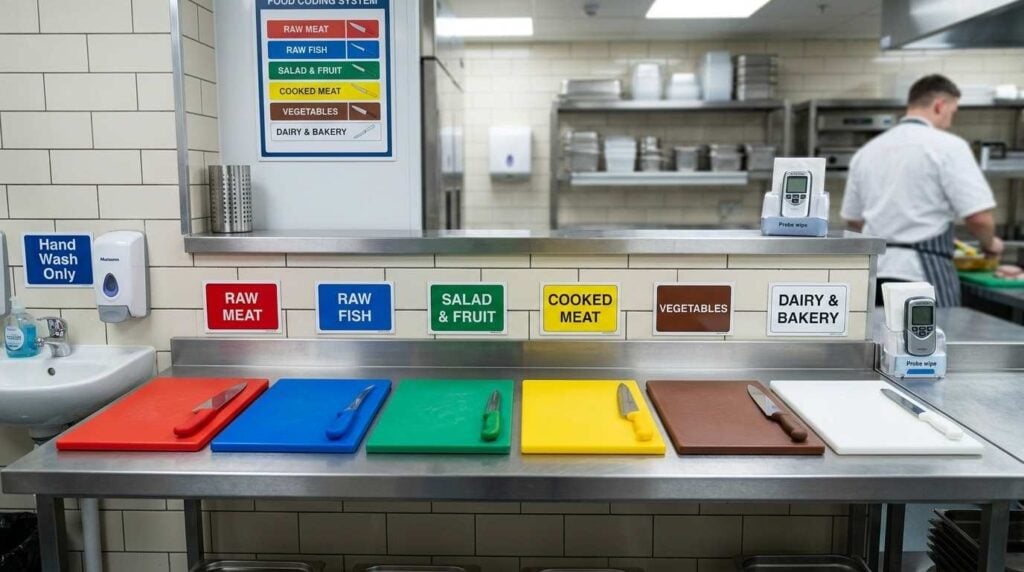
Standard UK Colour System
- ▸ Red: Raw meat
- ▸ Blue: Raw fish and seafood
- ▸ Yellow: Cooked meat
- ▸ Green: Salad, fruit, and ready-to-eat foods
- ▸ Brown: Root vegetables and unwashed produce
- ▸ White: Bakery, dairy, and allergen-controlled prep
What You Must Do
- ▸ Keep all required colours in your kitchen
- ▸ Document the system in your HACCP plan
- ▸ Display a colour chart in the prep area
- ▸ Train all staff before they handle food (including new and agency staff)
Important Rules
Do not use wooden chopping boards. They absorb moisture, trap bacteria, and cannot be properly sanitised in a commercial dishwasher.
Use polypropylene boards only. Replace them when they become heavily scored or the colour is no longer clear.
Tableware and Service Equipment
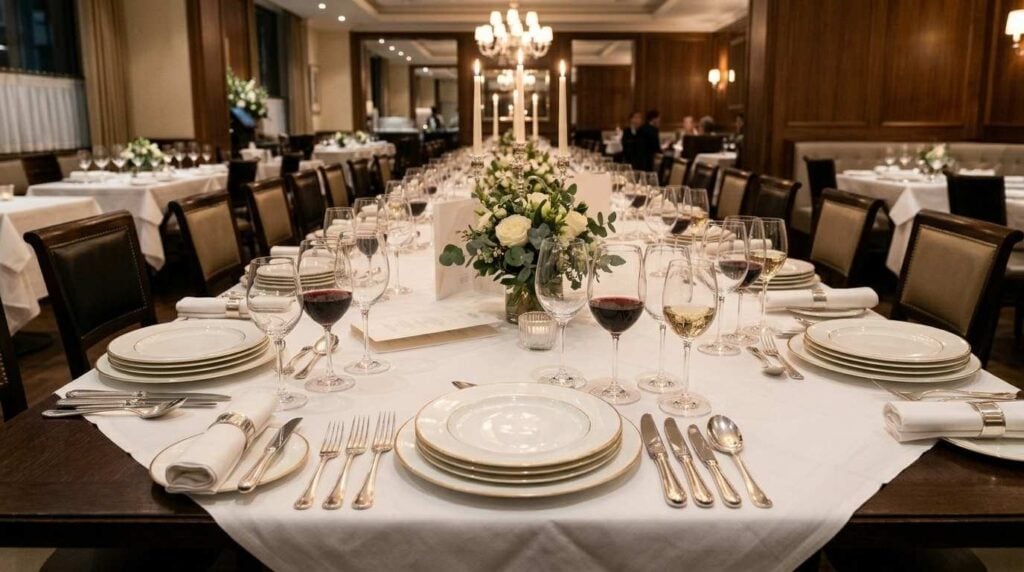
One of the most common mistakes new restaurants make is under-ordering tableware.
The fix is simple: follow the right formula.
Buy enough to keep service moving at all times.
- ▸ Crockery: 2.5× your seated cover count
- ▸ Cutlery: 3× covers (lost and damaged more often)
- ▸ Glassware: 2.5× covers
This ensures you always have stock in use, in transit, and in the dishwasher.
Service Checklist
- ▸ Main course plates – 2.5× covers
- ▸ Side plates – 2× covers
- ▸ Cutlery sets – 3× covers
- ▸ Wine glasses and tumblers – 2.5× covers
- ▸ Salt and pepper sets – one per table
- ▸ Serving dishes and platters – based on your menu
Consumables and Hygiene Supplies
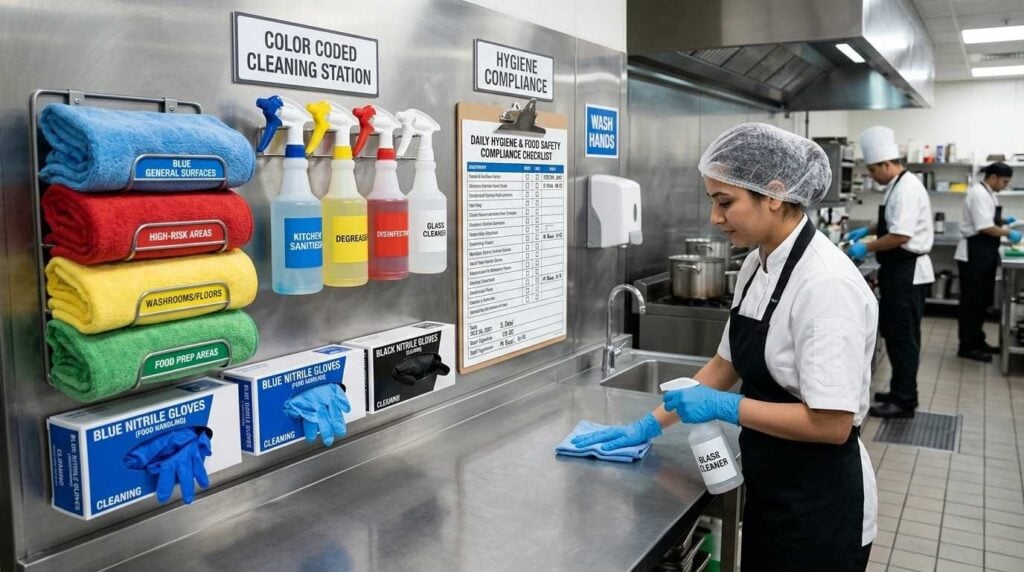
These are the items that run out mid-service and cause real problems. Stock them properly from day one.
Food date labels
A HACCP requirement, not optional. Every prepared item must be labelled with the product name, prep date, and use-by date. Use dissolvable day-dot labels for refrigerated prep, they wash off in the dishwasher. For frozen items, use permanent freezer labels.
Cleaning products
Your surface sanitiser must be EN1276 certified. This is the minimum standard for food contact surfaces in the UK. Most supermarket cleaners don’t meet it, so they’re not suitable for a professional kitchen.
Colour-coded cleaning cloths and mops
Match your cleaning tools to kitchen zones.
- ▸ Blue: general surfaces
- ▸ Red: raw meat areas
- ▸ Green: food prep surfaces
- ▸ Yellow: washrooms
Never use the same cloth across different zones.
PPE essentials
Stock disposable nitrile gloves (multiple sizes), aprons, and hairnets. Hand soap must be available at every handwash basin; this is a legal requirement.
Cling film, foil, parchment, and napkins.
Always use commercial rolls. Domestic sizes run out fast and create unnecessary waste.
Waste management (2025 update)
Separate food waste collection is now mandatory for most food businesses in England. Use lidded bins for food waste, recycling, and general waste to stay compliant.
The Order to Buy
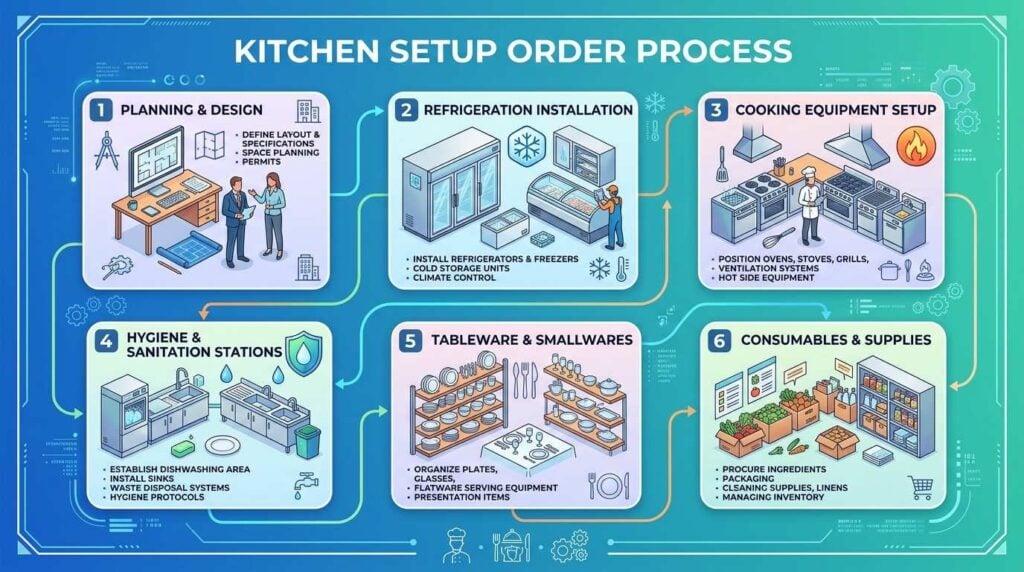
If your budget is tight, the order you buy matters. Start with what keeps your kitchen running.
1. Cooking equipment and refrigeration
These come first. Without them, you can’t operate.
2. Probe thermometers and date labels
HACCP compliance starts on day one. No exceptions.
3. Colour-coded chopping boards (with staff training)
This system is checked on every EHO inspection.
4. Commercial dishwasher
Service speed depends on how fast you can turn plates.
5. Tableware (at the right quantities)
Under-ordering here causes delays during busy service.
6. Consumables
Stock at least 4–6 weeks of core items before opening.
We Can Source It supplies the full range of commercial kitchen essentials in this checklist, from gastronorm containers and colour-coded chopping boards to food date labels, cleaning chemicals, and everyday consumables.
Browse the full range at: wecansourceit. For a complete overview of catering supplies across all categories, see our full guide” The Complete Guide to Catering Supplies for UK Restaurants & Cafés.”
FAQ
What kitchen supplies does a professional kitchen legally need in the UK?
At minimum, a professional kitchen must have calibrated probe thermometers, food date labels used on all prepared and stored items, a colour-coded chopping board system documented in the HACCP plan, dedicated handwash basins with soap and drying facilities, and EN1276-certified surface sanitiser. All of these are checked by Environmental Health Officers during inspections.
How many plates does a 50-cover restaurant need?
Using the standard 2.5× formula, a 50-cover restaurant needs at least 125 main course plates. For cutlery, 150 full place settings (3× covers) are recommended. This ensures sufficient stock for service, transit, and washing without shortages.
Are wooden chopping boards allowed in a commercial kitchen?
No. Wooden chopping boards are not recommended in commercial kitchens because they cannot be effectively sanitised and can harbour bacteria in surface grooves. Polypropylene colour-coded boards are the correct and accepted option for food safety compliance.
Author
We Can Source It Team
We Can Source It is a UK-based specialist supplier of catering and hospitality supplies for restaurants, cafes, bars, hotels, and professional kitchens across the United Kingdom.