
Glass breakage in hospitality is universally acknowledged as a problem and almost universally managed by accident. Most bar and restaurant managers know that breakage costs money. Very few have calculated exactly how much. Fewer still have traced the most common cause of commercial glass breakage to its source: not customer drops, not staff carrying mistakes, but the glasswasher.
This guide works through the financial cost of breakage, the five most common causes ranked by contribution, the thermal shock mechanism most venues miss entirely, the UK health and safety obligations that apply when glass breaks in licensed premises, a glass selection guide by venue type, and a staff training checklist you can implement this week.
The Annual Cost of Glass Breakage: A Worked Calculator
Every guide on this topic says glass breakage is expensive. None of them put a number on it. Here is the calculation.
The Formula
Annual breakage cost = Glass stock x Annual breakage rate x Average replacement cost per glass
Breakage Rates by Venue Type
| Venue Type | Annual Breakage Rate | Primary Cause |
| Wet-led pub or bar | 15 to 25% of stock | Staff handling, customer drops, glasswasher stress |
| Casual restaurant | 10 to 15% of stock | Mixed causes, moderate volume |
| Fine dining restaurant | 5 to 10% of stock | Careful handling reduces the rate; polishing accounts for most |
| Nightclub / high-volume bar | 25 to 35% of stock | Customer handling at volume |
| Festival / outdoor event | 30 to 40% per event cycle | Environmental factors and high-volume service |
Worked Examples
Busy pub with 400 glasses in total stock at £4 average replacement cost:
- ▸ 20% annual breakage = 80 glasses replaced per year
- ▸ Annual breakage cost: £320
100-seat casual restaurant with 600 glasses at £5 average replacement cost:
- ▸ 15% annual breakage = 90 glasses replaced per year
- ▸ Annual breakage cost: £450
High-volume bar with 800 glasses at £3.50 average replacement cost:
- ▸ 25% annual breakage = 200 glasses replaced per year
- ▸ Annual breakage cost: £700
These figures cover replacement glass only. They do not include staff time for clean-up, the service disruption of a glass breaking mid-service, the injury risk to staff and customers, or the investigation and documentation time required when a breakage results in a reportable incident.
A busy bar or restaurant operating at the high end of these ranges is spending £500 to £1,500 per year on routine glass replacement before any of those additional costs are counted. The financial case for systematic breakage prevention is straightforward.
Key takeaway: Glass breakage is not an unpredictable overhead. It is a calculable annual cost with specific causes that can be managed. Operators who quantify it first are significantly more motivated to reduce it.
The Five Most Common Causes of Glass Breakage in Bars and Restaurants
Ranked by contribution to total annual breakage in a typical UK hospitality environment.
Cause 1: Thermal Shock from the Glasswasher (Highest Contribution)
The single largest cause of glass breakage in bars and restaurants is thermal shock from the glasswasher. See Section 3 for the full mechanism. This cause is responsible for a significant proportion of glasses that appear to break randomly, in a customer’s hand, when picked up from the bar, or when stacked, because the damage has already occurred invisibly inside the glass structure.
Cause 2: Staff Carrying Technique
Carrying multiple glasses by inserting fingers inside the rims concentrates stress at the most fragile part of the glass. A single finger inserted into four pint glasses creates uneven lateral pressure on each rim. Over time, this causes micro-chips and weakening at the rim contact points that predispose those glasses to breakage under normal service conditions. The glass that breaks when a customer sets it down is often one that was rim-gripped twenty minutes earlier.
Cause 3: Back-Bar Storage Contact
Glasses stored in contact with each other on back-bar shelves chip at the rim and base contact points every time they vibrate against each other. In a busy bar with music, door slams, and footfall vibration, this contact is constant. Glasses without protective separation gradually accumulate micro-damage that reduces their effective lifespan well before any single breakage event.
Cause 4: Customer Drops
Direct customer drops account for a meaningful proportion of total breakage, particularly in standing-room venues. This cause is the least preventable through operational management. The mitigation is glass selection (toughened glass breaks into smaller, safer fragments) and floor surface (rubber anti-fatigue mats at the bar reduce impact force on dropped glasses).
Cause 5: Glasswasher Overloading
Loading a commercial glasswasher beyond its rated capacity causes glasses to contact each other during the wash cycle. Rim-to-rim contact at operating temperature weakens glasses and causes chips that are not always immediately visible. The correct load for most undercounter commercial glasswashers is glasses upside-down in the rack with 2 to 3 centimetres of clearance between each glass.
Thermal Shock: The Hidden Cause Most Venues Miss
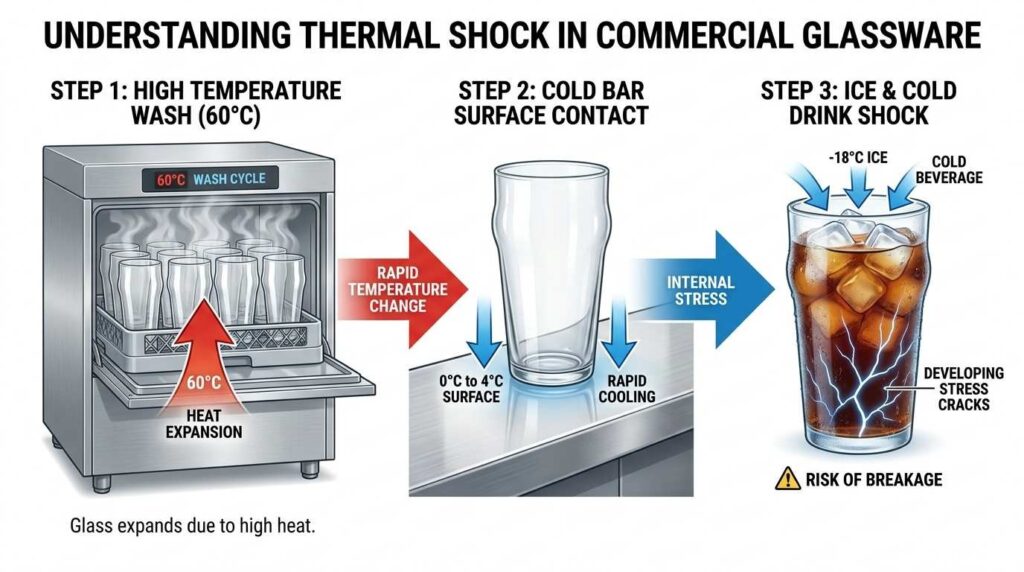
Thermal shock is the most technically important cause of commercial glass breakage, and it is mentioned on zero of the nine competing pages in this SERP. Understanding it changes how you manage your glasswasher programme.
The Mechanism
A commercial glasswasher washes at 55 to 65 degrees Celsius and rinses at 80 to 85 degrees Celsius. When a glass exits this cycle, its temperature is 60 to 70 degrees Celsius.
If that glass is immediately:
- ▸ Placed on a cold stainless steel bar surface
- ▸ Filled with ice or a cold drink
- ▸ Stored in a chilled glass cabinet
- ▸ Stacked against cold glasses fresh from the bar
The outer surface of the glass cools rapidly while the interior remains hot. This temperature differential creates tensile stress inside the glass structure. The glass does not necessarily break immediately. Instead, it develops invisible internal micro-fractures that permanently weaken the structure.
The result is a glass that looks and functions normally but is significantly more likely to break under ordinary service conditions. It may break when a customer grips it, when it is placed on a hard surface, or when it is picked up from the bar shelf. From the manager’s perspective, it appears to break randomly. The actual cause is the thermal stress event that occurred at the glasswasher thirty minutes earlier.
The Scale of the Problem
Thermal shock damage is cumulative. A glass that survives one high thermal shock event is weaker than before. A glass subjected to repeated thermal shock across dozens of cycles develops a fracture network that makes eventual failure almost certain. In a venue where every glass goes from a hot glasswasher directly onto a cold surface as standard practice, a significant proportion of the glass stock is in a thermally weakened state at any given time.
How to Prevent Thermal Shock Damage
Allow glasses to cool on a wire drain rack.
After the glasswasher cycle, glasses should sit on an open wire rack at ambient temperature for 5 to 10 minutes before being placed on cold surfaces, stacked, or returned to service. This single change is the highest-impact operational improvement available for reducing glass breakage in most venues.
Never place hot glasses directly on cold surfaces.
Stainless steel bar tops, refrigerated shelving, and cold glass chillers are all thermal shock risks for glasses fresh from the washer. A rubber bar mat or wooden draining board between the washer outlet and the storage point provides enough thermal buffering to significantly reduce shock damage.
Pre-rinse cold glasses before the first hot cycle.
Glasses that have been stored in a cold glass chiller and then loaded directly into a hot glasswasher experience the same shock mechanism in reverse. A cold pre-rinse before the first hot cycle moderates the temperature transition.
Check your glasswasher temperature settings.
Some commercial glasswashers are set above the manufacturer’s recommended temperature by operators who assume hotter equals cleaner. Above 65 degrees Celsius, wash temperature, thermal shock risk increases significantly for all glass types. The correct operating temperature for most commercial glasswashers is 55 to 60 degrees Celsius on the wash cycle.
Key takeaway: The glass that breaks in a customer’s hand was probably damaged at the glasswasher, not in the customer’s grip. Managing the thermal transition from washer to bar eliminates the most common hidden cause of glass breakage in commercial hospitality.
UK Health and Safety Obligations: HSE, RIDDOR, and Safe Disposal
This is the section entirely absent from every competing page in this topic. It covers the legal obligations that apply to every UK bar and restaurant manager when glass breaks on the premises.
The Health and Safety at Work Act 1974
Under the Health and Safety at Work Act 1974, employers have a general duty to protect employees from risks to their health and safety, including the risk of injury from broken glass. In licensed premises, this duty is directly relevant to glass handling throughout service, from the glasswasher to the table and back.
The HSE expects licensed premises to have documented risk assessments covering glassware handling. If an HSE inspector visits your premises and asks to see your risk assessment for glass handling, you should be able to produce one.
A practical risk assessment for glass handling in a licensed venue covers:
- ▸ The type of glass used and whether it is toughened
- ▸ Staff carrying and collection protocols
- ▸ Glasswasher operating procedures
- ▸ Broken glass disposal method
- ▸ Staff training records on glass handling
When Breakage Becomes RIDDOR-Reportable
Under the Reporting of Injuries, Diseases and Dangerous Occurrences Regulations 2013 (RIDDOR), certain injuries in the workplace must be reported to the HSE. Glass-related injuries that could trigger a RIDDOR report include:
- ▸ A staff member sustaining a laceration from broken glass that requires hospital treatment
- ▸ Any fracture to a finger, hand, or other body part caused by broken glass
- ▸ An injury requiring more than 7 days off work resulting from glass handling
If a member of staff cuts themselves on broken glass and the wound requires stitches or hospital treatment, this is potentially a RIDDOR-reportable incident. Document all glass-related injuries in your accident book immediately, record the circumstances, and assess whether the severity threshold for RIDDOR reporting has been reached.
Safe Glass Disposal Procedures
Improper disposal of broken glass is a staff injury risk that extends well beyond the initial breakage event. The correct procedures:
Never put broken glass loose in a bin bag.
A bin bag with loose glass shards will puncture and injure the staff member removing it. All broken glass should go into a dedicated rigid glass waste container.
Use a dedicated glass waste bin with a lid.
A labelled rigid bin with a secure lid prevents accidental contact with glass shards during bin handling and storage.
Do not sweep broken glass with your hands.
Use a dustpan and brush or a specialist glass collection tool. Fine glass fragments are invisible on many floor surfaces.
Isolate the breakage area during clean-up.
In a customer area, cordon off the breakage location until all fragments are collected. Fine glass spreads further than the visible break point, particularly on smooth floors.
Check the surrounding glasses after a breakage.
A glass that breaks near other glasses on a bar or shelf may chip or crack adjacent glasses. Remove and inspect surrounding glasses before returning them to service.
Glass Selection: Which Materials Break Least in High-Volume Environments
The glass you choose is the starting point for your breakage rate. Not all commercial glass formats break equally.
Toughened (Tempered) Glass
Toughened glass is the most appropriate choice for high-volume commercial service. It is four to five times stronger than standard annealed glass and breaks into smaller, less dangerous fragments when it does fail. For pubs, bars, and casual restaurants, toughened glass is the correct specification for all high-use formats.
Our Nonic Pint Glass 20oz with Activator Max is fully toughened with safe break technology and a CE government stamp for draught beer service, designed specifically for the demands of busy bar environments.
The Senator 20oz CE Activator Max glass provides the same fully toughened specification in an alternative pint format at trade pricing for volume orders.
For spirit and cocktail service, the Rocks S Old Fashioned Glass 10oz provides a durable toughened tumbler format suitable for high-volume bar use.
Glass Format Breakage Risk by Type
| Glass Format | Relative Breakage Risk | Why |
| Toughened nonic pint | Low | Bulge design resists rim chips; toughened construction |
| Toughened tumbler/rocks | Low | No stem; stable base; toughened construction |
| Standard wine glass (stemmed) | Medium | Stem is the primary breakage point |
| Crystal stemware | High in high-volume settings | Thinner walls; stem fragility; not toughened |
| Consumer crystal | Very high in commercial use | Not designed for commercial conditions |
| Polycarbonate (reusable plastic) | Very low | Virtually unbreakable under normal service |
For venues where breakage rate is the primary concern, polycarbonate reusable formats eliminate glass breakage entirely in the applicable service areas. For outdoor service, events, or beer gardens where local authority licences require unbreakable glassware, polycarbonate is the correct operational choice. See our complete guide to polycarbonate vs glass for UK hospitality venues for the full comparison.
Storage and Back-Bar Organisation to Reduce Breakage
The back-bar and glass storage area are where passive, ongoing breakage accumulates. Getting storage right does not eliminate dramatic breakage events, but it consistently lowers the background rate of chipping, cracking, and weakening that contribute to eventual failures.
Stemware Storage
Store stemware rim-down on a padded glass rack. Rim-down storage:
- ▸ Protects the most fragile part of the glass from contact chips
- ▸ Prevents contamination inside the bowl
- ▸ Allows drainage after washing
Rim-up storage in a standard wire rack without padding chips, stemware at the rim contact points every time the glasses shift. On a bar with regular vibration, this contact is continuous.
Pint Glass and Tumbler Storage
Pint glasses and tumblers can be stacked, but limit stack height to six to eight glasses. Stacks above this height concentrate weight on the bottom glass and increase fracture rates at the base contact point.
Use interlocking bar glass shelf mats on back-bar shelves to provide a cushioned surface between the glass base and the shelf. These mats absorb vibration, reduce base contact chips, and prevent glasses from sliding on smooth surfaces.
Separation and Spacing
Glasses stored in direct contact on a shelf will chip each other at the contact points whenever the shelf vibrates. Space glasses with enough clearance to prevent regular contact, or use shelf dividers to maintain consistent separation.
Staff Training Checklist to Prevent Glass Breakage
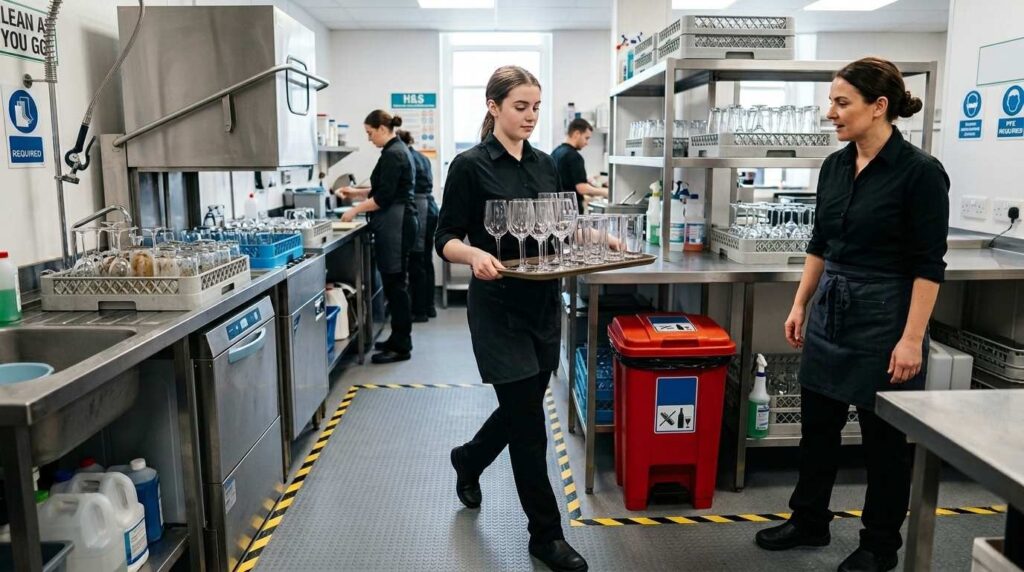
This checklist covers the minimum training content for new staff in any bar or restaurant. It takes five minutes to deliver and should be part of every new starter induction before their first service.
Carrying and Collection
- ▸ Carry glasses by the base or stem, never by inserting fingers into the rim or bowl.
- ▸ Use a glass rack or tray for volume carrying (four or more glasses at once)
- ▸ Do not stack glasses by nesting them inside each other during collection
- ▸ Collect glasses from tables individually or with a tray, not by bunching rims together
Glasswasher Procedure
- ▸ Load glasses upside down in the rack with clearance between each glass
- ▸ Never overload the rack or force glasses in at an angle
- ▸ Allow glasses to cool on the drain rack for at least 5 minutes after the cycle before placing on cold surfaces or returning to the back bar
- ▸ Never place hot glasses directly into a cold glass chiller or onto a cold stainless surface
When a Glass Breaks
- ▸ Isolate the area immediately and warn staff and customers within the immediate vicinity.
- ▸ Use a dustpan and brush or a glass collection tool, never your hands
- ▸ Dispose of all broken glass in the dedicated rigid glass waste bin, never in a bin bag
- ▸ Check glasses immediately surrounding the breakage for chips or cracks before returning them to service
- ▸ Record the incident in the accident book if any injury occurred, however minor
Storage
- ▸ Store stemware rim-down on padded racks
- ▸ Limit pint glass and tumbler stacks to eight glasses maximum
- ▸ Do not store glasses directly against other glasses on open shelves without separation
Key takeaway: The venues with the lowest glass breakage rates treat handling protocols as training items, not assumed knowledge. A five-minute induction covering the points above, delivered consistently to every new starter, produces measurable reductions in breakage within weeks.
For a complete guide to glassware selection, materials, and stock management across all venue types, see our hospitality glassware guide for UK venues.
FAQs
How much does glass breakage cost a UK pub or bar per year?
A busy pub with 400 glasses in stock at £4 average replacement cost and a 20% annual breakage rate spends approximately £320 per year on glass replacement alone. A high-volume bar with 800 glasses at 25% breakage spends approximately £700 per year. These figures cover replacement cost only and exclude staff clean-up time, service disruption, and potential injury costs.
What is the most common cause of glass breakage in bars and restaurants?
Thermal shock from the glasswasher is the most common hidden cause. When glasses move directly from a hot wash cycle onto cold surfaces, internal stress fractures develop that weaken the glass without visible damage. These glasses then break later under ordinary service conditions, appearing to fail randomly. Managing the thermal transition from washer to bar eliminates the most significant cause of otherwise unexplained breakage.
Does toughened glass reduce breakage costs?
Yes, in two ways. Toughened glass is approximately four to five times stronger than standard annealed glass, which reduces the rate of breakage under normal handling. When toughened glass does break, it fractures into smaller fragments, reducing injury risk and the time required for safe clean-up. For high-volume commercial service, toughened glass is the correct specification for all primary drinkware formats.
When is a glass breakage injury RIDDOR-reportable in the UK?
A glass-related injury is RIDDOR-reportable when it results in a fracture (other than to a finger or thumb), an amputation, a loss of sight, or any injury that requires hospital treatment and results in more than 7 days off work. All glass-related injuries should be recorded in the accident book immediately, regardless of severity. Assess RIDDOR reportability based on medical treatment required and time off work.
What is the safest way to dispose of broken glass in a bar or restaurant?
All broken glass should be placed into a dedicated rigid glass waste container with a lid. Never put broken glass loose in a bin bag. Use a dustpan and brush or a specialist glass collection tool, never your hands. Label the glass waste bin clearly and ensure all staff know where it is located.
How do you prevent thermal shock damage to glasses from a commercial glasswasher?
Allow glasses to cool on a wire drain rack for 5 to 10 minutes after the wash cycle before placing them on cold surfaces, chilling them, or stacking them. Never move glasses directly from the washer into a cold glass chiller. Check that your glasswasher wash temperature is set at 55 to 60 degrees Celsius. Pre-rinse cold glasses before loading them into a hot washer.
What glass format breaks least in a busy bar?
Fully toughened nonic pint glasses and toughened tumblers have the lowest breakage rate in high-volume bar environments. The nonic design specifically resists rim chipping through its bulge shape. For service areas where glass breakage is a persistent problem, polycarbonate reusable formats eliminate glass breakage entirely.
Do staff need training on glass handling under UK health and safety law?
Under the Health and Safety at Work Act 1974, employers have a duty to protect staff from injury, including from broken glass. While there is no specific regulation mandating a glass-handling training module, the HSE expects documented risk assessments covering glassware handling in licensed premises. Maintaining training records for glass handling inductions supports your risk assessment documentation and demonstrates due diligence if a glass-related injury is investigated.
References
- ▸ Health and Safety at Work Act 1974 via legislation.gov.uk
- ▸ Reporting of Injuries, Diseases and Dangerous Occurrences Regulations 2013 (RIDDOR) via legislation.gov.uk
- ▸ HSE: Catering and Hospitality — hse.gov.uk