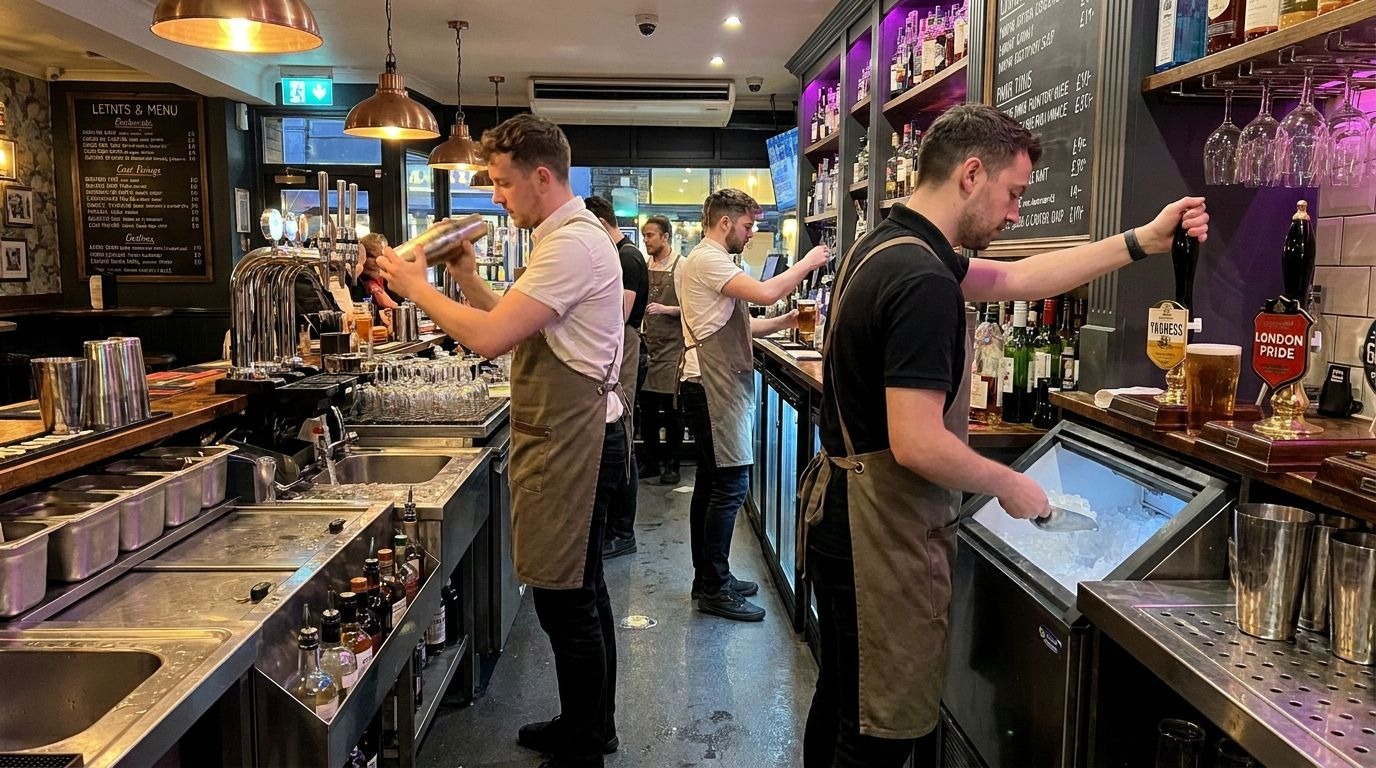
A well-run bar counter is not just a surface for serving drinks; it is a precision-engineered service station where compliance, speed, and organisation all intersect. The bar and pub equipment you place behind that counter will determine how quickly your staff can serve, how accurately they can pour, and whether your venue passes a Trading Standards inspection.
This guide covers every essential category of equipment that belongs behind a UK bar counter, with practical advice on what to buy, what to prioritise, and where most operators go wrong.
Why Getting Your Bar Setup Right Matters
Customers form their impression of a bar within the first 60 seconds of placing an order. Fumbling for a bottle opener, running out of ice, or calling for a clean glass affects guest perception, regardless of drink quality.
The equipment behind your bar directly controls three key factors for profitability:
- ▸Service speed: how many covers can be turned in a session
- ▸For accuracy: protecting your margin or losing revenue per drink
- ▸Compliance: ensuring that measuring equipment meets the Weights and Measures Act 1985
Legal requirement: The Weights and Measures (Intoxicating Liquor) Order 1988 mandates that gin, rum, vodka, and whisky must be served in stamped measures of 25ml or 35ml. Non-compliance can lead to fines up to £5,000.
The Six Categories of Bar and Pub Equipment Behind the Counter
Understanding what belongs behind your bar, and why, requires thinking in categories rather than individual items. Every piece of bar and pub equipment behind the counter fits into one of six functional areas.
1. Measuring and Dispensing Equipment
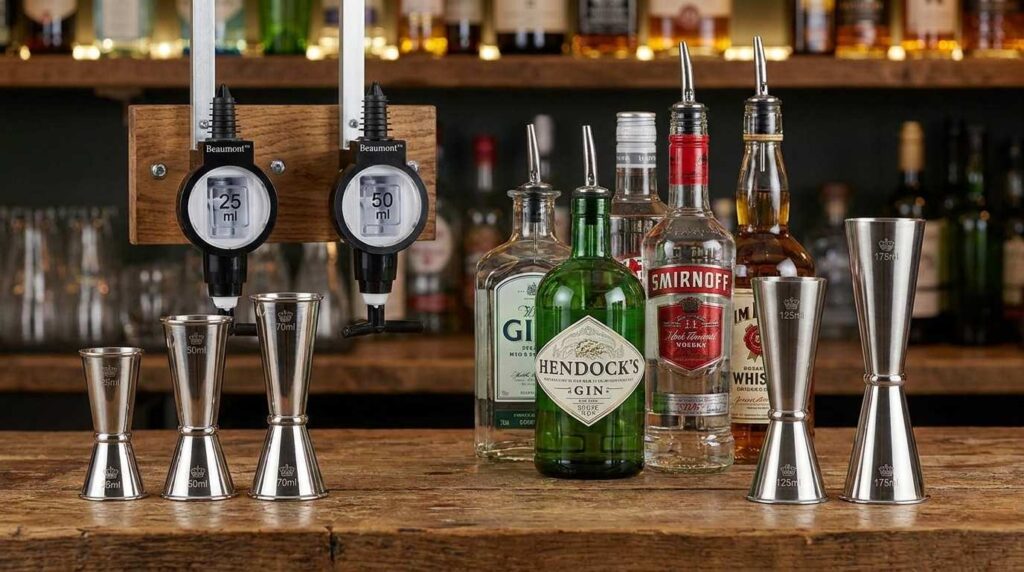
This category is legally the most critical behind a UK bar. An incorrect setup can cause compliance issues and costly fines.
Bar optics: Push-up dispensers mounted on inverted spirit bottles at the back bar. Each lever pull delivers a precise, pre-set measure. In high-turnover pubs, optics is the fastest and most consistent method. The measuring chamber must remain unobstructed, and the optic must carry a government crown stamp for legal compliance.
Thimble measures & jiggers: Handheld, stamped-metal cups filled to the brim before pouring. Ideal for cocktail environments where multiple pour sizes are needed. At a minimum, stock 25ml and 50ml stamped thimbles, with 35ml if that’s your standard spirit serving.
Speed pourers: Metal-and-rubber pourers inserted into bottle necks for controlled flow. Useful for prep and free-pour ingredients, but not legally acceptable for gin, rum, vodka, or whisky. Always use a stamped measure for these spirits.
Wine measures: Lined glasses or stamped optic dispensers are required when selling wine by the glass. Legal measures are 125ml, 175ml, or 250ml, or multiples thereof. Glassware must carry the government crown stamp for the stated measure.
2. Bar Tools & Cocktail Equipment
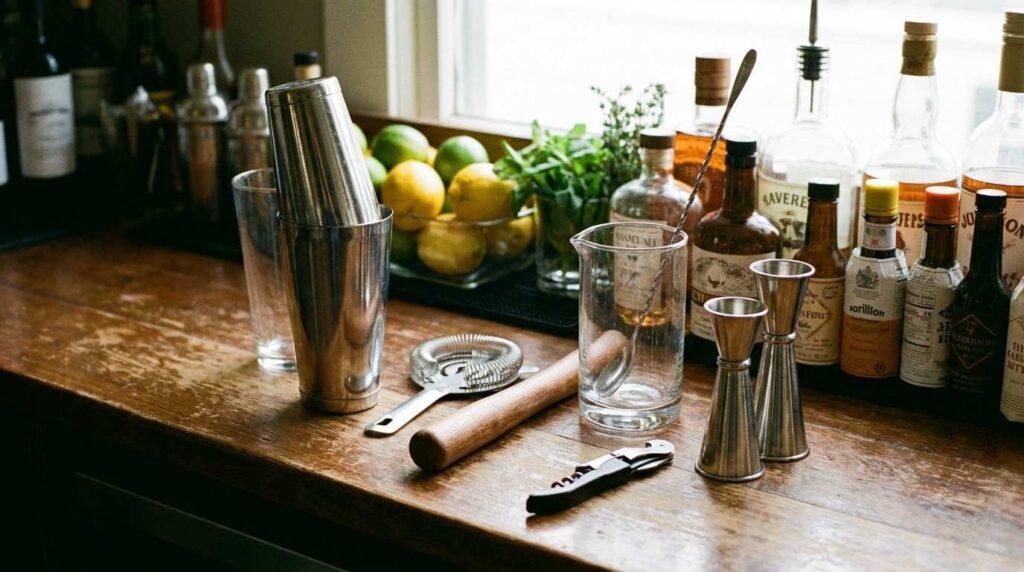
Every UK pub and bar needs a core set of tools, whether or not cocktails feature on the menu. These items support drink preparation, garnishing, and smooth service.
Bottle opener: The most-used tool on any bar. Invest in commercial-grade wall-mounted openers for bottled beer stations. They’re faster than handheld versions and cannot be misplaced. Keep at least two per bar section.
Corkscrew / Waiter’s friend: Essential for table and bottle service. A hinged lever-style waiter’s friend is the professional standard, opening bottles cleanly without crumbling or twisting the cork.
Bar spoon: Used for stirring, layering, and measuring small volumes (approx. 5ml per standard spoon). Choose stainless steel with a twisted stem; avoid plastic handles, which crack under repeated sterilisation.
Muddler: Needed for fruit-forward cocktails like mojitos or smashes. Stainless steel is more hygienic than wood, which absorbs flavours and is harder to sanitise.
Cocktail shaker: The Boston shaker (two-piece tin system) is ideal for volume service. Faster, easier to clean, and more durable than a cobbler shaker. Occasional cocktail venues can use cobbler shakers for convenience.
Strainer: Stock a Hawthorne strainer for shakers and a julep strainer for mixing glasses. A fine mesh tea strainer is useful for double-straining delicate cocktails.
Jigger set: Even for spirits that don’t require stamped measures (tequila, brandy, liqueurs), consistent jiggers maintain cocktail quality and control costs. Stock a 25ml/50ml double-ended jigger as a minimum.
3. Glassware Handling & Storage
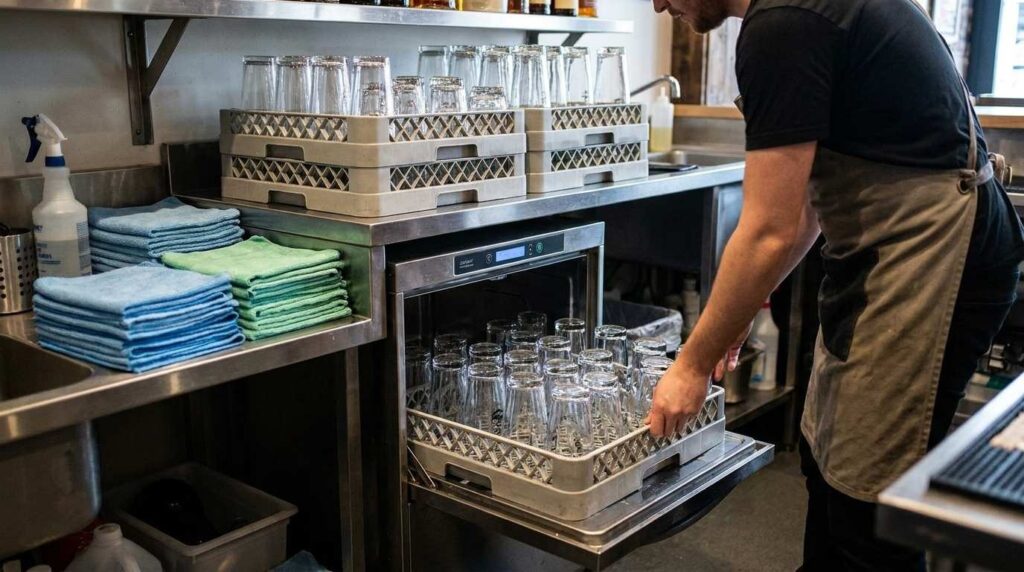
How you store and move glassware behind the bar directly impacts both hygiene and service speed. Poorly organised glass storage is a common cause of service bottlenecks during busy periods.
Glass racks & storage boxes: Use commercial glass racks to store stemware and tumblers inverted, reducing dust accumulation. They also allow efficient transport between the glasswasher and service station. Stack racks by glass type for fast, easy retrieval.
Glasswasher: An under-counter glasswasher is essential for venues with consistent volume. It cleans glasses in 90–120 seconds, compared to 15–20 minutes for a standard commercial dishwasher. Always use the correct detergent and rinse aid specified for your machine.
Glass polishing cloths: Lint-free microfibre cloths help keep wine glasses and other polished glassware looking premium. Small details like this have a big impact on presentation and guest perception.
4. Ice & Temperature Management
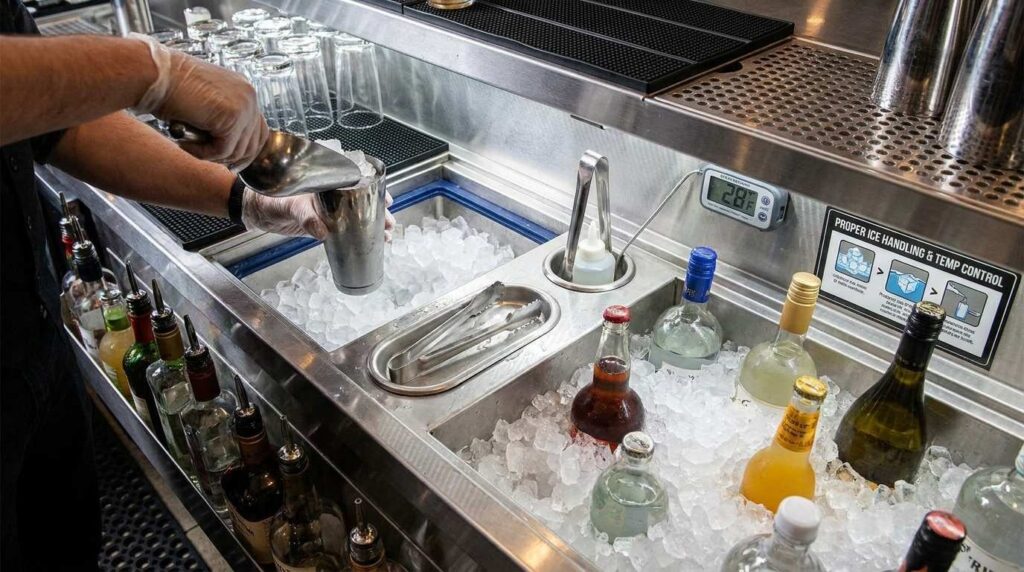
Ice is considered a food product under UK food safety law, so proper handling is essential. Two key rules apply: never touch ice with bare hands and never scoop it with glassware.
Ice scoop: Use a commercial stainless steel or heavy-duty plastic scoop, stored in a dedicated holder next to the ice well. Using glassware can chip and contaminate the ice, creating a serious safety risk.
Ice tongs: Required for serving individual cubes, especially for premium spirits where presentation matters.
Ice caddy or insulated ice well: Keeps service ice at the correct temperature throughout a session without constant replenishment. A lid also reduces contamination risk from exposure.
Bottle coolers & wine chillers: Under-counter fridges maintain frequently ordered beers, wines, and mixers at ideal service temperature. Organise fridges by product type: e.g., beer fridge, wine/mixer fridge, garnish fridge, to minimise searching time during service.
Ice buckets & stands: Essential for tableside wine and champagne service. Use a stainless steel bucket on a stable stand, deep enough to fully submerge a 750ml bottle in ice and water. Using ice water chills bottles faster than ice alone.
5. Bar Organisation & Station Setup
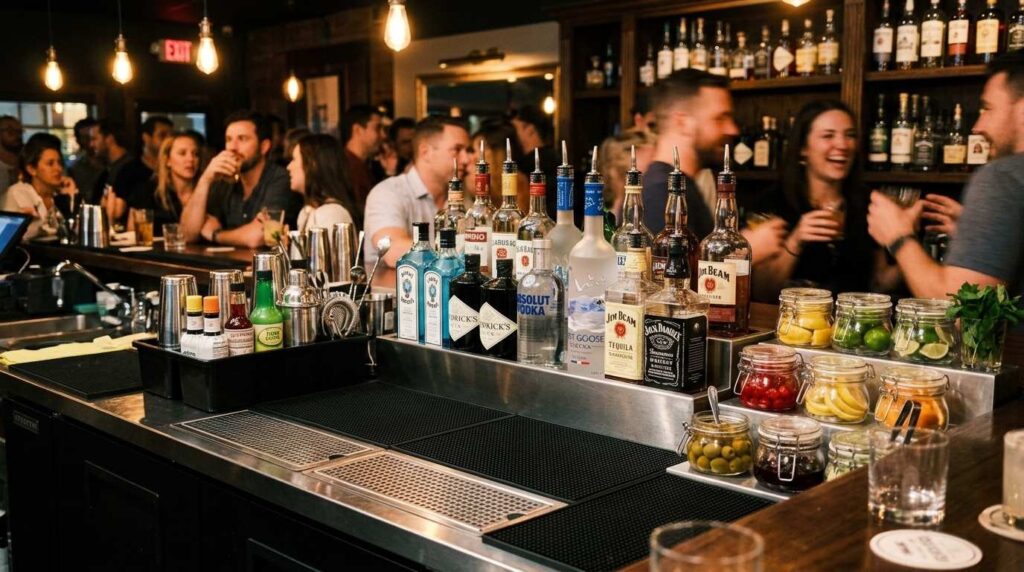
The layout of your service station is just as important as the equipment itself. A poorly organised bar slows service, creates unnecessary movement, and increases mistakes.
Speed rail: Also called a bottle rail, this metal rack is mounted under or beside the bar surface. It holds your most-used bottles upright and within arm’s reach. Organise bottles by usage frequency to keep fast-moving spirits and mixers accessible without turning or reaching across the bar.
Bar mats & drain mats: Service mats protect surfaces, absorb spills, and give bartenders a stable work area. Drain mats with perforations let liquid pass through rather than pool. Use bar runners on the customer-facing side for brand presentation and surface protection.
Drip trays: Placed under optics and dispensing points, drip trays capture run-off and prevent spirits from pooling. They reduce waste and keep workstations clean during busy service.
Bar caddies & condiment holders: Keep garnishes, straws, cocktail picks, napkins, and syrups within easy reach. Caddies help avoid clutter and keep prep organised.
Bottle stoppers & pourers: Rubber stoppers reseal opened wine and sparkling bottles between services. Small but essential, they prevent product waste and maintain quality.
6. Cleaning & Hygiene Supplies
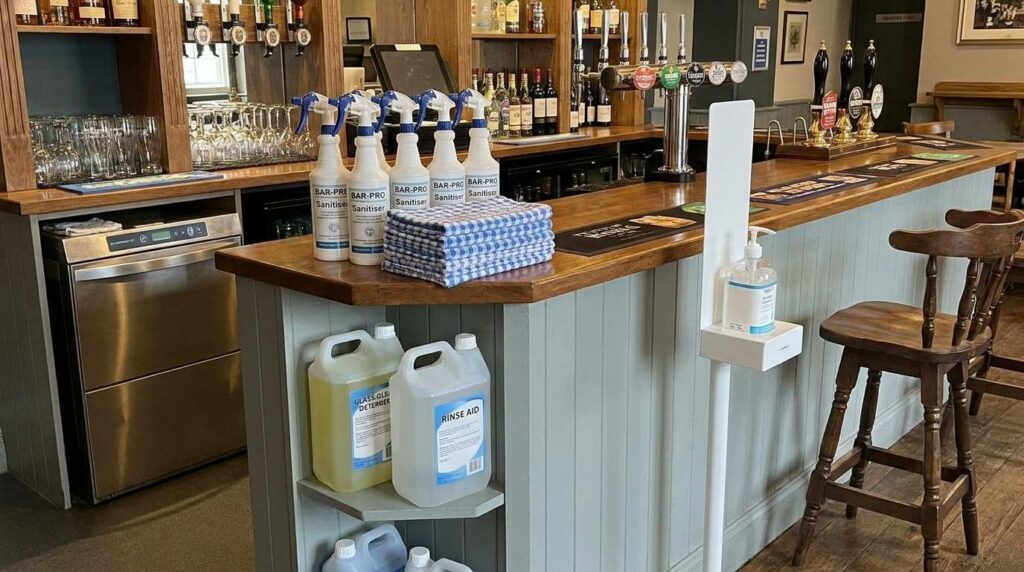
UK food safety law classifies licensed bars as food preparation environments. The same hygiene standards that apply to a pub kitchen also apply to the bar counter, especially for surface cleaning, glassware sanitisation, and ice handling.
Surface sanitiser: Use an EN1276-certified, food-safe sanitiser for bar worktops between services and during spills. Avoid general-purpose cleaning sprays on surfaces that touch food or drink.
Bar cleaning cloths: Use colour-coded cloths separate from kitchen cloths. Interchanging clothes increases the risk of cross-contamination and hygiene breaches.
Glasswasher chemicals: Dedicated glasswash detergent and rinse aid should match your machine. For venues where lipstick marks are common, additives are available to keep glassware spotless.
Hand sanitiser station: A fixed or counter-mounted dispenser is standard best practice. Bartenders handle cash, glasses, and food-contact surfaces throughout service, and easy access to hand sanitiser reduces cross-contamination.
Common Mistakes UK Bars Make When Kitting Out the Counter
Buying unstamped spirit measures: Some measures may look compliant, but lack the government crown stamp. Using them for gin, rum, vodka, or whisky is illegal. Always check the stamp, especially when buying second-hand. Fines start at £2,000 and can reach £5,000.
Scooping ice with glassware: A major food safety breach. Chipped glass contaminates the ice and every drink it touches. Always use a dedicated stainless steel or heavy-duty plastic ice scoop.
Under-stocking bottle openers: One opener per section often isn’t enough during busy service. Keep at least two per section, including a wall-mounted option for speed.
Ignoring drain mats: Without mats, bar surfaces become wet, unhygienic, and slippery. Drain mats are essential for safety and hygiene, not optional.
Buying cheap, high-use items: Bar spoons that bend or speed pourers that drip cost more over time than investing in durable equipment. Prioritise long-lasting tools for daily service.
How to Prioritise Your Bar Equipment Investment
If you are setting up a bar for the first time or working within a budget, the following order of priority reflects what has the highest operational and compliance impact:
- Stamped spirit measures and optics: non-negotiable, legal requirement
- Bottle openers, bar mats, and drain mats: foundational service tools
- Glasswasher or glass handling system: service speed depends on glass turnaround
- Ice scoop and ice management: food safety requirement, daily operational need
- Cocktail shakers, strainers, and jiggers: if cocktails feature on the menu
- Speed rail and bar organisation accessories: improve service efficiency measurably
- Under-counter bottle coolers: product quality and service speed
- Drip trays, bar caddies, and finishing accessories: complete the professional setup
For a full breakdown of phased investment strategies and what to buy at each stage, see our complete guide” Bar Equipment & Supplies: The Complete UK Buyer’s Guide for Pubs & Bars (2026)”
Where to Buy Bar and Pub Equipment in the UK
We Can Source It stocks the full range of bar and pub equipment covered in this guide, from government-stamped spirit measures, bar optics, and thimble jiggers to cocktail shakers, bar mats, ice buckets, speed rails, glasswasher chemicals, and bar organisation accessories.
All products are available for delivery across the UK, with trade pricing and no minimum order. Explore the full range of bar equipment on our Bar Equipment & Supplies category page.
Frequently Asked Questions
What bar equipment is legally required behind the counter?
Government crown-stamped measures for gin, rum, vodka, and whisky; draught beer and cider in stamped glasses, display the measure notice at the bar.
What is a speed rail?
A metal rack holding frequently used bottles upright and within arm’s reach. Organising by frequency ensures fast service.
Can I use a glass to scoop ice?
No. It’s a safety hazard. Use a dedicated scoop or tongs.
What is the difference between a bar optic and a thimble measure?
Optics deliver a fast, pre-set measure; thimbles are flexible, hand-held cups. Both must be crown-stamped for legal use.
Author
We Can Source It, Team
We Can Source It is a UK-based specialist supplier of catering and hospitality equipment, serving licensed bars, pubs, restaurants, hotels, and event operators across the United Kingdom. Drawing on hands-on experience in UK food and beverage operations, the team produces practical, compliance-focused content to help hospitality professionals improve service efficiency, safety, and profitability.