Event catering is completely different from running a restaurant or pub kitchen. In a fixed venue, you can restock during service if something runs low. At an event, you only have what you brought with you.
If napkins run out or you are short on plates halfway through service, there is no quick solution. That is why planning matters so much in off-site catering. Every item needs to be counted, packed, and checked before the van leaves.
This guide covers the catering supplies UK event caterers actually need, scaled for 50, 100, and 500 guests. It also explains the key food safety requirements that apply the moment food leaves your kitchen.
Why Event Catering Needs a Different Supply Strategy
A restaurant works on a constant cycle. Plates return to the kitchen, glasses get washed, and stock can be replaced through regular deliveries. Event catering does not work like that.
Everything must be planned in advance. Supplies need to be packed in full and reliable enough to handle venues where you may not have your normal kitchen setup.
An outdoor wedding, corporate lunch, private dinner, or community festival may all look different, but they follow the same rule:
Always pack at least 20% extra consumables.
Not 10%. Twenty.
Running out of napkins at a 300-guest wedding or discovering you only packed 30 plates for 40 meals can damage your reputation quickly. An extra box of napkins costs very little. Running short during service can cost future bookings.
The Core Categories of Catering Supplies for Events
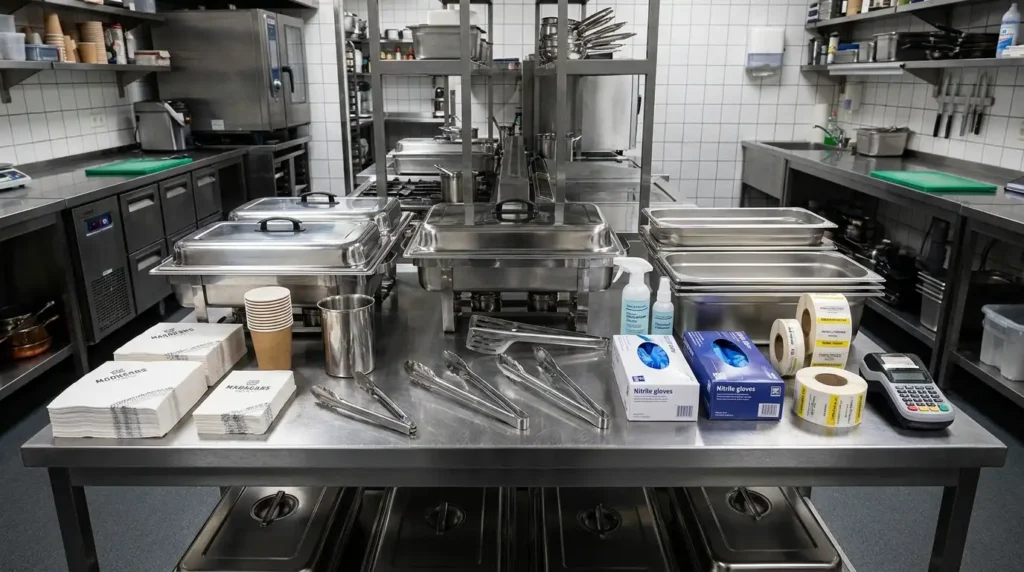
Before planning quantities, it helps to break catering supplies into clear categories. Every successful event needs items from each of these areas.
Serving Equipment
These are the tools your team uses during service.
Common essentials include:
- ▸ Chafing dishes and fuel canisters
- ▸ Serving spoons and tongs
- ▸ Ladles and carving knives
- ▸ Serving platters
- ▸ Portion scoops
This equipment moves food from holding stations to guests quickly and safely.
Food Holding and Transport
Keeping food at safe temperatures during transport is critical.
Typical items include:
- ▸ Insulated hot boxes for cooked food
- ▸ Cool boxes with ice for cold dishes
- ▸ Gastronorm containers with lids
- ▸ Foil trays for hot holding
Good transport equipment helps maintain food quality from the kitchen to the venue.
Service Consumables
These are the everyday items guests use throughout the event.
You will usually need:
- ▸ Plates or food containers
- ▸ Cutlery
- ▸ Cups or glasses
- ▸ Napkins
- ▸ Drinkware if beverages are served
These are also the items most likely to run out if quantities are underestimated.
Food Safety and Hygiene
The moment food leaves your kitchen, food safety becomes even more important.
Essential hygiene supplies include:
- ▸ Probe thermometers
- ▸ Food date labels
- ▸ Disposable gloves
- ▸ Hand sanitiser
- ▸ Portable handwash stations
- ▸ Surface sanitiser spray
At least one team member should be responsible for temperature checks during service.
Waste Management
Waste builds up faster than most first-time caterers expect.
Make sure you have:
- ▸ Large bin bags
- ▸ Small bin liners
- ▸ Recycling bags
- ▸ Food waste bags
You also need a clear plan for how rubbish leaves the venue after service.
Setup and Utility Items
These are the small items people often forget until setup starts.
Useful extras include:
- ▸ Cable ties
- ▸ Gaffa tape
- ▸ Tablecloths
- ▸ Trestle tables
- ▸ Serving station barriers
They may seem minor, but they solve a lot of last-minute problems on event day.
Quantity Guide for 50 Guests
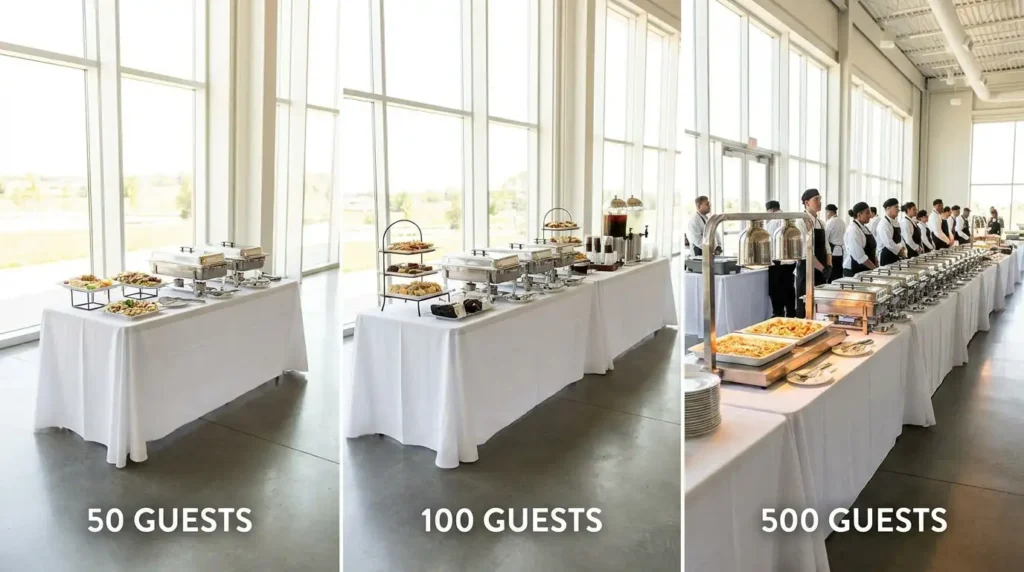
A 50-guest event is manageable for most catering businesses, but planning still needs to be precise. At this size, forgetting one important item affects the entire service.
| Item | Quantity Needed | Buffer to Order |
| Main course plates or containers | 55 | 10 extra |
| Side plates or bread plates | 55 | 10 extra |
| Cutlery sets | 60 | 10 extra |
| Napkins (paper) | 200 | Buy by the case |
| Cups or glasses | 65 | 15 extra |
| Serving spoons or tongs | 6 to 8 | 2 spare |
| Chafing dishes | 3 to 4 | Depends on the menu |
| Fuel canisters | 3 per dish | 1 spare per dish |
| Waste bags (large) | 8 | 4 extra |
| Disposable gloves (pairs) | 20 | 10 extra |
| Sanitiser spray bottles | 3 | 1 spare |
| Probe thermometers | 2 | 1 spare |
Staffing for 50 Guests
For seated service, plan for:
- ▸ 1 server per 10 guests
For buffet service:
- ▸ 1 server per 15 guests
You should also have at least one trained staff member responsible for food temperature monitoring throughout the event.
Quantity Guide for 100 Guests
At 100 guests, logistics become more demanding. Food must arrive hot enough to serve immediately or stay safely above 63°C during holding. Cold food should remain below 8°C from transport through service.
| Item | Quantity Needed | Buffer to Order |
| Main course plates or containers | 110 | 20 extra |
| Side plates | 110 | 20 extra |
| Cutlery sets | 120 | 20 extra |
| Napkins (paper) | 400 | Buy by the case |
| Cups or glasses | 130 | 20 extra |
| Serving spoons or tongs | 10 to 14 | 4 spare |
| Chafing dishes | 6 to 8 | Depends on the menu |
| Fuel canisters | 3 per dish plus spares | Plan for 3-hour service |
| Waste bags (large) | 16 | 6 extra |
| Disposable gloves (pairs) | 40 | 20 extra |
| Sanitiser spray bottles | 5 | 2 spare |
| Probe thermometers | 2 | 1 spare |
Service Setup Tips for 100 Guests
Once you reach 100 guests, a single buffet line usually slows service too much.
For larger spaces, use:
- ▸ Two separate serving stations
- ▸Duplicate serving utensils
- ▸ Extra backup fuel canisters
Splitting the buffet helps reduce queues and keeps food at safer temperatures because trays stay uncovered for less time.
Quantity Guide for 500 Guests
At 500 guests, catering becomes as much about logistics as food preparation. You are no longer managing a small event. You are running a large-scale operation with strict timing, transport coordination, and food safety control.
At this size, many supplies need to be ordered well in advance. Custom packaging, branded disposables, and specific product ranges often come with lead times of 3 to 4 weeks.
| Item | Quantity Needed | Buffer to Order |
| Main course plates or containers | 550 | 50 extra |
| Napkins (paper) | 2,000 | Buy by the case |
| Cutlery sets | 600 | 100 extra |
| Cups or glasses | 650 | 100 extra |
| Serving spoons or tongs | 30 to 40 | 10 spare |
| Chafing dishes | 16 to 20 | Depends on the menu |
| Fuel canisters | 3 per dish plus spares | Plan for full service |
| Waste bags (large) | 60 | 20 extra |
| Disposable gloves (pairs) | 120 | 40 extra |
| Sanitiser spray bottles | 10 | 5 spare |
| Probe thermometers | 4 | 2 spare |
| Portable handwash stations | 2 minimum | 1 extra recommended |
Planning Tips for Large Events
For events this size, experienced caterers usually buy supplies in full case quantities.
Breaking cases often:
- ▸ Increases per-unit cost
- ▸ Slows stock handling
- ▸ Makes inventory harder to track
For high-use items like napkins, cups, and plates, ordering an extra 10% to 15% above your planned quantities is common practice.
It is far better to return unopened stock than run short during service.
Documentation Matters at 500 Guests
Large events also require proper record-keeping.
You should maintain:
- ▸ Temperature logs
- ▸ Allergen records
- ▸ Waste disposal records
- ▸ Delivery and holding checks
Keep these records throughout the event in case Environmental Health Officers request them.
Food Safety Requirements for Off-Site and Outdoor Events
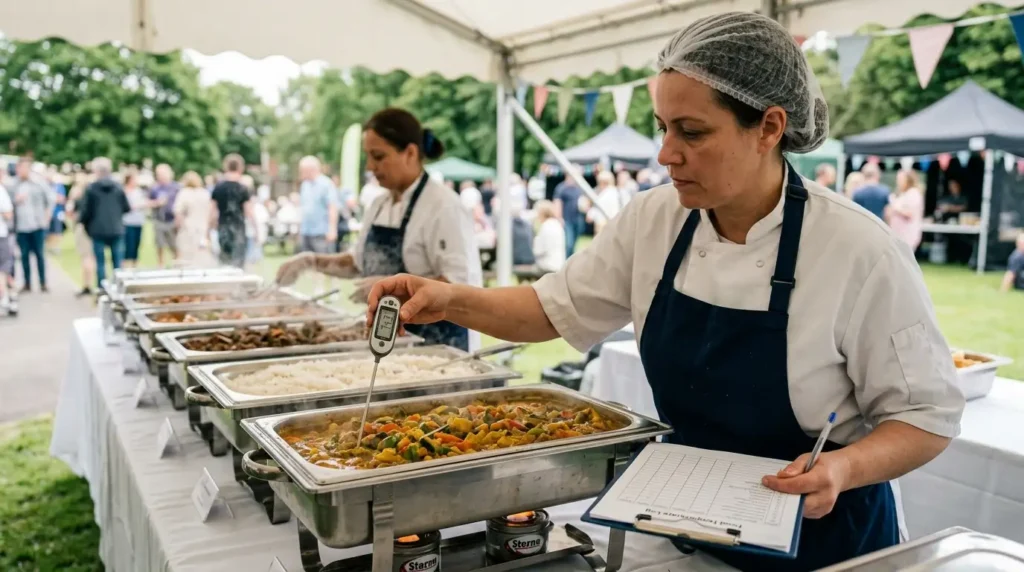
UK food safety law applies wherever food is served. Once food leaves your kitchen, your legal responsibilities travel with it.
That includes your obligations under the Food Hygiene Regulations 2006 and your HACCP procedures.
Hot Food Temperature Rules
Hot food must stay at or above 63°C during service.
If the food drops below 63°C, the clock starts immediately. You have a maximum of 2 hours before the food must be discarded.
That is why fuel levels, hot holding equipment, and temperature checks matter so much at events.
Cold Food Temperature Rules
Cold food must stay at or below 8°C.
Best practice is to keep it below 5°C whenever possible.
To maintain safe temperatures during transport and service, use:
- ▸ Insulated cool boxes
- ▸ Ice packs or bagged ice
- ▸ Covered containers
- ▸ Minimal exposure during setup
When Food Must Be Disposed Of
If food has been transported, held, and is approaching the 2-hour temperature limit, do not continue serving it.
Dispose of the food safely and record the disposal in your temperature log.
Trying to stretch service times with unsafe food is one of the fastest ways to fail an inspection.
Portable Handwash Stations
Many outdoor events legally require portable handwash stations.
This is especially common at:
- ▸ Festivals
- ▸ Markets
- ▸ Community events
- ▸ Temporary outdoor venues
If fixed plumbing is unavailable, local authority guidance will usually require portable handwashing facilities for food handlers.
Always confirm requirements with:
- ▸ The event organiser
- ▸ The local council for the event location
Food Date Labels
Every prepared food container leaving your kitchen should be labelled clearly.
Include:
- ▸ Food name or contents
- ▸ Preparation date
- ▸ Use-by date
This applies to gastronorm containers, prep tubs, and transported holding trays.
If Environmental Health Officers inspect your setup, unlabelled food containers are an immediate compliance issue.
Allergen Information
Customers must be able to access allergen information at the point of service.
Your team should know the allergen content of every dish being served.
For larger events, the easiest approach is usually:
- ▸ Printed allergen menus
- ▸ Allergen cards at serving stations
- ▸ Clearly labelled buffet signage
This keeps the service smoother and reduces the risk of staff giving incorrect information under pressure.
Equipment Event Caterers Commonly Forget
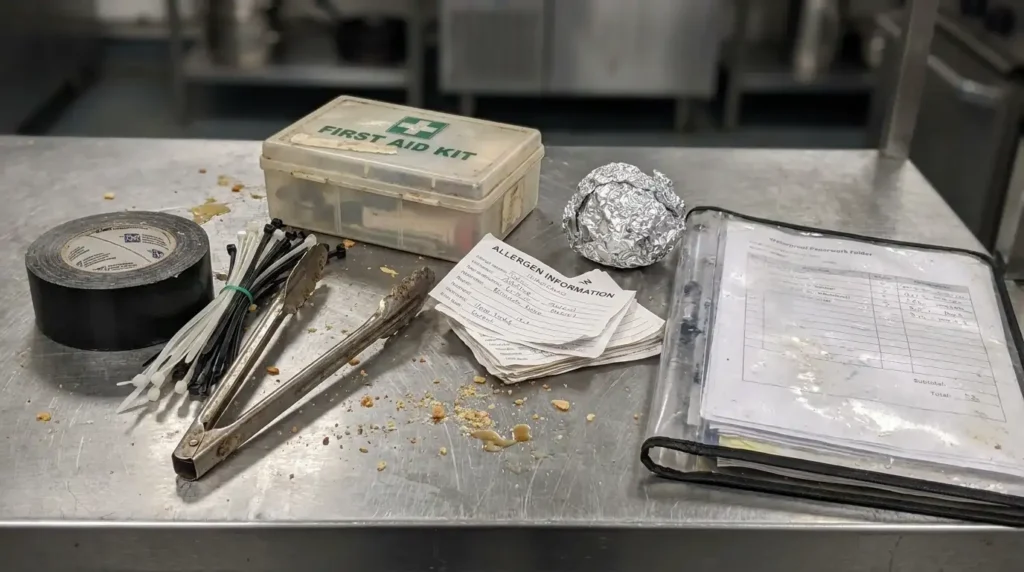
Some of the most important event supplies are also the easiest to forget. These small items solve problems quickly and can save a service from unnecessary stress.
Cable Ties and Gaffa Tape
These get used constantly during setup.
They help with:
- ▸ Securing tablecloths outdoors
- ▸ Managing loose cables
- ▸ Fixing last-minute setup issues
- ▸ Stabilising lightweight signage
Most experienced caterers pack far more than they think they will need.
A First Aid Kit
A first aid kit is not optional at public catering events. It is a legal requirement for food businesses operating on-site.
Keep it easy to access and make sure staff know where it is stored.
Extra Serving Utensils
Serving spoons and tongs get dropped more often than people expect.
Once a utensil hits the floor, it is out of service immediately.
At larger events, always carry a spare:
- ▸ Tongs
- ▸ Serving spoons
- ▸ Ladles
- ▸ Portion scoops
Without backups, buffet service slows down very quickly.
Separate Waste Bags for Used Utensils
A dedicated bin bag or container for used utensils makes clean-down far easier.
It also helps prevent clean and dirty equipment from getting mixed together during busy service periods.
Printed Allergen Menus or Allergen Cards
Guests regularly ask about allergens, especially at weddings and corporate events.
Printed allergen cards save time and reduce mistakes.
Instead of explaining every dish repeatedly, staff can quickly direct guests to clear written information.
Waterproof Storage for Temperature Logs
Outdoor catering and paper records rarely work well together.
Rain, spills, and condensation can ruin paperwork fast.
A waterproof folder or sealed plastic container keeps your:
- ▸ Temperature logs
- ▸ HACCP sheets
- ▸ Allergen records
- ▸ Delivery notes
safe throughout the event.
Foil or Cling Wrap
These are often forgotten but constantly useful.
Foil and cling film help protect food during:
- ▸ Transport
- ▸ Buffet setup
- ▸ Course changeovers
- ▸ Temporary holding periods
They also keep serving platters cleaner between service stages.
Disposables vs Reusable at Events
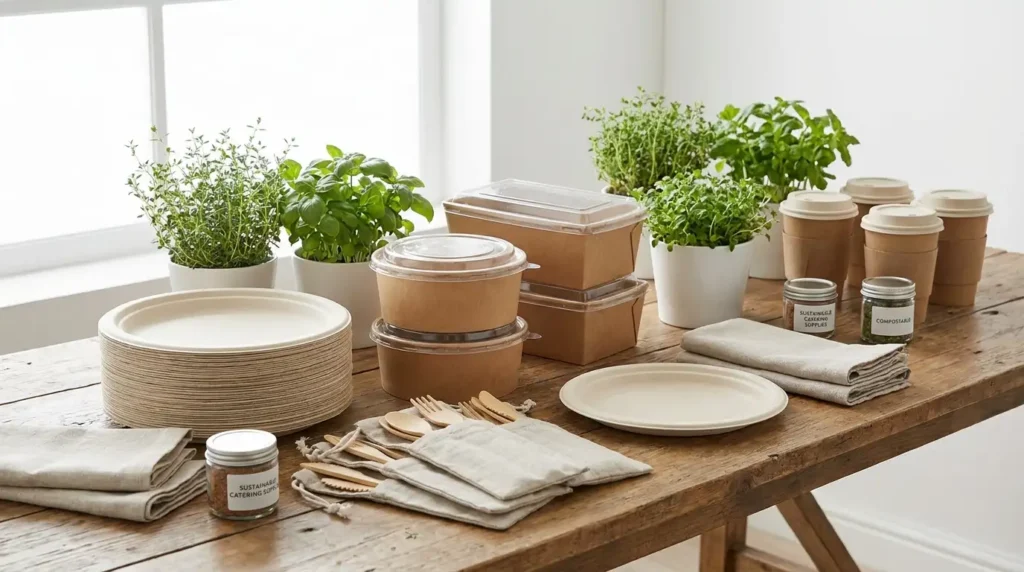
Most event caterers still rely heavily on disposables.
The reason is simple. Reusable plates, glasses, and cutlery create extra work at every stage of the event.
You need to:
- ▸ Transport them safely
- ▸ Collect them after service
- ▸ Wash them properly
- ▸ Pack and return them
For many events, especially outdoor catering, disposables are simply more practical.
UK Packaging Rules for 2026
If you use disposables, they must comply with current UK packaging regulations.
The following single-use plastic items are banned from customer supply in England:
- ▸ Plastic cutlery
- ▸ Plastic plates and bowls
- ▸ Polystyrene food containers
- ▸ Polystyrene cups
- ▸ Plastic stirrers
Common Eco-Friendly Alternatives
Most UK caterers now use:
- ▸ Bagasse plates and bowls
- ▸ Kraft paper food containers
- ▸ Wooden cutlery
- ▸ CPLA cutlery
These options are widely available and work well for most catering setups.
Typical Disposable Costs Per Guest
For standard eco-friendly disposable setups, most caterers budget around:
- ▸ £1.50 to £2.50 per guest for standard service
- ▸ £2.50 to £4.00 per guest for premium or branded options
That usually includes:
- ▸ Plate or container
- ▸ Cutlery
- ▸ Cup
- ▸ Napkin
At larger events, ordering full case quantities can reduce per-unit costs significantly.
For 500-guest events, bulk ordering often lowers pricing by 20% to 30% compared to smaller orders.
Buying Catering Supplies for Events in the UK
We Can Source It supplies a full range of catering products for UK events, including:
- ▸ Disposable plates, cups, and cutlery
- ▸ Paper napkins
- ▸ Serving equipment
- ▸ Food date labels
- ▸ Gastronorm containers
- ▸ Insulated food carriers
- ▸ Hygiene supplies
- ▸ Waste management products
Trade pricing and bulk case quantities are available, with delivery across the UK.
Browse the full catering range here: Catering Supplies Collection
👉 For a broader guide covering bar equipment, kitchen essentials, disposables, and hygiene products, see: Catering Supplies UK Guide
Frequently Asked Questions
What catering supplies do I need for a 100-person event?
For a 100-guest event, you will usually need:
- ▸ Around 110 plates or food containers
- ▸ 120 cutlery sets
- ▸ 400 napkins
- ▸ 130 cups or glasses
- ▸ 6 to 8 chafing dishes with fuel
- ▸ Serving utensils, gloves, and sanitiser
Always add a 20% backup quantity for consumables. If the venue has no fixed plumbing, you may also need a portable handwash station.
How much do catering supplies cost per person for a UK event?
For eco-friendly disposable setups, most UK caterers budget:
- ▸ £1.50 to £2.50 per guest for standard options
- ▸ £2.50 to £4.00 per guest for premium or branded products
Buying in full case quantities usually lowers the per-unit cost.
What food temperature rules apply to event catering in the UK?
Hot food must stay at or above 63°C during service.
Cold food must stay at or below 8°C, with under 5°C considered best practice.
If food stays outside safe temperature limits for more than 2 hours, it should be disposed of and recorded in your temperature log.
Are plastic plates and cutlery banned at UK events?
Yes. England banned several single-use plastic items in October 2023, including:
- ▸ Plastic plates and bowls
- ▸ Plastic cutlery
- ▸ Polystyrene food containers
- ▸ Plastic stirrers
Most caterers now use bagasse plates, kraft paper containers, or wooden cutlery instead.
How far in advance should I order catering supplies for a large event?
For standard stock items, order at least 2 to 3 weeks before the event.
For branded or custom-printed products, allow 3 to 4 weeks.
For events with more than 500 guests, ordering 4 to 6 weeks ahead helps avoid stock or delivery issues.
Author
We Can Source It, Team
We Can Source It is a UK-based specialist supplier of catering and hospitality supplies for restaurants, cafes, bars, hotels, and event caterers across the United Kingdom.