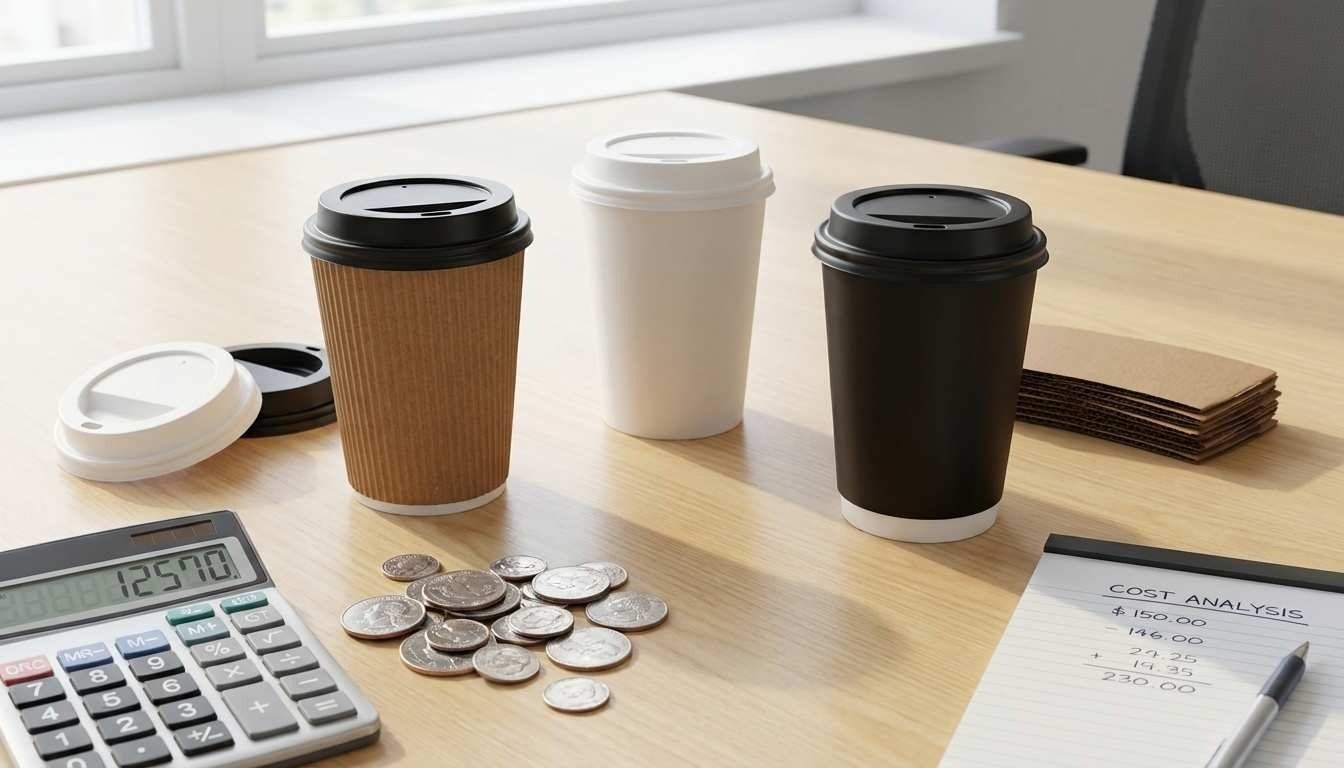
Businesses that purchase takeaway packaging quickly learn that the listed unit price of a paper cup is only part of the total cost. Professionals working in foodservice procurement and packaging management know that the true price of paper cups includes accessories, logistics, and operational waste.
The true price of paper cups includes the cup unit cost plus lids, sleeves, storage space, transport, handling time, and waste from unused or damaged stock. For cafés and takeaway businesses in the UK, these additional costs can significantly increase the real per-drink packaging expense.
This guide breaks down the true price of paper cups so coffee shops and foodservice operators can make smarter purchasing decisions.
What does the “true price of paper cups” actually mean?
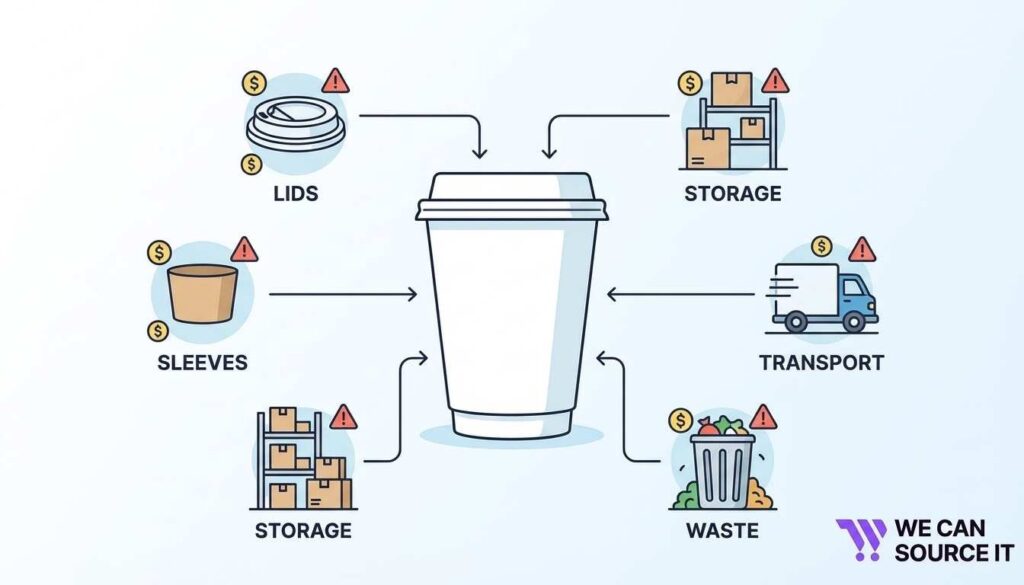
The true price of paper coffee cups is the total operational cost of using them—not just the price printed on the supplier invoice.
Most buyers focus on the per-cup price, but several hidden cost factors affect the real expense.
Key components of the true price
- Cup unit price
- Plastic or fibre lids
- Cup sleeves (for single-wall cups)
- Shipping and delivery
- Storage space
- Staff handling time
- Waste from damaged or unused stock
Key takeaway: A cup that looks cheaper per unit may actually cost more when all factors are included.
How much do paper cups actually cost per unit?
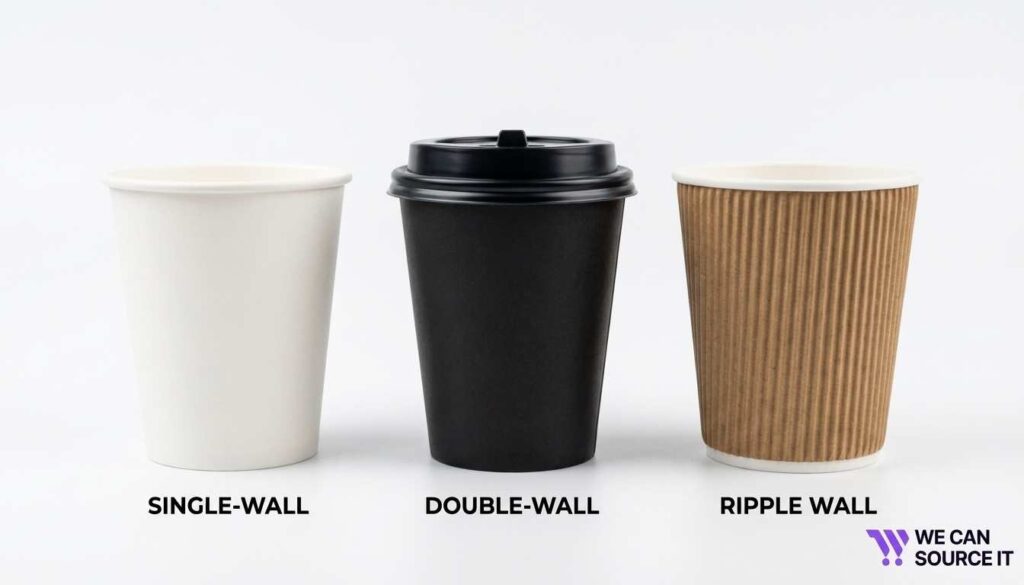
The unit price of paper cups varies depending on size, construction, and order volume.
In UK foodservice supply chains, common cup types include single-wall, double-wall, and ripple cups.
| Cup Type | Typical Unit Cost Range | Notes |
| Single-wall paper cup | Lowest unit price | Often requires sleeves |
| Double-wall cup | Moderate price | Built-in insulation |
| Ripple cup | Higher price | No sleeve required |
However, the lowest unit price does not always produce the lowest operational cost.
For example:
- A cheap single-wall cup may require extra sleeves
- A ripple cup may eliminate sleeve costs entirely
Key takeaway: The cheapest cup per unit may not be the most cost-effective option overall.
Why do lids significantly affect the true price of paper cups?
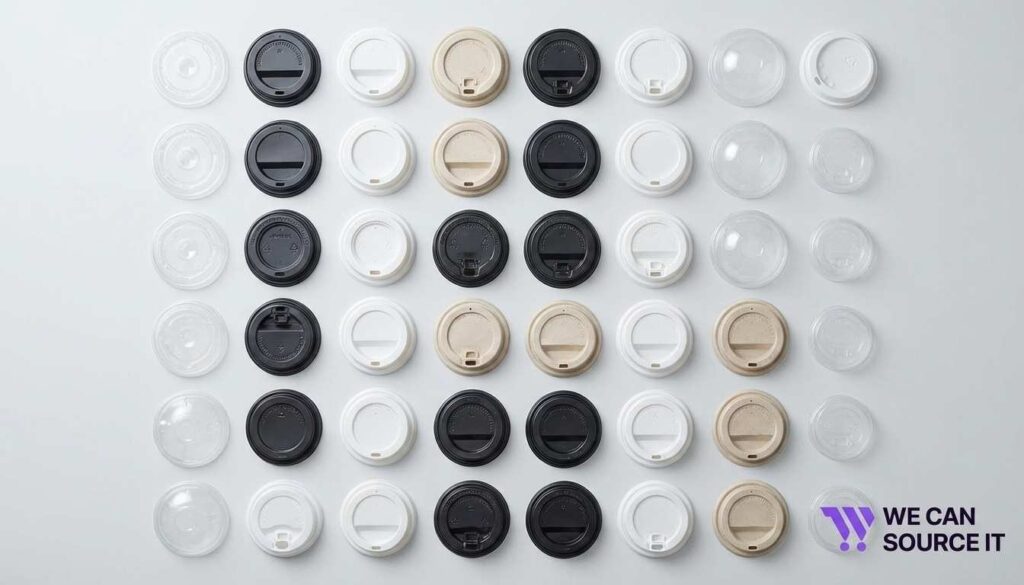
Lids are one of the highest hidden costs in takeaway beverage packaging.
Most hot drink cups require a compatible lid, which adds a separate unit cost.
Typical considerations include:
- Lid price per unit
- Compatibility with cup rims
- Inventory management for multiple sizes
If cafés offer several cup sizes (8oz, 12oz, 16oz), they may also need multiple lid sizes, increasing stock complexity.
Operational impacts include:
- More SKUs to manage
- Higher storage requirements
- Increased ordering complexity
Key takeaway: Lid costs and compatibility management are a major part of the true price of paper cups.
Do cup sleeves increase the total packaging cost?
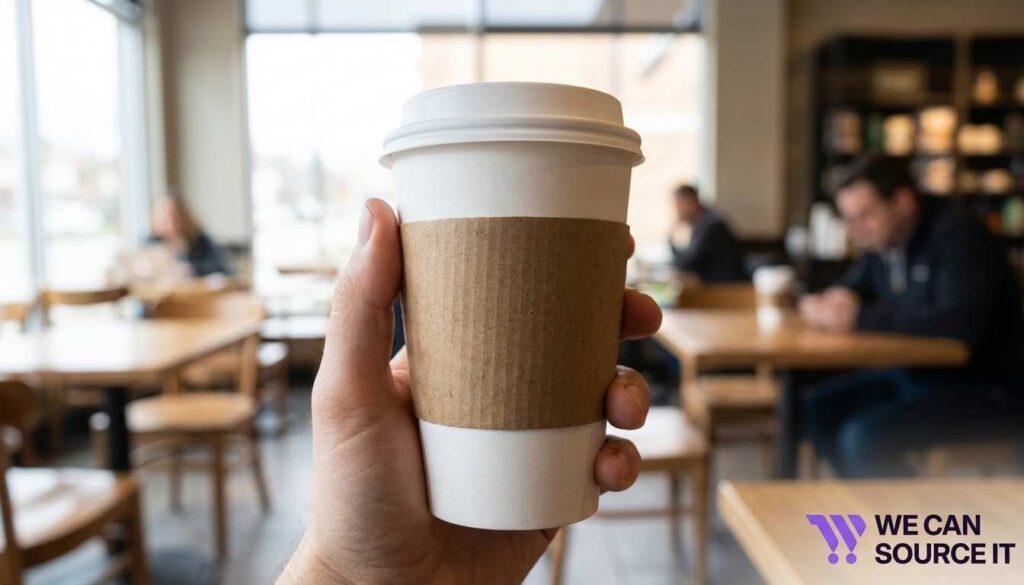
Yes. Cup sleeves can significantly increase packaging costs when used with single-wall cups.
Sleeves are often required to protect customers’ hands from hot beverages.
Typical sleeve costs include:
- Sleeve unit price
- Storage space
- Additional packing steps during service
Example scenario:
| Packaging Setup | Components | Operational Impact |
| Single-wall cup + sleeve | Cup + sleeve | Extra cost and handling |
| Double-wall cup | Cup only | Moderate cost |
| Ripple cup | Cup only | Higher unit price but no sleeve |
Many cafés choose double-wall or ripple cups specifically to eliminate sleeve costs.
Key takeaway: Sleeves can turn a low-cost cup into a higher-cost packaging solution.
How do storage and logistics affect cup costs?
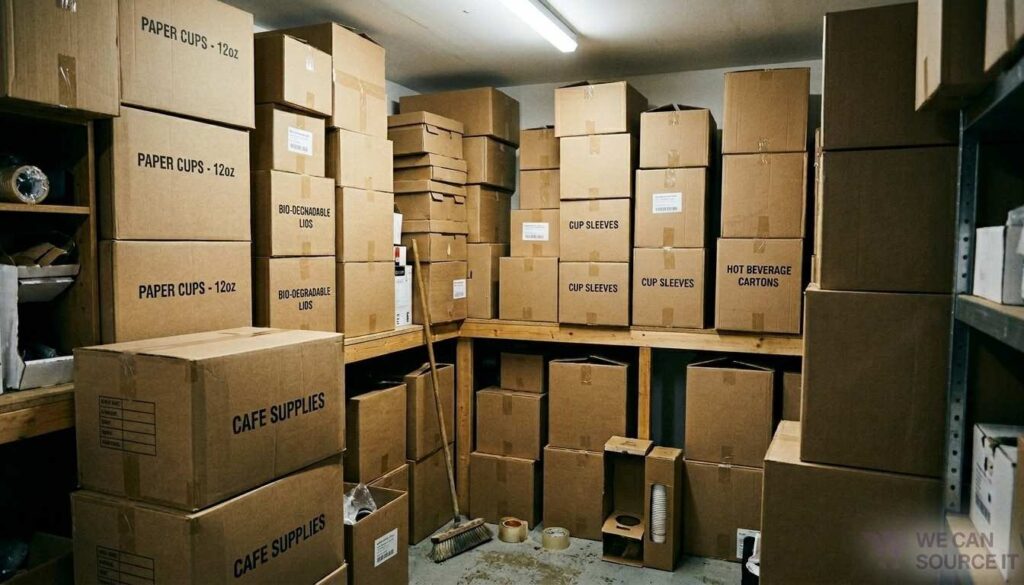
Storage space is a hidden operational cost many businesses overlook.
Paper cups, lids, and sleeves are typically delivered in large cartons. These require space in:
- Stock rooms
- Kitchen storage areas
- Warehouse shelving
When multiple cup sizes and lid types are used, the number of cartons increases.
Operational challenges include:
- Limited back-of-house storage
- Increased stock management
- Risk of over-ordering or under-ordering
In urban cafés with limited storage space, simplifying packaging systems can reduce operational friction.
Key takeaway: Storage costs and logistics complexity contribute to the true price of paper cups.
How does waste increase the real cost of paper cups?
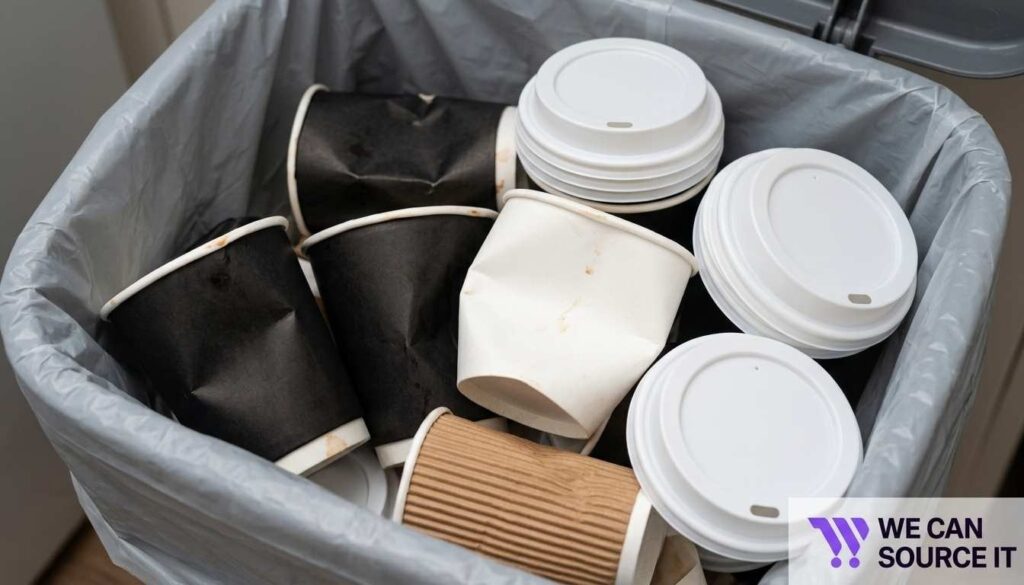
Packaging waste directly increases the effective price per cup used.
Waste occurs in several ways:
- Damaged cups during transport
- Incorrect lid sizes ordered
- Overstocked packaging
- Unused seasonal inventory
For example:
If a café buys 10,000 cups but discards 500 due to damage or mismatch, the effective cost per usable cup increases.
Waste also affects:
- Sustainability targets
- Waste disposal costs
- Operational efficiency
Key takeaway: Reducing packaging waste helps lower the real cost per drink served.
Are premium cups sometimes cheaper overall?
Yes. In some cases, higher-quality cups reduce overall packaging costs.
This happens when premium cups eliminate additional components, such as sleeves.
Example comparison:
| Option | Components | Potential Outcome |
| Single-wall cup | Cup + sleeve | Lower cup price but extra sleeve cost |
| Ripple cup | Cup only | Higher cup price but fewer accessories |
When labour, handling, and inventory are taken into account, the ripple cup option may be the more efficient solution.
Key takeaway: Operational efficiency can make higher-priced cups more cost-effective in practice.
How can cafés reduce the true price of paper cups?
The most effective way to reduce costs is to simplify packaging systems.
Strategies include:
1. Standardise cup sizes
Using fewer cup sizes reduces the number of lids required.
2. Choose cups with built-in insulation
Double-wall or ripple cups can eliminate sleeves.
3. Work with compatible packaging systems
Using cups and lids from the same supplier reduces mismatch waste.
4. Monitor packaging waste
Tracking damaged or unused stock improves ordering accuracy.
Key takeaway: Packaging efficiency, not just unit price, determines the true price of paper cups.
Related guide: For a deeper breakdown of cost structures in takeaway packaging, see the pillar guide section on Understanding the True Price of Paper Cups. This section explains how cafés evaluate cup pricing, operational costs, and procurement strategies.
FAQ
Why is the cheapest paper cup not always the best option?
Because additional costs, such as sleeves, lids, and waste, can increase the real cost per drink served.
Do ripple cups reduce packaging costs?
Often yes. Ripple cups provide built-in insulation, which removes the need for sleeves and simplifies packaging systems.
What factors affect the true price of paper cups?
The main factors include unit price, lids, sleeves, storage space, logistics, and packaging waste.