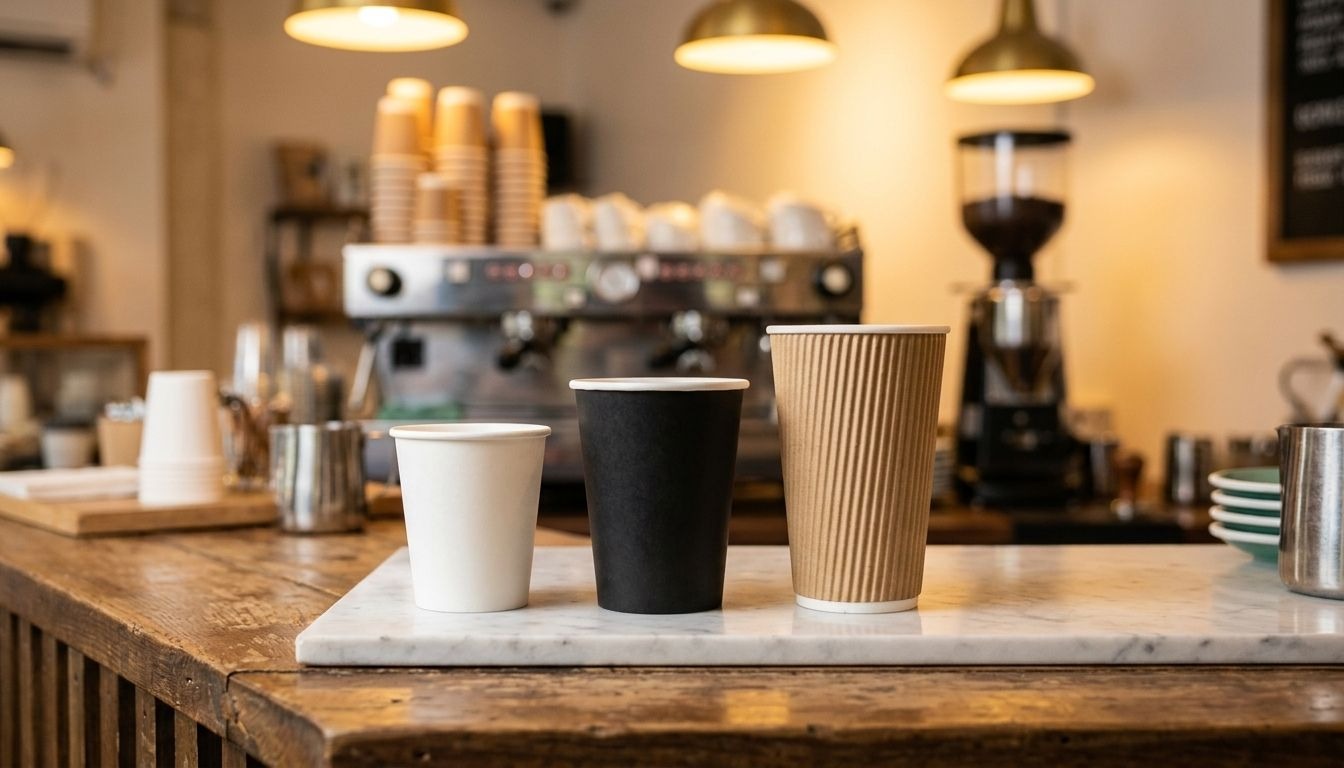
I’ve worked with UK coffee shops on packaging strategy, supplier selection, and margin optimisation, and one operational decision consistently affects profitability more than expected: cup sizing.
Choosing the right cup size means balancing drink structure, customer expectation, lid compatibility, and per-serve profit margin. In the UK, most shops centre their menu around 12 oz as the standard coffee cup, then build other sizes around it.
If your sizes are wrong, your margins and workflow suffer.
What does “choosing the right cup size” actually mean?
It means selecting cup volumes that match your recipes, pricing structure, and customer expectations, not just copying competitors.
In practical terms, you are deciding:
- How much milk goes into each drink
- How many sizes you will stock
- Which paper coffee cups and paper cup lids you need
- How pricing tiers are structured
Key takeaway: Cup size is a menu engineering decision, not just a packaging choice.
How does coffee cup size affect your profit margin?
Cup size directly affects milk cost, syrup usage, lid cost, and perceived value.
A 4 oz increase (from 12 oz to 16 oz) typically increases:
- Milk usage by 25–35%
- Syrup and topping cost
- Cup and lid cost
- Waste risk during busy periods
But customers often expect only a small price difference between medium and large.
Example margin comparison (simplified)
| Size | Milk Used | Cup + Lid Cost | Typical UK Price | Margin Risk |
| 8 oz | Low | Lower | £2.80–£3.20 | Safe |
| 12 oz | Moderate | Moderate | £3.20–£3.80 | Balanced |
| 16 oz | High | Higher | £3.60–£4.20 | Tight |
If your 16 oz isn’t priced correctly, it quietly reduces profitability.
Key takeaway: The most profitable size is usually the one that balances volume and perceived value, often 12 oz in the UK.
Is 12 oz really the standard coffee cup in the UK?
Yes, 12 oz takeaway coffee cups are widely considered the UK “regular” size.
This size works because:
- It fits a double espresso + steamed milk ratio
- Customers expect it as a medium
- Most paper cup packaging suppliers stock it heavily
- 89–90 mm paper cup lids are widely available
Standardising around 12 oz reduces:
- Inventory complexity
- Supplier dependency
- Lid mismatch issues
For most UK takeaway coffee cups, 12 oz accounts for the majority of hot drink sales.
Should you offer 8 oz, 12 oz, and 16 oz — or fewer sizes?
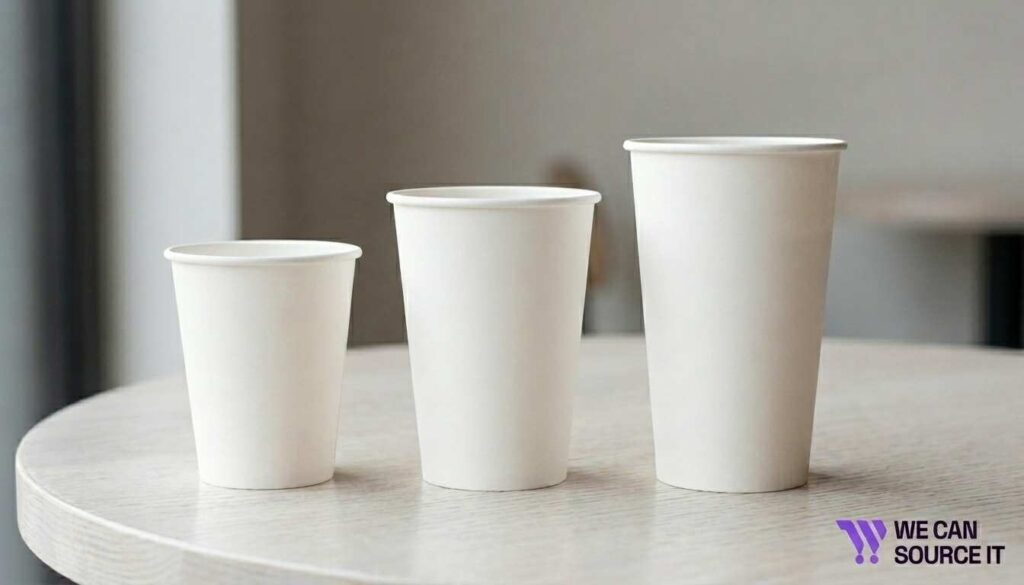
Most independent coffee shops perform best with 2–3 sizes maximum.
Here’s why:
- Fewer SKUs = simpler stock management
- Faster service during rush hours
- Lower risk of ordering mistakes
- Easier milk forecasting
Typical UK structure:
- 8 oz – Flat whites and smaller drinks
- 12 oz – Standard coffee cup (core seller)
- 16 oz – Upsell option
Shops offering more than three sizes often see operational friction without meaningful revenue gain.
Key takeaway: More sizes do not automatically mean more profit.
How do paper cup lids influence your cup size decision?
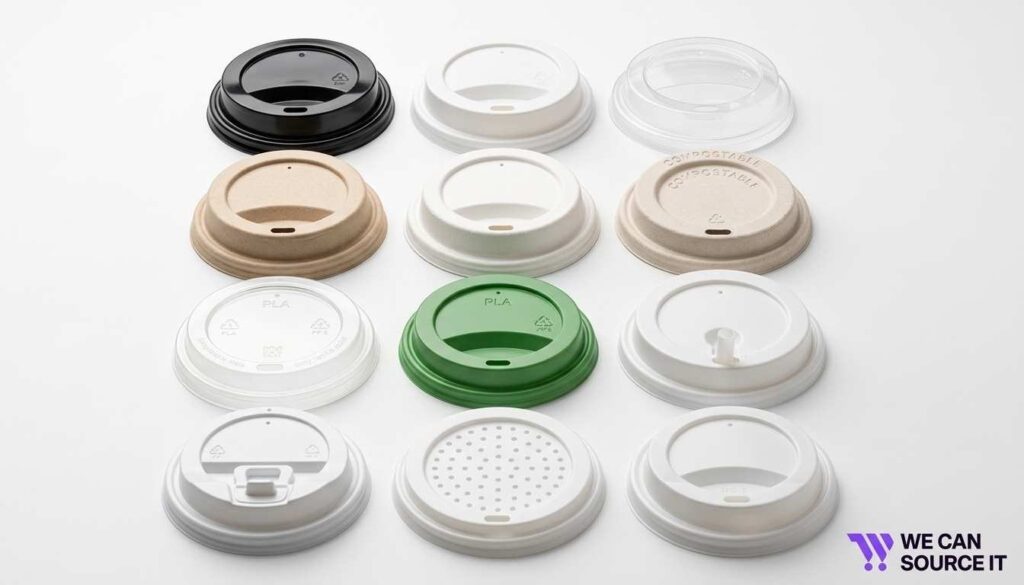
Lid compatibility is a hidden operational factor when choosing the right cup size.
Most UK paper coffee cups use:
- 80 mm rims for 8 oz
- 89–90 mm rims for 12 oz and 16 oz
If your 12 oz and 16 oz share the same lid size, you reduce:
- Storage space
- Order quantities
- Dead stock
When sourcing disposable coffee cups, always confirm:
- Rim diameter
- Lid material compatibility
- Heat resistance
Paper cup packaging decisions should simplify, not complicate.
How do you calculate margin per cup size?
You calculate margin by subtracting total drink cost from retail price — and cup size directly affects total drink cost.
Basic formula:
Retail Price + Espresso cost + Milk cost + Syrup/toppings + Cup + lid cost = Gross margin per drink
Example (illustrative only):
- 12 oz latte price: £3.50
- Ingredient + packaging cost: £1.10
- Gross margin: £2.40
If milk usage increases for 16 oz but price only rises by £0.40, your margin shrinks.
Key takeaway: Upsizing without proportionate pricing reduces profitability.
Does cup size affect customer perception?

Yes, cup size influences perceived value more than actual volume.
Customers typically judge value by:
- Visual fullness
- Cup height
- Familiar size labels (“regular”, “large”)
If your 8 oz is labelled “regular,” customers may feel short-changed — even if it matches traditional espresso ratios.
Aligning your coffee cup size with UK expectations prevents this friction.
What are common mistakes when choosing takeaway coffee cup sizes?
Most mistakes come from overcomplication or poor pricing alignment.
Common errors:
- Offering too many sizes
- Not adjusting milk ratios per size
- Using different lid diameters unnecessarily
- Underpricing larger cups
- Ignoring storage constraints
Each mistake increases operational cost.
Simplification improves consistency and margin.
Final Recommendation for UK Coffee Shops
If you are choosing the right cup size today:
- Make 12 oz your primary standard coffee cup.
- Add 8 oz for speciality drinks.
- Use 16 oz strategically as an upsell.
- Align lid sizes wherever possible.
- Recalculate margin per size quarterly.
Cup sizing should support workflow, cost control, and customer expectation — not complicate them.
FAQ
What is the most profitable coffee cup size in the UK?
In most cases, 12 oz offers the strongest balance between cost control and perceived value, making it the most commercially stable size.
How many cup sizes should a small coffee shop offer?
Two to three sizes are typically optimal. More than that increases stock complexity without significantly improving revenue.
Do takeaway coffee cups UK suppliers standardise sizes?
Yes. Most suppliers stock 8 oz, 12 oz, and 16 oz as core sizes, with standardised lid diameters for easier sourcing.