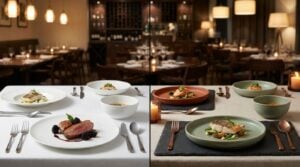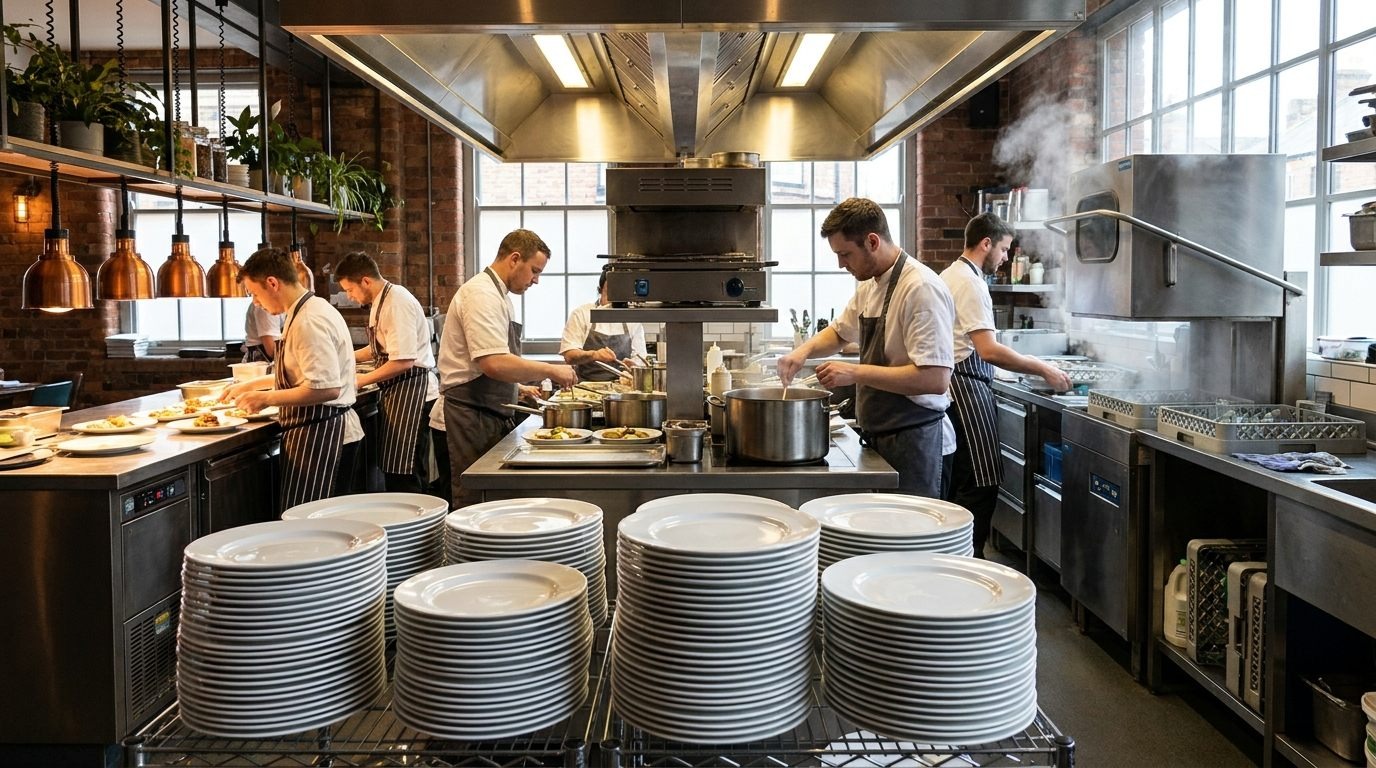
Most restaurant owners order crockery the same way. They count their seats, order one set per cover, and then spend the next six months constantly running out of side plates during a Saturday rush or pulling wet plates off the rack mid-service.
The question is not just how much crockery a restaurant needs. It is how much crockery you need to run a smooth service without constantly patching gaps in your stock.
At We Can Source It, we have helped restaurants, cafes, pubs, hotels, schools, and catering businesses source crockery for operations ranging from 20 covers to several hundred. What follows is the actual formula we see working in the field, along with every variable that changes it: dining style, table turnover, washing cycle time, breakage rate, menu format, and storage capacity.
Quick Reference: Restaurant Crockery Formula
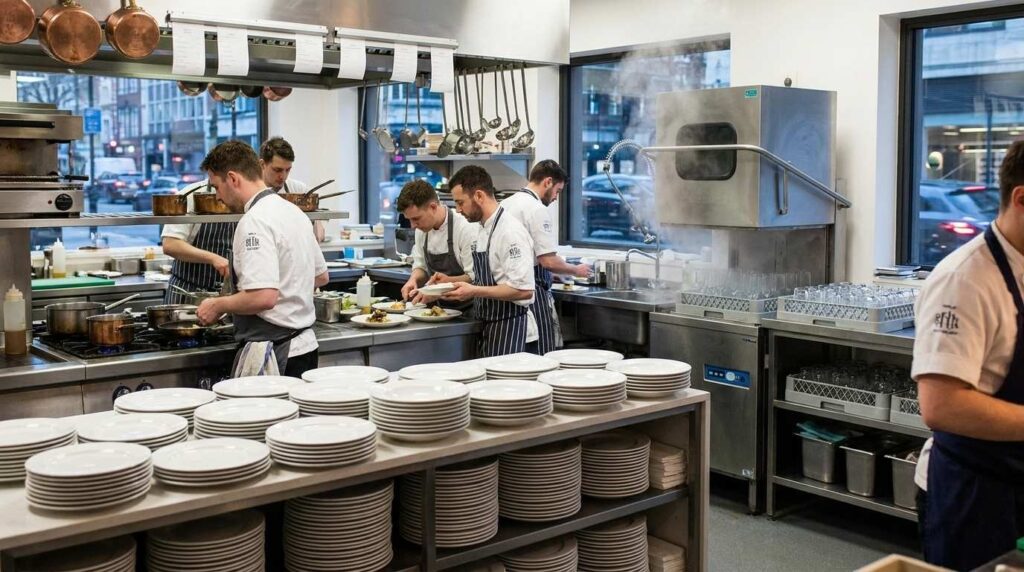
Seats x Covers Per Seat x Wash Cycle Multiplier + Breakage Buffer = Total Crockery Required
Use the table below as a starting point, then read on to adjust for your specific operation:
| Seats | Dinner Plates Needed (approx.) |
| 20 | 48 |
| 40 | 96 |
| 50 | 115, typically rounded to 120 for case ordering |
| 60 | 138 |
| 80 | 192 |
| 100 | 230 |
Based on a 2x operational multiplier and 15% breakage buffer. Adjust using the layers below.
Expert Tip: If you are uncertain between two stock levels, always choose the higher number. Running out of plates during service costs more in operational disruption than carrying additional stock on the shelf.
The Core Formula: Where to Start
Before anything else, there is a baseline calculation that applies to almost every restaurant operation:
Total crockery needed = (Seats x Covers per seat per service) x Safety multiplier
But that alone is too blunt. The real calculation requires you to work through four layers:
- Seat-to-cover ratio (how many of each item per seat)
- Operational multiplier (based on your wash cycle time)
- Breakage allowance (ongoing replacement buffer)
- Service format adjustments (à la carte, set menu, buffet, cafe)
Let us work through each one.
Layer 1: Seat-to-Cover Ratio
This is the foundation. For every seat in your restaurant, how many of each crockery piece does one cover require?
Standard à la carte Dinner Service
| Crockery Item | Pieces Per Cover |
| Dinner plate (main) | 1 |
| Side plate / bread plate | 1 |
| Starter plate or bowl | 1 |
| Soup bowl | 1 (if soup on menu) |
| Dessert plate or bowl | 1 |
| Teacup and saucer | 1 |
A 60-seat restaurant running a standard three-course dinner service needs at minimum 60 of each applicable item, before any other variables are factored in.
Fine Dining
Fine dining increases the count significantly. Multiple courses, amuse-bouche presentations, pre-dessert plates, petit fours dishes, and cheese boards all add pieces per cover. Expect to need 8 to 12 different plate and bowl types per cover rather than the typical 4 to 6.
Cafes and Brunch Operations
The mix shifts heavily toward:
- ▸ Breakfast plates (larger, often oval)
- ▸ Small plates for pastries and toast
- ▸Soup bowls doubling as porridge bowls
- ▸ A high ratio of cups, saucers, and mugs
A 40-seat cafe may need 150 to 200 mugs in circulation at any one time, given table turnover and the time cups sit with customers during long coffee sessions.
Set Menu and Tasting Menu Restaurants
Set menus simplify plate selection but increase total volume. Every cover uses the same sequence of plates, which means all plates from Course 1 may need washing before the next seating can begin. This tightens your window and requires more total stock.
Layer 2: The Operational Multiplier and Your Wash Cycle Time
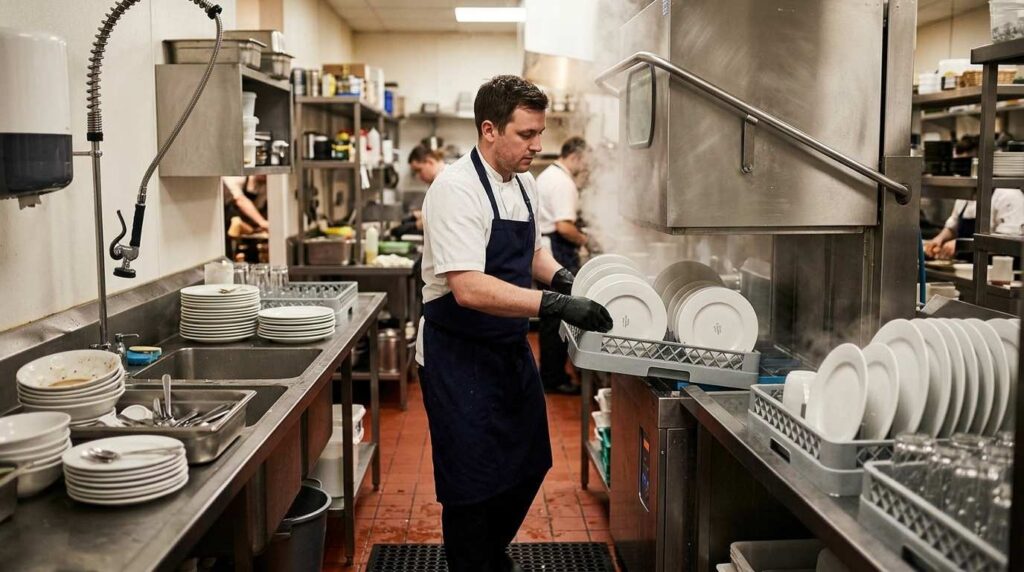
This is the variable most operators ignore, and it is the one that causes service chaos.
The operational multiplier accounts for the fact that plates in use are not available. They are on tables, being bussed, in the wash cycle, drying, or being restacked.
How to Calculate Your Wash Cycle Window
Wash cycle time = table bussing time + dishwasher cycle time + drying and racking time
In a typical UK restaurant kitchen using a rack or pass-through dishwasher:
- ▸ Bussing tables: 5 to 10 minutes
- ▸ Dishwasher cycle: 2 to 4 minutes (commercial rack dishwasher)
- ▸ Drying and racking: 5 to 10 minutes
- ▸ Total: 12 to 24 minutes
During that 12 to 24-minute window, any plate that has left the table is unavailable.
Applying the Multiplier
If your dining room turns over within 45 to 60 minutes per cover and your wash cycle takes 20 minutes, you need roughly 1.5 to 2x your baseline seat count to keep stock in circulation.
| Wash Cycle Time | Recommended Multiplier |
| Under 15 minutes | 1.5x |
| 15 to 25 minutes | 2x |
| 25 to 40 minutes | 2.5x |
| Over 40 minutes (manual wash) | 3x |
Example: 60 seats x 1 dinner plate per cover x 2x multiplier = 120 dinner plates minimum.
Add your breakage buffer (covered next), and you are looking at 130 to 140 dinner plates for a 60-seat restaurant running a 20-minute wash cycle.
Layer 3: Breakage Allowance
Breakage is an operational cost, not a crisis. Plan for it from day one, and you will not face the situation of running a service short of plates because three broke last week and nobody reordered.
Industry Breakage Benchmarks
The hospitality industry typically operates on a 10 to 15% annual breakage rate for standard commercial crockery. Some categories break more than others:
| Item | Relative Breakage Risk |
| Dinner plates | Medium |
| Side plates | Medium-High (dropped during bussing) |
| Soup bowls | High (hot contents, awkward grip) |
| Espresso cups | Very High |
| Teacups and saucers | High |
| Ramekins | Medium |
| Serving platters | Low-Medium |
Building the Buffer Into Your Order
If you calculate that you need 120 dinner plates operationally, add 15% on top:
120 + (120 x 0.15) = 138 dinner plates
Round up to the next complete pack size from your supplier. Most commercial crockery is sold in cases of 6, 12, or 24. Order accordingly rather than trying to match an exact number.
Ongoing Replacement Orders
Set a quarterly crockery audit into your operations calendar. Count stock, note breakages, and reorder before you hit a critical shortage. A simple stock sheet for each crockery category prevents panic-ordering that ends up costing more and sometimes arriving in the wrong size or pattern.
When to replace restaurant crockery should be decided by your audit results, not by guesswork. Most UK restaurants doing regular audits replace 10 to 20% of their total stock per year.
Layer 4: Service Format Adjustments
Your dining format changes almost every number above. Here is how to adjust by operation type.
High-Turnover Restaurants (Fast Casual, Brasseries)
Tables turn quickly, sometimes 3 to 4 covers per seat per service. Your wash cycle becomes the bottleneck. Even with a fast commercial dishwasher, high volume means you need more plates in the cycle at any one time.
Rule of thumb: For every additional cover per seat per service beyond one, add 0.5x to your multiplier.
A restaurant with 3 covers per seat per evening service and a 20-minute wash cycle should plan on:
- ▸ Baseline multiplier: 2x
- ▸ Additional covers: +1x (for 2 extra covers per seat)
- ▸ Total multiplier: 3x
- ▸ 60 seats x 3x = 180 dinner plates minimum, before breakage.
Destination Dining (Long Tables, 2-Hour+ Covers)
Plates come back slowly. Your wash cycle is less of a constraint, as the table itself holds most of your stock for a long time. You can use a lower multiplier (1.5x), but your per-cover piece count may be higher if the menu is more elaborate.
Brunch and All-Day Cafes
The challenge here is not turnover but category mix. Brunch services pile up used plates fast, and the same plates serve double duty (breakfast plates work for avocado toast, salads, and cakes). A mixed menu means less predictability about which plate gets used most.
Order extra of your most versatile plate, typically a 10 to 11-inch flat plate or a medium shallow bowl, and keep a generous buffer.
Functions and Private Dining
If you take functions or run private dining events, calculate separately from your restaurant operation. A 40-person function dinner requires 40 of every course plate in one hit, all going out simultaneously, all coming back simultaneously. This rarely overlaps neatly with your main service stock. Either you close the restaurant that night, or you need dedicated function stock.
Planning for Christmas and Peak Seasons
Peak trading periods are when crockery shortfalls become genuine service failures. Christmas parties, Valentine’s Day, Mother’s Day, and wedding season all spike demand, often with back-to-back fully booked services that compress your wash cycle time to its limit.
What to factor in:
- ▸ Back-to-back sittings: If you are running two full sittings with 30 minutes between them, there is almost no time to complete a full wash cycle before the next cover sits down. Your operational multiplier should increase to 2.5 to 3x during these periods.
- ▸ Private events alongside main service: If you are hosting a 30-cover Christmas party in your private dining room while running main service, those 30 covers draw from your total stock simultaneously.
- ▸ Seasonal menu changes: A Christmas menu with extra courses such as cheese board, amuse-bouche, or mince pie plate adds pieces per cover. Recalculate before the festive season begins.
The fix: Audit your crockery in October or early November. Order any replacement or additional stock before the pre-Christmas rush hits supplier lead times.
Crockery by Category: Specific Quantities to Order
Using the formula above, here is a practical guide for two common restaurant sizes.
40-Seat Restaurant (2x Multiplier, 15% Breakage Buffer)
| Item | Base Need | With 2x Multiplier | With 15% Buffer | Round Up To |
| Dinner plates | 40 | 80 | 92 | 96 (4 cases of 24) |
| Side plates | 40 | 80 | 92 | 96 |
| Starter plates | 40 | 80 | 92 | 96 |
| Soup bowls | 40 | 80 | 92 | 96 |
| Dessert plates | 40 | 80 | 92 | 96 |
| Teacups | 40 | 80 | 92 | 96 |
| Saucers | 40 | 80 | 92 | 96 |
80-Seat Restaurant (2x Multiplier, 15% Breakage Buffer)
| Item | Base Need | With 2x Multiplier | With 15% Buffer | Round Up To |
| Dinner plates | 80 | 160 | 184 | 192 |
| Side plates | 80 | 160 | 184 | 192 |
| Starter plates | 80 | 160 | 184 | 192 |
| Soup bowls | 80 | 160 | 184 | 192 |
| Teacups | 80 | 160 | 184 | 192 |
These are starting-point figures. Adjust based on your actual menu, wash cycle timing, and table turnover.
What Types of Crockery Does a Restaurant Actually Need?
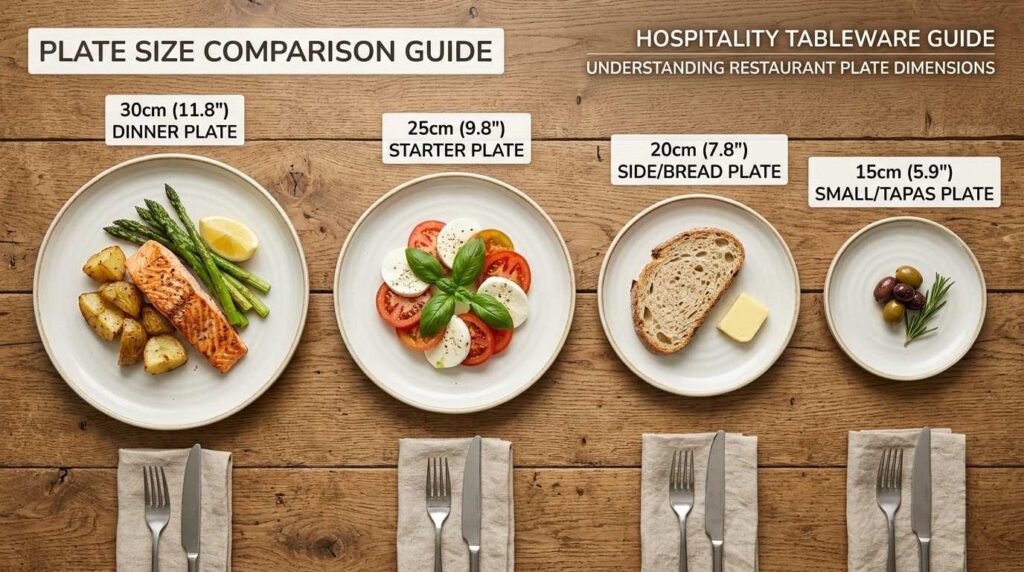
Getting the quantity right is half the job. Getting the right types in your order is the other half.
Core Plate Sizes and What They Are For
Understanding restaurant plate sizes helps you order the right mix rather than ending up with 150 plates that are all one size.
- ▸ 28 to 30cm (Dinner Plate): Main course presentation. The workhorse of any dinner service. Larger sizes suit fine dining; 28cm is the standard for most UK restaurants.
- ▸ 23 to 25cm (Intermediate Plate): Starter plates, sharing plates, and lighter mains. Often double as dessert plates in casual settings.
- ▸ 20 to 22cm (Side Plate / Bread Plate): Bread service, butter, amuse-bouche, side dishes.
- ▸ 15 to 18cm (Small Plate): Accompaniments, small sharing snacks, and bar snacks.
- ▸ Bowls (various depths): Soup, pasta, risotto, and sharing dishes. Depth matters. A shallow bowl is very different from a deep bowl for service purposes. Order the right type for your menu, not a generic bowl that does neither job well.
When to Mix Shapes and Styles
Some restaurants use a deliberate mix: square plates for starters, round for mains, slate boards for sharing plates. If you go this route, track your stock separately for each format. Mixed formats can disguise stock shortages because it is not immediately obvious which type you are running low on.
Choosing Your Crockery Material Before You Order
Your crockery material affects how much you need to order, because different materials have different breakage rates, chip resistance, and long-term durability.
Understanding the differences between porcelain, stoneware, and melamine helps you make the right call for your operation.
- ▸ Porcelain: The standard for most restaurants. Chip-resistant vitrified porcelain is the most practical choice for high-volume service. It is dishwasher safe, retains heat well, and presents food cleanly. Order a 15% breakage buffer.
- ▸ Bone China: Premium appearance, suitable for fine dining. Less robust under high-volume conditions. Increase your breakage buffer to 20 to 25%.
- ▸ Stoneware: Heavier, often with a more rustic aesthetic. Popular in casual dining and gastropubs. Chips at the edges over time, but it is harder to break outright. A 10% breakage buffer is typically sufficient.
- ▸ Melamine: Almost unbreakable. Suitable for outdoor dining, high-speed casual formats, children’s sections, and any setting where breakage is a major operational problem. Zero breakage buffer needed, but it does not suit formal dining.
What Does Restaurant Crockery Typically Cost?
Crockery is a relatively low unit-cost investment, especially compared to the operational disruption of running short mid-service. Here is a general guide to what UK restaurants typically pay per piece for commercial-grade stock:
| Material | Cost Per Piece (Approx.) | Breakage Buffer |
| Budget vitrified porcelain | £1 to £3 | 15% |
| Mid-range porcelain | £3 to £7 | 15% |
| Premium porcelain / fine dining | £7 to £20+ | 15 to 20% |
| Bone china | £8 to £25+ | 20 to 25% |
| Stoneware | £3 to £10 | 10% |
| Melamine | £2 to £5 | 0% |
Prices vary by manufacturer, decoration, order quantity, and market conditions. Use these figures as planning estimates rather than fixed pricing.
Planning tip: Calculate your total piece count first, then apply a per-piece budget to arrive at your total crockery investment. For a 60-seat restaurant needing approximately 138 dinner plates at £4 per plate, that is £552 for dinner plates alone, before other items. Build the full category list before approaching a supplier for a trade quote.
For bulk trade pricing on commercial crockery, contact wecansourceit.co.uk.
White vs Coloured Crockery: Does It Affect How Much You Need?
The short answer is yes, indirectly.
White crockery is universally interchangeable. Any white plate can go with any other white plate without a visual clash. This gives you maximum flexibility in service. If you are running low on 28cm dinner plates, you can substitute briefly without a guest noticing a jarring colour or pattern mismatch.
Coloured and patterned crockery is less forgiving. If your signature look is a specific dark blue plate and you run out, there is no easy substitute. You either pull plates from the pass or serve on something that clashes with your table setup.
Practical implication: If you run coloured or patterned crockery, increase your breakage buffer to 20% rather than 15%, and keep a closer eye on stock. The replacement lead time on specific patterns can be longer than standard white lines.
Storage: Can Your Kitchen Actually Hold the Stock You Need?
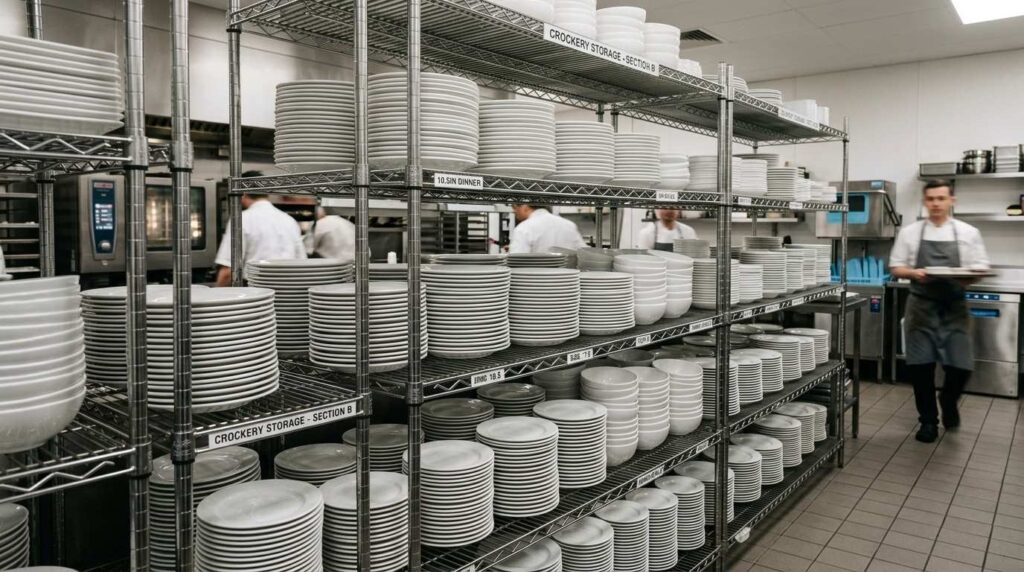
This is the question that gets overlooked until the crockery arrives. You have calculated 192 dinner plates. But where are they going?
Storage Realities in UK Restaurant Kitchens
Most UK restaurant kitchens have limited dry storage. Crockery competes for space with dry goods, equipment, and cleaning products. Before you finalise your order, measure your available shelving and calculate plate stack heights.
Approximate stack heights per 10 plates:
| Plate Type | Stack Height (approx.) |
| Standard dinner plate (porcelain) | 12 to 15cm |
| Side plate | 8 to 10cm |
| Shallow bowl | 15 to 20cm |
| Deep bowl | 20 to 25cm |
| Espresso cup | 12cm per 6 cups |
192 dinner plates in stacks of 30 equals 7 stacks, each roughly 40cm tall. You need shelf space for that before anything else goes on those shelves.
Practical Storage Tips
- ▸ Store by category and size, not by arrival date
- ▸ Keep float stock (the operational quantity) accessible near the pass or service area.
- ▸ Store overflow buffer stock in dry storage, clearly labelled
- ▸ Never stack more than 30 to 35 plates high. The pressure can chip the bases of the bottom plates over time
- ▸ Use open shelving over enclosed cupboards where possible. Crockery needs to be fully dry before stacking, and airflow helps
Common Mistakes Restaurant Owners Make When Ordering Crockery
Ordering only what you need for one service. The most common error. If you order exactly one plate per seat, you will run out of plates during your first busy service. The plates have not come back from the wash yet.
Ignoring wash cycle time. Some operators assume a dishwasher means plates are instantly available. A full rack dishwasher cycle plus drying time is typically 15 to 25 minutes. During a full service, that is a significant amount of your stock that is unavailable at any one time.
Buying all the same plates. A restaurant service needs depth: multiple bowl types, multiple plate sizes, ramekins, and sharing dishes. Buying 200 of one plate and nothing else leaves you underprepared for every course except one.
Underordering small items. Espresso cups, ramekins, sauce dishes, and bread plates get broken at a higher rate per unit than dinner plates and are often underordered. A restaurant that runs out of espresso cups mid-service looks unprofessional even if everything else is fully stocked.
Not planning for growth. If you are opening at 40 seats but planning to expand to 60 within a year, factor this into your initial order. Buying 60 seats’ worth of a specific pattern now is cheaper and easier than trying to source the same pattern again in 12 months. It may have been discontinued.
Not accounting for table linen patterns. If you are changing from white to patterned tablecloths, your crockery requirements may change, not in quantity but in type. Audit your tableware together when you redesign your dining room.
Putting It All Together: A Step-by-Step Crockery Calculation
- Count your seats.
- List every crockery piece needed per cover based on your actual menu.
- Identify your wash cycle time and apply the correct operational multiplier.
- Add 15% breakage buffer (20% for coloured/patterned crockery or bone china).
- Round up to the nearest full case size from your supplier.
- Check that your storage can physically accommodate the volume.
- Set a quarterly stock audit date and track breakages from day one.
FAQ: How Much Crockery Does a Restaurant Need?
How many plates does a 50-cover restaurant need?
For a standard dinner service with a 20-minute wash cycle, you need approximately 115 dinner plates (50 x 2x multiplier = 100, plus 15% buffer = 115), typically rounded to 120 for case ordering. Add more if you run multiple sittings back-to-back.
What is the average crockery breakage rate in a restaurant?
The industry standard is 10 to 15% per year for standard vitrified porcelain. Higher-end bone china and delicate items can run 20 to 25%. Budget for this upfront and reorder quarterly rather than reactively.
How many plates should a restaurant keep in reserve?
Your reserve stock is built into the breakage buffer, typically 15% above your operational requirement. Keep this in dry storage, separate from your active float, and treat it as replenishment stock rather than overflow.
What crockery breaks most often?
Espresso cups, teacups, saucers, and soup bowls break at the highest rate. Espresso cups are handled frequently at speed; soup bowls carry hot contents and have an awkward grip profile. Order a larger buffer for these categories specifically.
How much storage space do restaurant plates require?
As a rule of thumb, 30 standard dinner plates stack to approximately 40cm in height. A restaurant holding 192 dinner plates needs seven stacks of 30, each 40cm tall. Measure your shelving before finalising your order.
How often should restaurant crockery be replaced?
There is no fixed replacement cycle. It depends on the breakage rate and pattern availability. A quarterly stock audit lets you replace as needed rather than in one large reactive order. Most UK restaurants doing regular audits find they replace 10 to 20% of their total stock per year.
Should I buy more crockery than I think I need?
Yes. The cost difference between ordering 10% more crockery upfront and ordering emergency replacements mid-season is significant. Most quality commercial crockery has a low unit cost. The operational disruption of running out costs more than the extra stock.
Do I need different crockery for lunch and dinner service?
Not necessarily. The same plates work for both. However, if your lunch menu is significantly simpler (sandwiches, bowls, light bites), you may use fewer plate types during lunch, and your stock goes further. Your dinner service will be the harder test.
How do I calculate crockery for a cafe?
Cafes need a higher ratio of small plates, side plates, and cups relative to dinner plates. A 30-seat cafe may need 120 mugs if customers sit for long coffee sessions. That is a 4x ratio, far higher than dinner service. Track which items you are constantly restacking and use that as your guide to order more.
What happens if I choose the wrong plate size?
The wrong plate size affects portion presentation and kitchen workflow. Chef’s plate to the plate. A plate that is too small forces tight plating and looks cramped. A plate that is too large makes portions look mean. See our guide on restaurant plate sizes for full guidance on choosing the right dimensions.
Final Thoughts
The right amount of crockery for your restaurant is almost always more than your instinct says. The formula, baseline per cover multiplied by your wash cycle factor plus a breakage buffer, gives you a defensible number that keeps service running smoothly.
Build in the buffer from the start, run quarterly audits, and treat crockery as an ongoing operational cost rather than a one-off purchase. The restaurants that never run short mid-service are not lucky. They planned properly.
Explore the full range of commercial restaurant crockery and tableware at WeCanSourceIt from vitrified porcelain dinner plates to specialist serving bowls, with UK delivery and trade pricing.
And for the full tableware procurement picture, including quantities, trends, and supplier guidance, the Restaurant Tableware and Crockery Buyer’s Guide covers the complete framework.