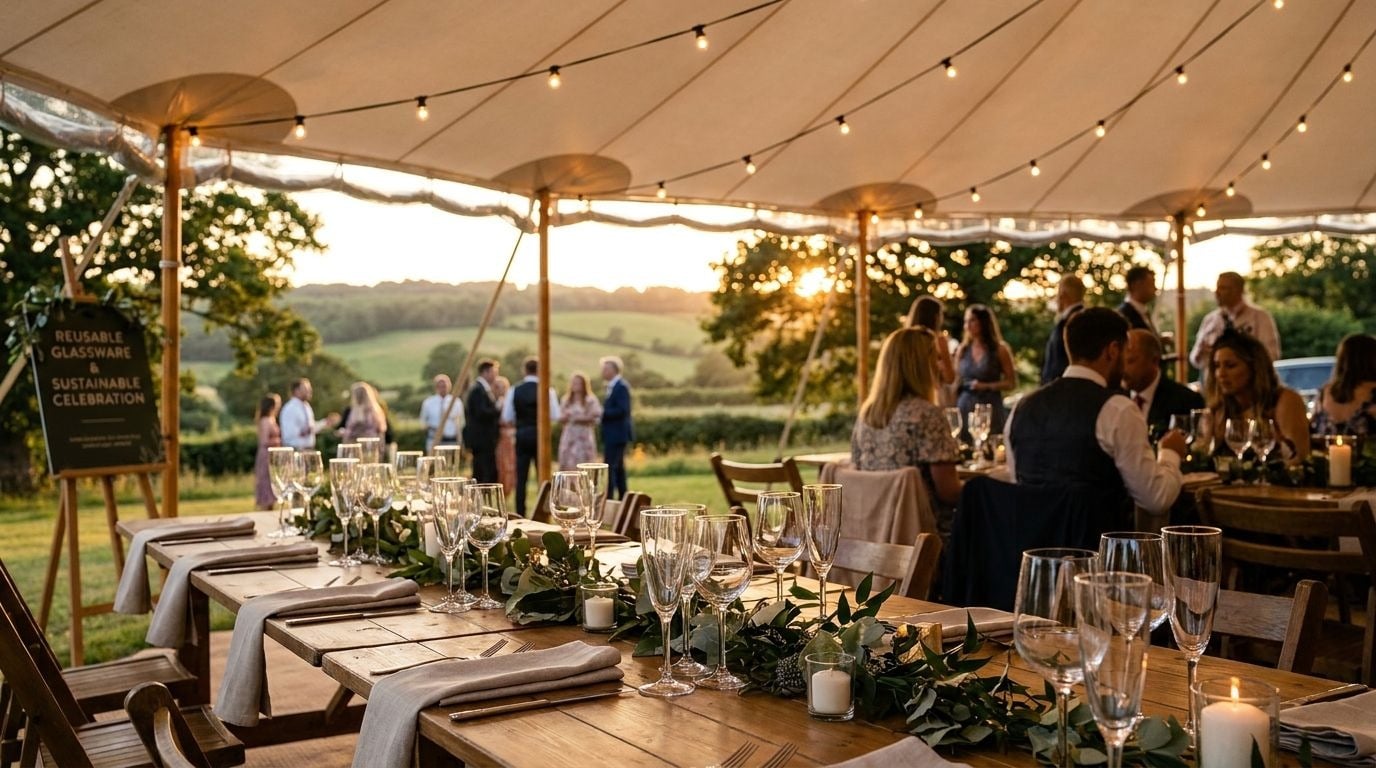
Most couples do not realise wedding glassware can cost hundreds of pounds in hire fees, generate unexpected breakage charges after the event, or create licensing compliance problems at the bar until they are already deep into planning. By then, the deposit is paid and the options are narrowing fast.
The good news is that the decision is straightforward once you have real numbers in front of you. This guide gives you a complete comparison of disposable plastic glasses, reusable polycarbonate, and real glass hire for UK weddings, with a quantity calculator, a UK legal breakdown, a recycling and disposal guide, and a clear steer on what to avoid.
Quick Answer: Which Wedding Glass Option Is Best?
| Wedding Type | Best Choice | Why |
| Outdoor garden or beach wedding | Disposable plastic | No washing facilities, cost-efficient, no breakage risk |
| Outdoor marquee or tipi | Reusable polycarbonate | Licence conditions often require unbreakable glassware |
| Black tie or premium indoor venue | Real glass hire | Venue presentation standard, full-service staff present |
| Festival or boho outdoor | Reusable polycarbonate | Robust, reusable, suits relaxed premium aesthetic |
| DIY village hall or barn | Mixed approach | Disposable for reception, polycarbonate or hire for dining |
| Budget priority, any venue | Disposable plastic | Lowest cost per unit across all formats |
| Best eco long-term option | Reusable polycarbonate | 500 to 1,000 uses per glass replaces hundreds of disposables |
The Three-Way Decision: Hire, Reusable, or Disposable
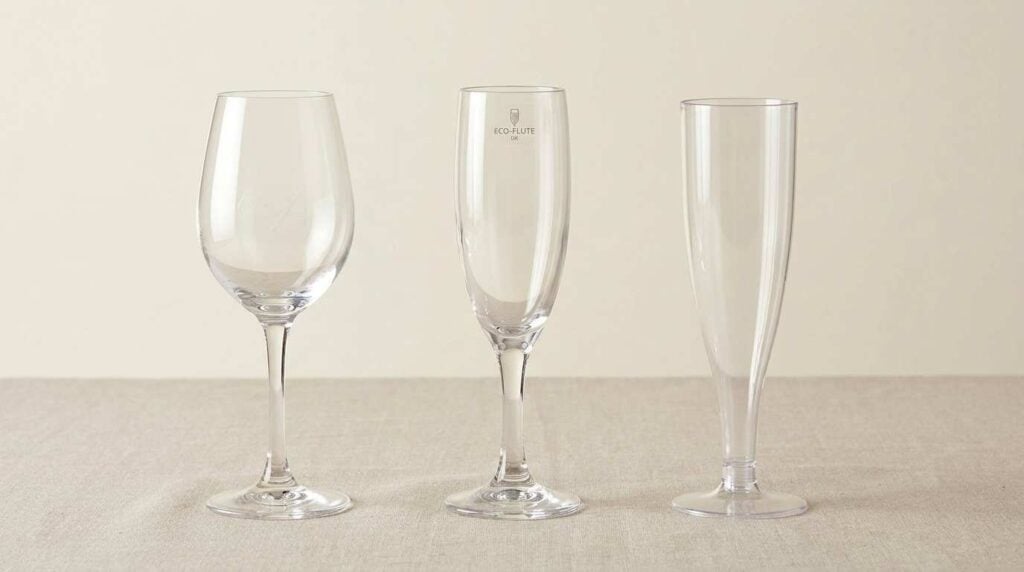
Every couple or event planner reaches the same fork in the road. Here are the real numbers for each option.
Option 1: Real Glassware Hire
Glass hire companies supply washed, event-ready real glassware at approximately £0.50 to £1.00 per glass per day, including delivery, collection, and post-event washing. For a 100-guest wedding with four glass types (prosecco flute, wine glass, tumbler, water glass), you are looking at roughly 400 glasses, costing approximately £200 to £400 in hire plus delivery charges of £40 to £80 depending on location.
Real glass hire suits weddings where the venue expects a certain presentation standard and the hire company can deliver and collect within your event window. The risk is breakages. Most hire companies charge £2 to £5 per broken glass, billed after the event. At a lively evening reception, breakages can accumulate quickly and the final invoice often comes as a surprise.
Option 2: Reusable Polycarbonate
Commercial-grade polycarbonate glasses cost £1.50 to £2.50 per unit to buy outright. For the same 100-guest wedding at 1.5 glasses per guest per format, purchase cost runs approximately £900 to £1,500. After the wedding, you own the stock and can use it again, lend it to friends, or sell it on.
Reusable polycarbonate suits couples hosting multiple events, venues with licence conditions requiring unbreakable glassware, and anyone who wants a premium plastic finish without the breakage risk of real glass. The polycarbonate champagne and stemware collection is worth reviewing early if a premium outdoor presentation is a priority.
Option 3: Disposable Plastic Glasses
Disposable glasses for weddings cost between £0.04 and £0.15 per unit depending on format and material. For the same 100-guest wedding across four formats, total disposable cost runs £24 to £90. The trade-off is presentation quality and end-of-life recyclability.
Disposable is the right choice for outdoor weddings with no washing facilities, budget-conscious events, or any reception where the volume of service makes washing up genuinely impractical.
| Option | 100 Guests (4 formats) | Key Advantage | Key Risk |
| Glass hire | £240 to £480 | Premium look and feel | Post-event breakage charges |
| Reusable polycarbonate | £900 to £1,500 | Own asset, reusable indefinitely | Higher upfront cost |
| Disposable plastic | £24 to £90 | Lowest cost, no washing required | Presentation quality, recyclability |
Cost Comparison by Guest Count
| Guest Count | Glass Hire (mid) | Reusable Polycarbonate (mid) | Disposable Plastic (mid) |
| 50 guests | £125 to £250 | £450 to £750 | £12 to £45 |
| 100 guests | £250 to £500 | £900 to £1,500 | £24 to £90 |
| 150 guests | £375 to £750 | £1,350 to £2,250 | £36 to £135 |
| 200 guests | £500 to £1,000 | £1,800 to £3,000 | £48 to £180 |
| 300 guests | £750 to £1,500 | £2,700 to £4,500 | £72 to £270 |
Figures based on four glass formats, 1.5 glasses per guest per format, mid-range unit pricing. Hire figures include estimated delivery. Polycarbonate figures are purchase price only.
For couples hosting multiple events, the polycarbonate investment typically breaks even against cumulative hire costs after three to five events of similar scale.
Best Glass Options by Wedding Type
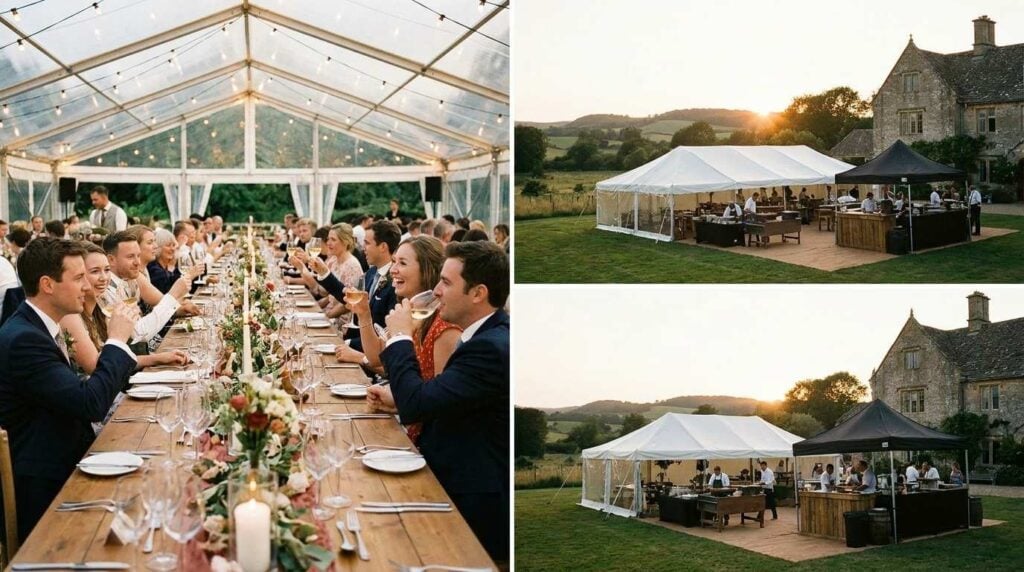
Different wedding styles have genuinely different practical requirements, and generic advice that treats all weddings the same consistently leads to over-spending, under-ordering, or the wrong glass format for the service style.
| Wedding Type | Best Option | Reason |
| Outdoor marquee | Reusable polycarbonate | Licence conditions often require unbreakable; no breakage risk in service |
| Garden wedding | Disposable plastic | No washing facilities, casual format, cost-efficient |
| Black tie venue | Real glass hire | Venue expectation, full-service staff present |
| Festival or boho outdoor | Reusable polycarbonate | Robust, reusable, suits relaxed premium aesthetic |
| DIY village hall | Mixed approach | Disposable for reception, hire or polycarbonate for dining |
| Barn wedding | Disposable or polycarbonate | Depends on caterer; avoid real glass in unlicensed rural spaces |
| Beach or cliff-top | Polycarbonate or disposable | Wind and uneven surfaces make real glass too risky |
| Tipi or yurt | Reusable polycarbonate | Intimate premium setting; polycarbonate maintains presentation |
The pattern holds across wedding types: the more outdoor, informal, and self-managed the event, the stronger the case for polycarbonate or disposable. The more the venue provides full-service staff and a fixed bar, the more sensible real glass hire becomes.
UK Legal Requirements for Licensed Wedding Bars
Most wedding planning guides ignore this section entirely. It is directly relevant to any couple planning a wedding with a bar.
What Requires a Government-Stamped or UKCA-Marked Glass
Under the Weights and Measures Act 1985 and the Drinking Glasses (Intoxicating Liquor) Regulations 1988, any premises serving alcohol by a measured pour must use either a government-stamped glass or an approved measuring device at the point of dispense. This applies at weddings in two situations.
At a licensed venue with a permanent premises licence. Most licensed wedding venues operate metered dispense taps for draught beer and optic dispensers or jiggers for spirits. In these cases, the glass itself does not need to carry a crown stamp because the measuring happens at the dispense point. You can use any glass format you choose.
At a temporary event with a Temporary Event Notice (TEN). If your wedding involves a marquee bar, a garden reception, or any bar operating under a TEN, the same Weights and Measures rules apply. Draught beer or cider served by the pint or half pint requires either a government-stamped glass or a metered tap.
The Practical Rule
If your bar uses optics, metered taps, or jiggers for all measured pours, you can use any glass format including disposable, polycarbonate, or real glass.
If the glass itself is being used as the measure (for example, a wine glass sold as “175ml of house white” poured without a measuring device), it must be UKCA-marked at that measure. Disposable plastic wine glasses marked at 125ml and 175ml are available with CE/UKCA/NICA markings for exactly this purpose at licensed wedding venues and TEN events.
Self-Serve Prosecco and Welcome Drinks Receptions
A self-serve prosecco table, a welcome drinks tray, or an unlimited-pour reception where drinks are not sold by a specific measured volume does not require UKCA-stamped glasses. The Weights and Measures Act requirements apply to alcohol sold by a specified measure. If you are serving prosecco at a set price per head with no stated measure per pour, you can use any glass format you choose, including an elegant disposable flute.
For most UK wedding reception services, the glass choice is legally unrestricted.
Compliance note: This section references the Weights and Measures Act 1985, the Drinking Glasses (Intoxicating Liquor) Regulations 1988, and UKCA marking requirements current as of May 2026. Couples and event organisers should confirm the specific requirements of their premises licence or TEN with their venue or local licensing authority.
5. Materials Explained: What You Can Honestly Call Eco-Friendly

The sustainability conversation around disposable glasses for weddings is full of vague claims. Under the CMA Green Claims Code, making unsubstantiated environmental claims carries real legal risk. Here is what is accurate in 2026.
rPET (Recycled PET Plastic)
rPET contains 30% or more post-consumer recycled content. rPET disposable glasses can be recycled in standard kerbside collections if rinsed clean after use. For eco-conscious couples, rPET is the most defensible disposable choice. You can tell guests the glasses are made from recycled plastic and can go in the household recycling after the event.
Crystal Polystyrene
Crystal polystyrene has excellent optical clarity, comparable to real glass, and is the most common material for disposable wedding glasses in the mid-price range. It is legal and widely available. The honest sustainability position: crystal polystyrene is not widely recyclable in UK kerbside collections. Do not describe crystal polystyrene glasses as eco-friendly. Describe them accurately as disposable plastic glasses.
Polycarbonate (Reusable)
The most environmentally responsible plastic glassware option because the same glass survives 500 to 1,000 wash cycles. The carbon footprint per use drops with every event the glass is used at. For couples who will use the glasses again, polycarbonate is the right long-term environmental choice.
Foamed Polystyrene
Banned in England under DEFRA single-use plastics regulations. Do not purchase or use foamed polystyrene cups or glasses at any UK event.
| Material | Recyclable? | Honest Eco Claim |
| rPET disposable | Yes, kerbside if rinsed | “Made from recycled plastic, kerbside recyclable” |
| Crystal polystyrene | No (specialist only) | No eco claim appropriate |
| Polycarbonate (reusable) | Long life replaces hundreds of disposables | “Reusable, significantly reduces single-use waste” |
| Foamed polystyrene | No | Banned in England, do not use |
Which Glasses for Which Drinks
Choosing the right glass format for each drink type matters both practically and legally. Two-piece disposable champagne flutes, for instance, regularly become a service problem during fast welcome drinks because staff must assemble hundreds of stems before guests arrive. One-piece formats remove this entirely.
| Drink | Recommended Format | Notes |
| Prosecco / Champagne (reception) | Disposable champagne flute 160ml | One-piece format, no assembly, fast service |
| Prosecco / Champagne (sit-down) | Polycarbonate flute or real glass hire | Higher presentation at the dining table |
| Still wine (dining) | Disposable wine glass marked 125/175ml | UKCA marking needed if sold by measure |
| Gin and tonic | Disposable copa or highball | Copa for premium presentation; highball for volume service |
| Beer / lager (draught) | CE/UKCA-marked pint | Government stamp or metered tap required |
| Soft drinks / water | Any disposable tumbler | No compliance requirement |
| Cocktails | Disposable highball or tumbler | Format matches the drink length |
| Evening shots | Disposable shot glass | Any format; measure not typically sold by stated volume |
For the prosecco welcome reception, disposable plastic champagne flutes are available in packs from 25 to 500 units in a one-piece design requiring no assembly, from approximately £0.07 per flute at volume.
For draught beer at a licensed marquee bar, CE-marked disposable pint glasses satisfy the UKCA compliance requirement when used with metered dispense taps.
Planning a wedding drinks service? Settling the glass format question early prevents over-ordering, avoids licensing issues at the bar, and makes the day-of service run significantly more smoothly.
How Many Glasses Do You Need? A Quantity Calculator
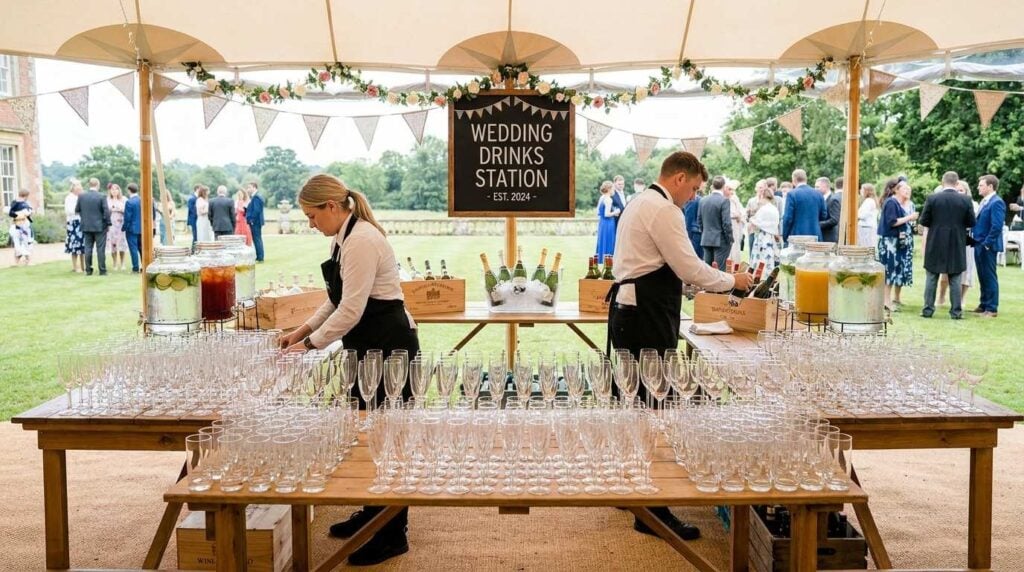
For most UK weddings, approximately 700 to 1,000 disposable glasses cover a 100-guest event depending on the drinks menu and whether guests reuse the same glass across the event.
Use this table as your starting calculation:
| Drink Occasion | Glasses per Guest | Notes |
| Welcome drinks (prosecco) | 1 to 1.5 flutes | Single glass, possible refill |
| Sit-down meal (wine) | 2 to 3 wine glasses | Red, white, and water |
| Evening reception (mixed) | 1 to 2 per drink type | Beer, spirits, soft drinks |
| Toasting (champagne) | 1 flute per guest | Can reuse welcome glass if disposable |
Guests at outdoor weddings tend to put glasses down and lose track of them more often than at seated indoor receptions. Experienced event planners typically order 15 to 20% more tumblers and pint glasses than the base calculation suggests for outdoor evening receptions, precisely because glass abandonment increases significantly as the evening progresses.
Worked example: 120-guest wedding
| Format | Calculation | Order Quantity |
| Champagne / prosecco flutes | 120 x 1.5 + 20% buffer | 250 |
| Wine glasses (meal) | 120 x 2.5 + 20% buffer | 400 |
| Tumblers (evening, soft drinks) | 120 x 1.5 + 20% buffer | 250 |
| Beer / lager glasses | 120 x 1 + 20% buffer | 150 |
| Total | approx. 1,050 glasses |
At £0.08 per unit average across formats, total disposable cost for a 120-guest wedding runs approximately £84. Order in rounded case quantities to avoid fractional packs.
For the full comparison of reusable polycarbonate glass quantities and cost at outdoor events, see our detailed guide to reusable plastic glassware for UK outdoor events.
What Happens to Wedding Glasses After the Event?
This is the question most wedding guides ignore entirely.
Disposable Glasses: Recycling After the Wedding
rPET glasses can go into standard household or venue recycling bags if rinsed clean. Brief your venue coordinator or a trusted friend to keep rPET glasses separate from general waste during clear-up.
Crystal polystyrene glasses should go into general waste. Do not put them in the recycling bin unless your local authority explicitly accepts polystyrene, which very few do. The honest approach is to dispose of them as general waste rather than contaminating a recycling stream.
The most practical wedding approach is to prepare two clearly labelled bags before the event — one for rPET recycling and one for general waste. Doing this the day before takes thirty seconds and prevents the wrong items going in the wrong places when everyone is tired at the end of the night.
Reusable Polycarbonate: Storage After the Wedding
Polycarbonate glasses should be washed, dried, and stored in their original cases or in purpose-made glass storage boxes before being put away. Storing polycarbonate loose in a bin bag causes surface scratching and reduces the number of future wash cycles the glass survives.
If you are not planning to use the glasses again, reusable polycarbonate sells easily via local wedding Facebook groups, Gumtree, or Facebook Marketplace. A set of 100 polycarbonate flutes in good condition typically sells for £40 to £80, recovering a meaningful portion of the original cost.
Real Hire Glass: Breakage Reconciliation
If you hired real glass, the hire company will count and inspect returned glasses on collection or at their warehouse. Breakage charges are typically invoiced within 5 to 10 working days. Keep a count of any glasses broken during the event so the final invoice is not a surprise.
Wedding Glasses to Avoid
Knowing what not to buy saves as much trouble as knowing what to buy.
Ultra-thin, brittle disposable cups from unbranded sources. Very cheap cups from marketplace sellers with no stated material, no UKCA marking, and no food contact compliance documentation are not suitable for a licensed wedding bar. They crack or collapse under normal service conditions and create both safety and compliance problems.
Non-UKCA-marked wine glasses used for measured pours. If your bar is selling wine by a stated measure without an approved measuring device at dispense, an unmarked glass creates a Weights and Measures compliance problem. Buy UKCA-marked formats or use a calibrated wine measure at the bar.
Multi-piece flutes with separate bases. Two-piece disposable champagne flutes are slower to assemble, more prone to collapsing during service, and create an inconsistent presentation. One-piece formats are faster, more reliable, and only marginally more expensive.
Foamed polystyrene in any format. Banned in England under DEFRA regulations.
Generic “biodegradable” glasses without certification. Under CMA Green Claims guidance, using the word biodegradable without specifying a timeframe, conditions, and certification is a misleading claim. Glasses described only as biodegradable without EN13432 or equivalent certification and a disposal route are not what they claim to be.
Ordering Timeline and Lead Times
For disposable wedding glasses ordered from UK suppliers, typical lead times are 3 to 7 working days for standard stock. For larger quantities (500 units or more), confirm availability before ordering, particularly in peak wedding season from May to September.
Recommended ordering timeline:
- ▸ 8 to 12 weeks before: confirm glass formats and quantities required
- ▸ 6 weeks before: place the order, confirm delivery address and date
- ▸ 2 weeks before: chase delivery confirmation if not already received
- ▸ 1 week before: confirm all formats and quantities are correct on delivery
For reusable polycarbonate with custom branding, allow 3 to 6 additional weeks from order confirmation.
Do not order the week before a large wedding. Stock shortfalls and courier delays are significantly harder to resolve inside seven days.
Recommended Wedding Glass Formats
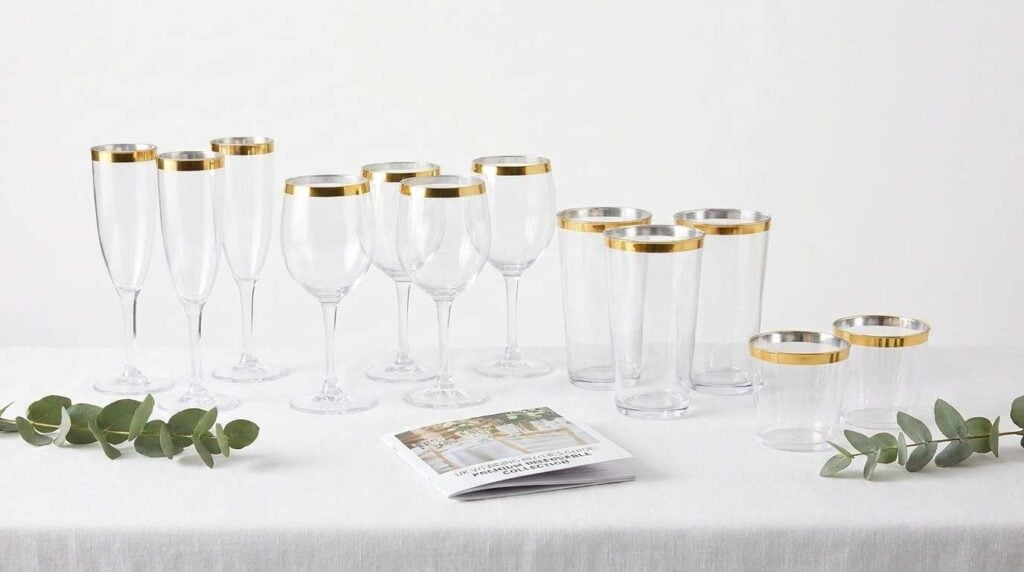
One-piece disposable champagne flutes work best for fast prosecco service at any guest count. They require no assembly, pour quickly, and look presentable at a welcome drinks station or tray service.
CE-marked pint glasses with UKCA marking at the stated measure are the correct choice for draught beer service at any licensed marquee or outdoor bar.
Polycarbonate stemware suits premium outdoor dining setups where presentation matters but breakage and washing logistics make real glass impractical.
UKCA-marked disposable wine glasses at 125ml and 175ml are the correct format if wine is being sold by a stated measured pour without an approved measuring device at dispense.
Key products for UK weddings, all available with CE/UKCA compliance documentation and standard 3 to 5 working day delivery:
- ▸ Disposable champagne flutes – one-piece design, 25 to 500 unit packs
- ▸ Plastic wine glasses marked 125ml and 175ml – CE/UKCA/NICA compliant for licensed service
- ▸ Full disposable stemware and wine glass range – flutes, wine glasses, gin and cocktail formats
- ▸ Disposable pint glasses CE marked – for draught beer service at outdoor and marquee weddings
- ▸ Polycarbonate champagne and stemware – reusable option for premium sit-down presentation
- ▸ Full disposable glassware range – complete range with bulk pricing available
For the full picture of glassware selection across licensed venues, material compliance, and UK hospitality law, see our hospitality glassware guide for UK venues.
FAQs
How many disposable glasses do I need for a 100-guest wedding?
Most UK weddings require approximately 700 to 1,000 disposable glasses for 100 guests depending on the drinks menu and whether guests reuse the same glass across the event. A practical breakdown is 150 prosecco flutes for the reception, 300 wine glasses for the meal, 200 tumblers for the evening, and 120 pint glasses if draught beer is being served.
Do I need UKCA-stamped glasses for a wedding bar?
It depends on how alcohol is dispensed. If your bar uses metered taps, optics, or jiggers for all measured pours, the glass does not need to carry a UKCA stamp. If wine is sold in a stated measure poured directly from a bottle without an approved measuring device, the glass must be UKCA-marked at that measure. For most UK wedding bars, metered dispense means the glass format is legally unrestricted.
Can I use disposable glasses for a prosecco welcome reception?
Yes. A welcome drinks reception where prosecco is served at a set price per head without a stated measured pour does not require UKCA-stamped glasses. A disposable flute is the most practical and cost-effective choice for any welcome drinks service.
What is the most eco-friendly disposable option for a wedding?
rPET glasses made from post-consumer recycled content are the most defensible eco-friendly disposable choice for a UK wedding. They can be recycled in standard kerbside collections if rinsed clean. Crystal polystyrene has better clarity but is not kerbside recyclable. Do not make eco-friendly claims for crystal polystyrene glasses.
Are disposable wedding glasses cheaper than hiring real glassware?
Yes, significantly. Disposable plastic glasses cost £0.04 to £0.15 per unit, giving a total of approximately £24 to £90 for a 100-guest wedding across four glass types. Real glass hire for the same wedding runs £240 to £480 plus delivery. The disposable option is three to ten times cheaper depending on specification.
Can disposable plastic glasses look elegant at a wedding?
Yes, if you choose the right format. One-piece crystal polystyrene champagne flutes are visually close to real glass at typical reception lighting. Polycarbonate stemware is heavier and optically clearer than standard disposable plastic and is difficult to distinguish from real glass at the dining table. The key is avoiding very cheap, thin formats from unbranded sources.
Are plastic champagne flutes allowed at licensed UK weddings?
Yes. Plastic champagne flutes are legal at any UK wedding bar. If the flute is being used to serve a stated measured pour of wine or sparkling wine without a separate measuring device, it must carry UKCA marking at the stated measure. For prosecco receptions served at a set price per head with no stated measure per pour, any flute format is legally compliant.
What is the best disposable glass for an outdoor wedding?
For outdoor weddings, one-piece disposable champagne flutes for reception drinks and UKCA-marked wine glasses for dining are the most practical combination. If the venue licence requires unbreakable glassware in outdoor areas, reusable polycarbonate replaces both. For draught beer service outdoors, a CE-marked disposable pint glass or a polycarbonate pint with metered dispense tap is the correct combination.
What happens to disposable glasses after the wedding?
rPET glasses can go into standard recycling if rinsed clean. Crystal polystyrene goes into general waste. Reusable polycarbonate should be washed, dried, and stored in cases for future use or sold on via wedding marketplace groups. Brief your venue coordinator or a trusted friend before the event on which bag receives which glass type during clear-up.
Author
We Can Source It, Team
The We Can Source It Team supplies disposable and reusable plastic glassware for weddings, parties, hospitality venues, and events across the UK. Our content is written to help couples, event organisers, caterers, and venues choose practical, compliant, and cost-effective glassware solutions for licensed and non-licensed events.
References
- ▸ Weights and Measures Act 1985 – legislation.gov.uk
- ▸ Drinking Glasses (Intoxicating Liquor) Regulations 1988 – legislation.gov.uk
- ▸ UKCA marking guidance – gov.uk
- ▸ DEFRA single-use plastics regulations – gov.uk
- ▸ CMA Green Claims Code – gov.uk