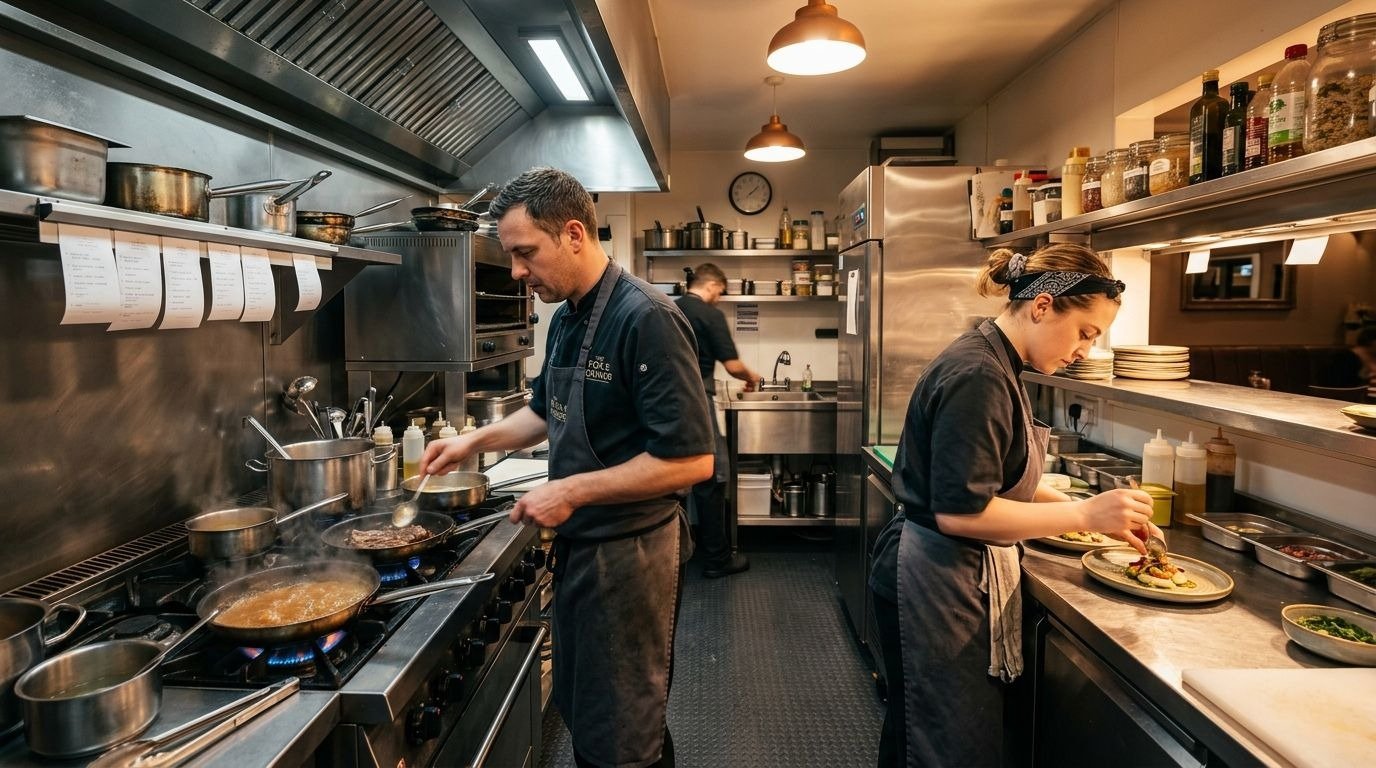
Most small restaurants overspend on commercial catering equipment from day one. Not because they’re careless, but because no one shows them what actually matters.
This UK buyer’s guide breaks it down simply. You’ll learn what to prioritise, what to skip, and how to build a kitchen that runs smoothly under pressure without wasting money.
Who This Guide Is For
- ▸ New restaurant owners opening their first kitchen
- ▸ Café and takeaway startups working with limited space
- ▸ Small hospitality teams upgrading outdated equipment
- ▸ UK-based operators needing to meet compliance standards
Why Equipment Choice Matters More in a Small Kitchen
In a large restaurant, a bad buy is an inconvenience. In a small one, it slows down every service.
Every piece of equipment must earn its place. The wrong oven wastes energy daily. An underpowered fridge creates food safety risks. A missing tool on a busy Friday can stop everything.
Your equipment choices also affect HACCP compliance. UK kitchens must manage food hazards properly. Poor refrigeration, weak extraction, and slow dishwashing all create compliance gaps.
Before You Buy Anything: Three Things to Sort First
Don’t build a kitchen, then write a menu. Do it the other way around.
List your top 15 dishes. Break down every cooking method required. That list tells you what’s essential and what can wait.
A grilled meat menu needs a different kit than a pasta kitchen. A breakfast café needs different equipment than a dessert bar.
Kitchen Layout Determines Your Workflow
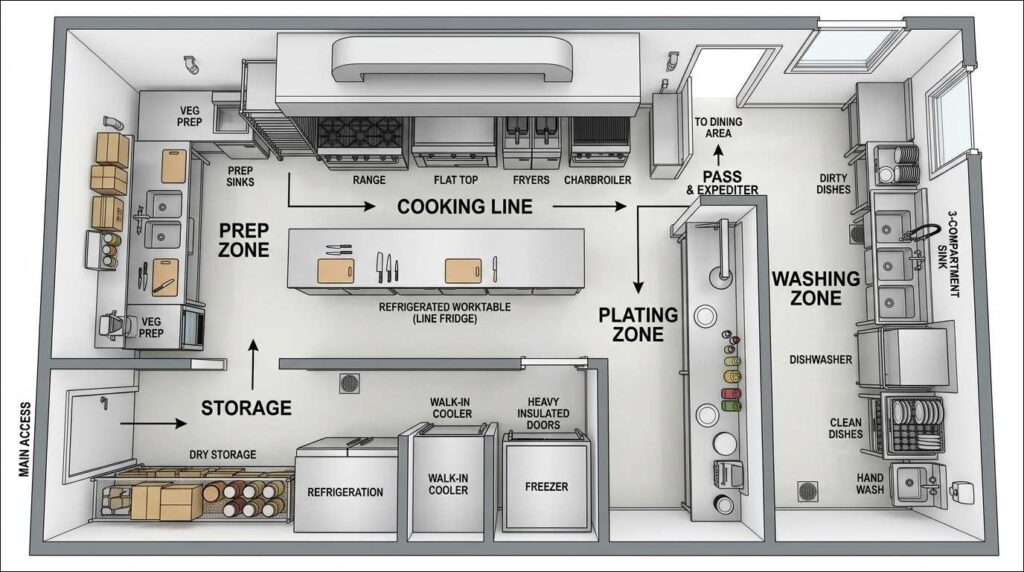
Set your kitchen in logical zones:
- ▸ Storage
- ▸ Prep
- ▸ Cooking
- ▸ Plating
- ▸ Washing
When zones flow in order, chefs move less and cook faster.
In small kitchens, think vertically. Under-counter fridges and wall shelving save space without slowing workflow.
Gas vs Electric: The Honest Answer
Gas heats faster and costs less to run. But it requires a Gas Safe installation.
Electric is easier to clean and more consistent. Induction hobs are growing fast in small kitchens. They’re safer and reduce heat output.
Most small restaurants use a mix:
- ▸ Gas range
- ▸ Electric oven
- ▸ Induction backup
The Essential Equipment List for Small Restaurants
1. Cooking Equipment
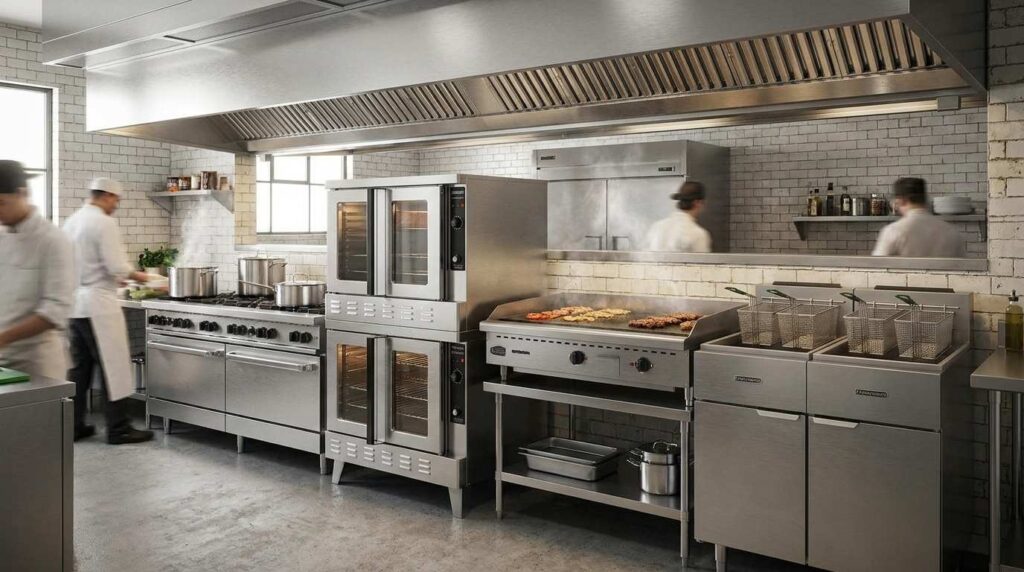
Commercial Oven
This is the most important purchase you’ll make. Don’t cut corners here.
A convection oven is the right starting point for most kitchens. It circulates hot air for even results and handles baking, roasting, and reheating. Budget £1,000–£4,000 for a reliable commercial unit.
A combi oven costs more but does more. It combines convection heat with steam injection. You can roast, steam, bake, and regenerate from one appliance. Combi ovens start around £2,000 and replace two or three other pieces.
For pizza-led menus, a dedicated deck oven makes sense. Countertop models start from £500. Commercial deck ovens run £1,500–£8,000.
Commercial Range
A 4 or 6-burner range handles most small kitchen menus. Choose burner count based on peak service demand, not average.
Countertop Fryer
Even without a chip-focused menu, a fryer earns its place. It handles starters, sides, and garnishes. Budget £200–£600 for a single-basket countertop unit.
Flat-Top Griddle
Underused in small kitchens, but very versatile. It handles burgers, fish, breakfast, and vegetables. It doubles as an extra prep surface when the kitchen is cold.
Salamander Grill
This is the finishing tool most chefs miss. It melts, toasts, grills, and grates without firing up a full oven. Budget £300–£800.
Cooking Equipment: Quick Reference Table
| Equipment | Main Use | Budget (UK) | Priority |
| Convection oven | Baking, roasting, reheating | £1,000–£4,000 | Essential |
| Combi oven | Multi-method cooking | £2,000–£15,000+ | High if the budget allows |
| Commercial range | All stovetop cooking | £800–£3,500 | Essential |
| Countertop fryer | Frying sides and starters | £200–£600 | Essential |
| Flat-top griddle | Burgers, breakfast, fish | £400–£1,500 | Recommended |
| Salamander grill | Finishing and melting | £300–£800 | Recommended |
| Deck/pizza oven | Pizza-focused menus | £500–£8,000 | Menu-dependent |
2. Refrigeration and Cold Storage
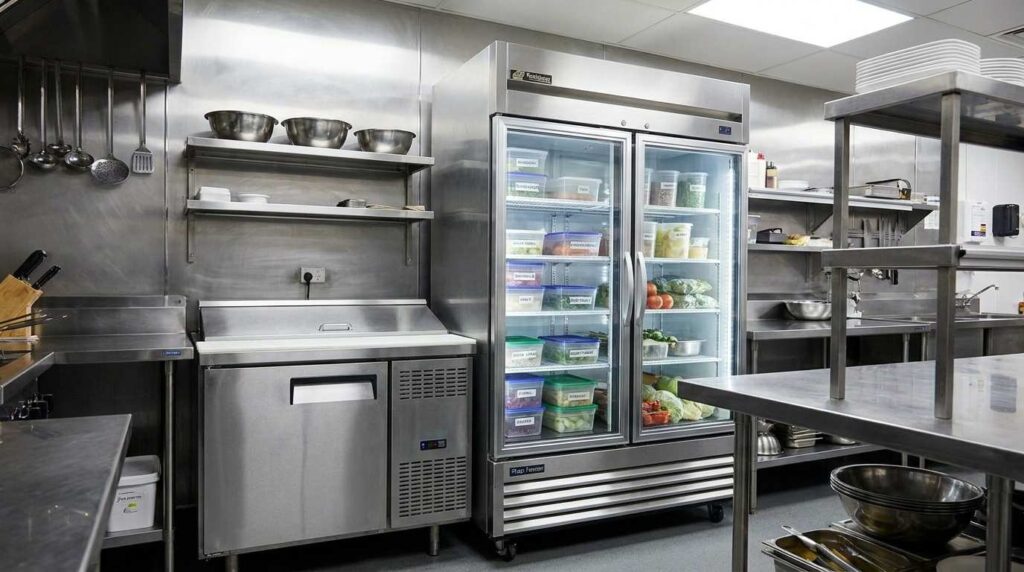
This is the area where small restaurant owners most often underinvest.
Your cold storage needs to do three jobs. Bulk storage for deliveries. Short-term storage at the prep station. And service-ready storage during a shift.
One fridge rarely handles all three well.
- ▸ Upright reach-in fridge: your main workhorse for daily stock
- ▸ Under-counter fridge: keeps ingredients at arm’s reach during prep
- ▸ Commercial freezer: essential for proteins, desserts, and batch-prepped items
Buy units certified for commercial use. Domestic fridges fail environmental health inspections. Choose A-rated models, the energy savings over five years are significant.
3. Food Preparation Equipment
Stainless steel prep tables are non-negotiable. UK food safety law says food cannot be prepped on non-food-safe surfaces. Buy at least two, one for meat, one for everything else.
A commercial food processor with full attachments speeds up prep significantly. Budget £300–£1,200 for a reliable unit.
A commercial blender is essential if your menu includes soups, sauces, or smoothies. Domestic blenders burn out fast in a commercial environment.
4. Dishwashing and Glasswashing
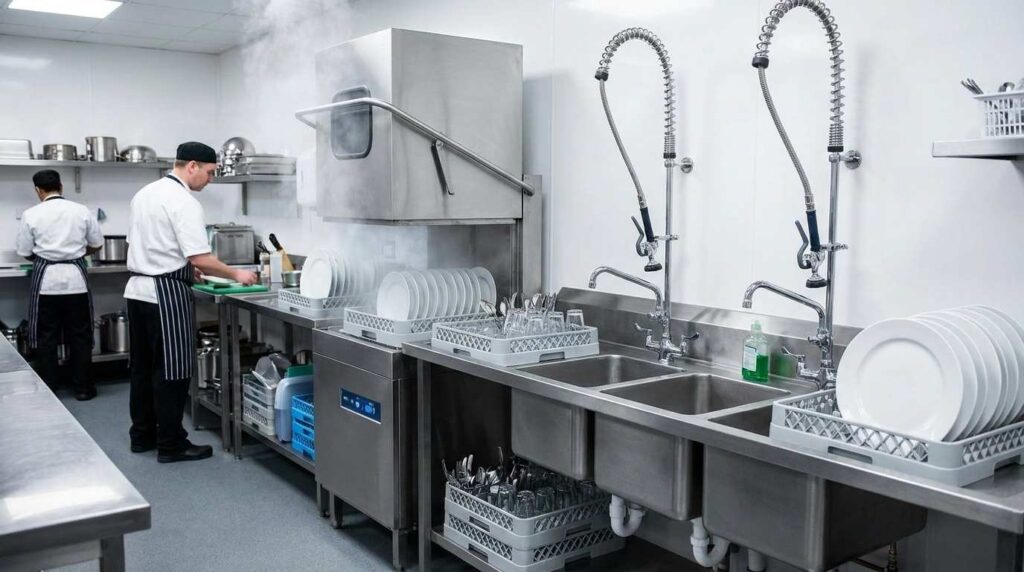
UK regulations require at least two sinks in a commercial kitchen. One for handwashing, one for equipment. Most kitchens need a third for food preparation.
- ▸ Under-counter dishwashers suit kitchens serving fewer covers (£800–£2,500)
- ▸ Pass-through dishwashers suit busier services with 50+ covers
- ▸ Glasswashers are worth it if you serve wine, beer, or cocktails
5. Ventilation and Extraction
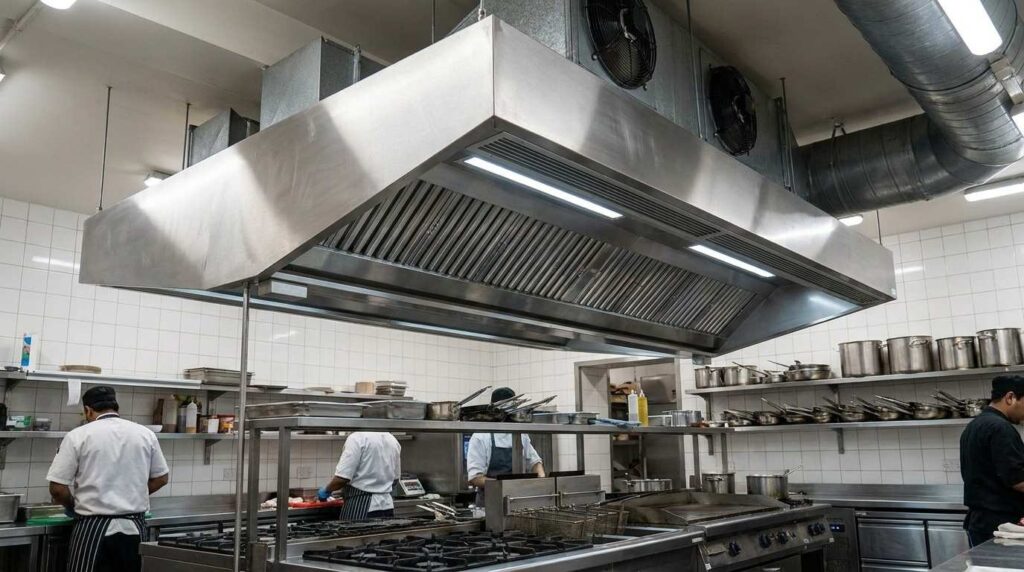
Most guides treat this as an afterthought. It shouldn’t be.
A commercial extraction system is a legal requirement in the UK. Any kitchen producing heat, steam, or cooking fumes must have one. A canopy and ducting system costs £2,000–£8,000. Fire suppression adds £2,000–£5,000 more.
Plan your extraction before you plan your cooking line. Your extraction layout decides where your equipment goes, not the other way round.
6. Storage and Shelving
UK law requires food to be stored off the floor. Minimum shelf height is 15cm.
Stainless steel shelving is the standard. It’s durable, easy to clean, and won’t corrode. Buy adjustable units, your storage needs will shift as your menu grows.
Use labelled, airtight containers for all dry goods. This is a HACCP requirement, not just good practice.
Common Mistakes Small Restaurant Owners Make
- ▸ Buying equipment before finalising the menu
- ▸ Choosing domestic appliances instead of commercial ones
- ▸ Ignoring ventilation until the installation stage
- ▸ Underestimating refrigeration needs
- ▸ Not planning workflow before buying equipment
Avoid these, and you’ll save thousands.
How Much Does It Cost to Kit Out a Small Restaurant Kitchen?
| Budget Level | Approach | Estimated Cost |
| Starter / tight | Used and leased essentials only | £15,000–£25,000 |
| Mid-range | Mix of new and certified used | £30,000–£55,000 |
| Well-equipped | Mostly new, combi oven included | £60,000–£80,000+ |
Equipment costs make up around £60,000–£80,000 in a full fit-out. A small restaurant with a tight menu can get started for much less. Certified used equipment on low-risk items helps stretch the budget.
Always budget separately for:
- ▸ Installation
- ▸ Gas and electrical work
- ▸ Maintenance contracts
Five Buying Tips That Save Real Money
- ▸ Buy for your current menu, not future ideas
- ▸ Never cut corners on refrigeration or extraction
- ▸ Buy used for tables and shelving
- ▸ Get at least three supplier quotes
- ▸ Choose energy-efficient models
UK Food Safety: What You Must Know
- ▸ Register your business 28 days before opening
- ▸ From March 2025, separate food waste (10+ employees)
- ▸ All equipment must support your HACCP plan
- ▸ Gas equipment requires a Gas Safe installation
- ▸ Keep all compliance documents ready
Frequently Asked Questions
What equipment does a small restaurant need?
At minimum: a commercial oven, range, refrigeration, prep surfaces, dishwasher, and extraction. Your menu dictates the rest.
How much does it cost to kit out a small UK restaurant kitchen?
A starter setup costs £15,000–£25,000 using new and used equipment. A well-equipped kitchen with new appliances costs £60,000–£80,000+. These figures exclude installation and services.
Should I buy or lease commercial catering equipment?
Lease if you’re a startup with limited capital. Buy once you’re established and your cash flow is stable. Leasing with maintenance cover is a smart middle ground for expensive items.
What is the most important piece of equipment in a commercial kitchen?
Your oven and refrigeration. Without a reliable oven, most of your menu doesn’t happen. Without proper cold storage, you can’t safely hold food.
What’s the difference between a combi oven and a convection oven?
A convection oven uses circulating hot air. A combi oven adds steam injection. This lets you steam, poach, and regenerate food as well. Combi ovens cost more but replace multiple appliances.
Build Your Kitchen Around Your Menu
The most common mistake is buying too much, too early.
Start with what your menu needs for every service. Invest properly in refrigeration, extraction, and your cooking line. Use certified used equipment for lower-risk items to stay within budget.
A well-chosen small kitchen will always outperform an over-specced one that ran out of money before opening.
For a complete guide to catering supplies, glassware, cookware, disposables, and more read our Complete Catering Supplies UK Guide.
About the Author
WeCanSourceIt Team is a UK‑based group of catering and hospitality supply experts at We Can Source It Ltd, dedicated to helping businesses find quality commercial catering equipment, disposables, barware, and tableware at great prices. With deep industry knowledge and a commitment to practical guidance, the team provides actionable insights to support your catering operations and purchasing decisions