
I’ve worked with UK coffee shops and packaging suppliers on cup selection, waste streams, and compliance decisions. In practice, PLA-lined cups are often misunderstood—especially regarding compostability claims and real-world disposal in the UK.
PLA-lined cups are only compostable in industrial composting facilities in the UK. They are not compostable at home and are not recyclable in standard paper recycling systems.
What are PLA-lined cups, and how are they different from standard cups?
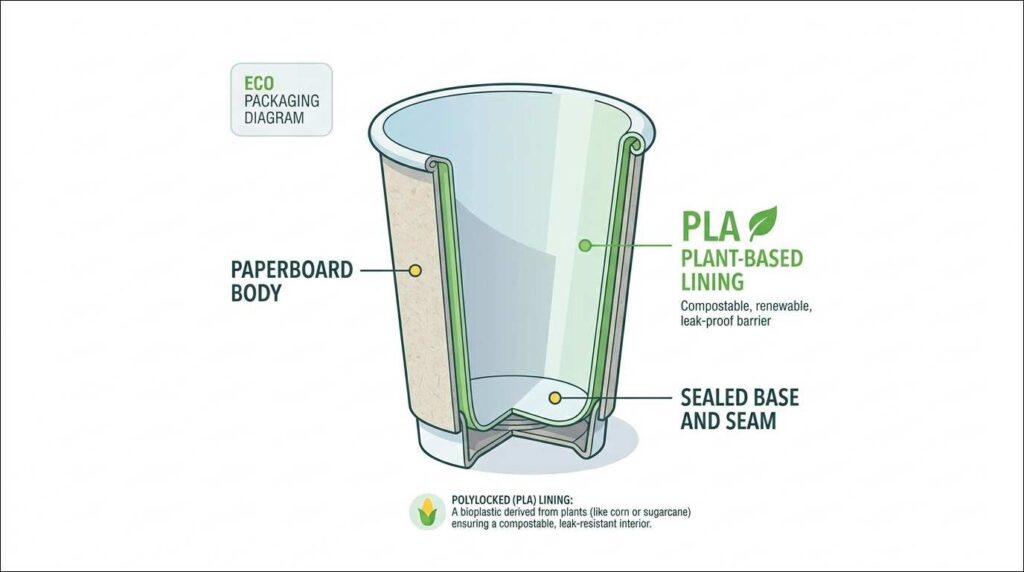
PLA-lined cups are paper cups coated with a plant-based plastic instead of traditional plastic.
Key components:
- ▸ Paperboard body: Provides structure
- ▸ PLA lining (plant-based): Prevents leaks
- ▸ Sealed base and seam: Maintains durability
What is PLA?
- ▸ Made from plant starch (usually corn)
- ▸ Designed to break down under specific composting conditions
Important distinction:
PLA is bio-based, not automatically biodegradable in all environments.
Key takeaway: PLA-lined cups function like standard cups but require specific disposal conditions.
Are PLA-lined cups actually compostable in the UK?
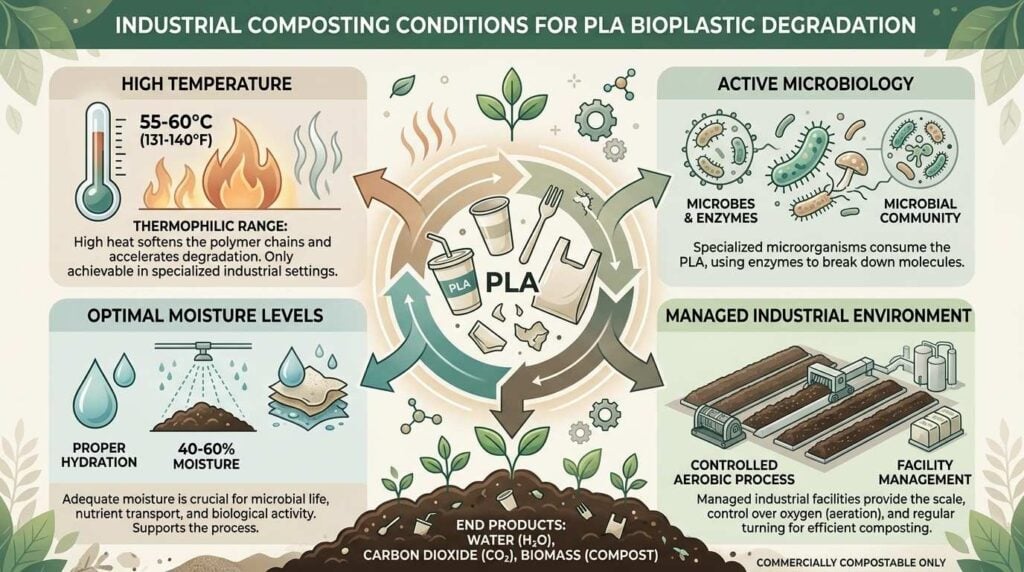
Yes, but only under controlled industrial conditions.
What “compostable” really means:
- ▸ Requires industrial composting facilities
- ▸ Needs sustained temperatures of 55–60°C
- ▸ Requires controlled moisture and microbial activity
In real UK conditions:
- ▸ Home composting: Not effective
- ▸ General waste: Ends up in landfill or incineration
- ▸ Kerbside recycling: Not accepted
Reality check:
Most UK areas do not provide widespread access to industrial composting for coffee cups.
Key takeaway: PLA cups are technically compostable, but rarely composted in practice.
Why don’t PLA-lined cups break down in normal environments?
They need heat and controlled conditions that natural environments don’t provide.
What happens in different environments:
| Environment | Outcome |
| Industrial composting | Breaks down properly |
| Home compost | Minimal or no breakdown |
| Landfill | Very slow decomposition |
| Ocean/nature | Behaves like plastic |
Why does this happen:
- ▸ PLA requires high, consistent heat
- ▸ Landfills lack oxygen and microbial activity
- ▸ Natural environments are too variable
Key takeaway: “Biodegradable” does not mean it breaks down anywhere.
Can PLA-lined cups be recycled in the UK?
No, PLA-lined paper coffee cups cannot be recycled in standard UK recycling systems.
Reasons:
- ▸ PLA contaminates paper recycling streams
- ▸ Recycling facilities cannot separate PLA from paper fibre
- ▸ Even small amounts disrupt paper processing
What happens if you recycle them:
They are usually rejected and diverted to waste
Important:
PLA behaves like plastic in recycling systems, even though it’s plant-based.
Key takeaway: PLA cups are neither recyclable nor widely composted in the UK.
PLA vs PE vs Aqueous: which is better for UK coffee shops?
Each option has trade-offs; PLA is not automatically the best environmental choice.
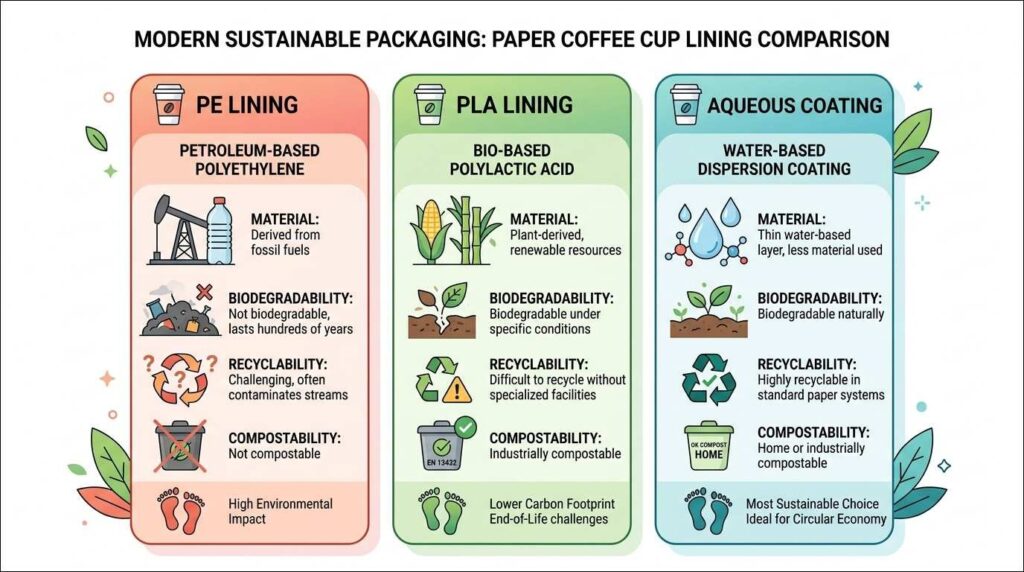
Comparison table:
| Feature | PLA Lining | PE Lining | Aqueous Coating |
| Source | Plant-based | Fossil-based | Water-based |
| Compostable | Yes (industrial only) | No | No |
| Recyclable | No | Limited | Potentially yes |
| UK infrastructure fit | Low | Low | Improving |
| Cost | Higher | Lowest | Medium–High |
Practical insight:
- ▸ PLA only works if composting exists
- ▸ PE is cheaper and more reliable
- ▸ Aqueous coatings are gaining traction
Key takeaway: PLA is only beneficial when disposal infrastructure supports it.
When do PLA-lined cups make sense in the UK?
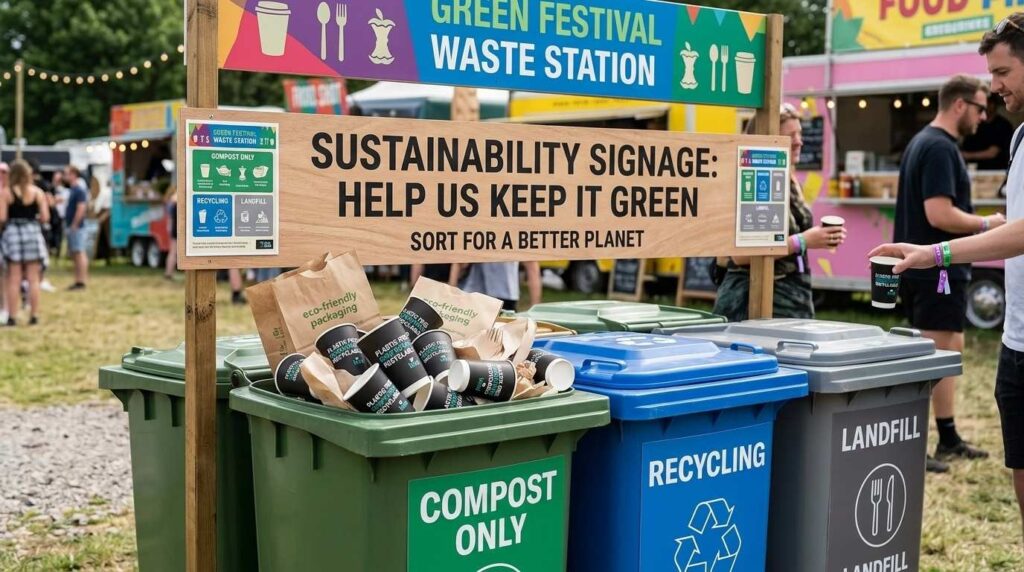
They make sense in controlled environments, not general retail settings.
Good use cases:
- ▸ Events with on-site composting systems
- ▸ Closed environments (festivals, corporate campuses)
- ▸ Businesses with verified waste collection partners
Poor use cases:
- ▸ High-street coffee shops
- ▸ Locations without compost bins
- ▸ Areas relying on general waste collection
Real-world pattern:
Many cafés switch to PLA for branding—but see no actual environmental benefit.
Key takeaway: PLA cups only work when the disposal system is guaranteed.
What can UK coffee shops realistically tell customers?
Clear communication matters to avoid greenwashing.
Honest claims for PLA-lined cups:
- ▸ “Industrial composting required”
- ▸ “Not suitable for home composting”
- ▸ “Please use designated compost bins”
What NOT to say:
- ▸ “Eco-friendly” (without explanation)
- ▸ “Fully compostable anywhere”
- ▸ “Recyclable”
Why this matters:
Misleading claims can damage trust and brand reputation.
Key takeaway: Transparency is more important than marketing claims.
Are PLA-lined cups better for sustainability in the UK?
Not necessarily, it depends on actual disposal outcomes.
When they are better:
- ▸ When correctly composted
- ▸ When replacing fossil-based plastics in closed systems
When they are not:
- ▸ When sent to a landfill
- ▸ When mixed into recycling
- ▸ When used without disposal planning
Critical insight:
A recyclable cup that gets recycled is better than a compostable cup that doesn’t get composted.
Key takeaway: End-of-life matters more than material type.
How to choose between PLA-lined cups and alternatives
Choose based on your waste system, not just material.
Decision guide:
- Choose PLA-lined cups if:
- ▸ You have access to industrial composting
- ▸ You can control waste disposal
- Choose PE-lined cups if:
- ▸ Cost and reliability are priorities
- ▸ No composting exists
- Choose aqueous-coated cups if:
- ▸ You want future-ready recyclability
- ▸ Supplier certification is verified
Key takeaway: The best cup is the one that matches your disposal reality.
Are PLA-lined cups worth it in the UK?
They are a niche solution, not a universal upgrade.
- ▸ Technically compostable
- ▸ Operationally limited
- ▸ Often misunderstood
PLA-lined cups are only worth it if you can guarantee industrial composting. Otherwise, they offer little real environmental benefit in the UK.
FAQ
Are PLA-lined cups compostable at home?
No. They require industrial composting conditions and will not break down in home compost bins.
Why aren’t PLA cups recycled?
PLA contaminates paper recycling, making it unsuitable for standard recycling systems.
Are PLA cups better than plastic-lined cups?
Only if they are properly composted. Otherwise, the environmental difference is minimal.