
Coffee shop operators often discover packaging problems only after ordering thousands of cups. From working with hospitality procurement and packaging suppliers, one practical lesson stands out: the best way to avoid leaks, poor lid fit, or weak cups is to test paper cups before committing to bulk orders.
To test paper coffee cups before committing, coffee shops should run a structured sample-testing protocol that checks seam integrity, heat insulation, rim quality, lid compatibility, and real-service usability with hot drinks over 30 minutes. This simple evaluation process helps cafés confirm cup reliability before placing large orders.
This guide outlines a practical testing protocol UK coffee shops can use to evaluate paper cups before committing to a supplier.
Why Should Coffee Shops Test Paper Cups Before Committing?
Testing cups before purchasing in bulk prevents operational and customer experience issues.
Bulk cup orders in the UK typically range from 1,000 to 10,000 units, so that poor product choice can lead to significant waste and disruption.
Common problems caused by untested cups include:
- Leaking seams
- Lids popping off during takeaway
- Cups collapsing when squeezed
- Poor heat insulation
- Barista handling issues during busy service
Key takeaway: A simple testing protocol helps cafés identify quality issues before they become costly mistakes.
What Is a Practical Paper Cup Testing Protocol?
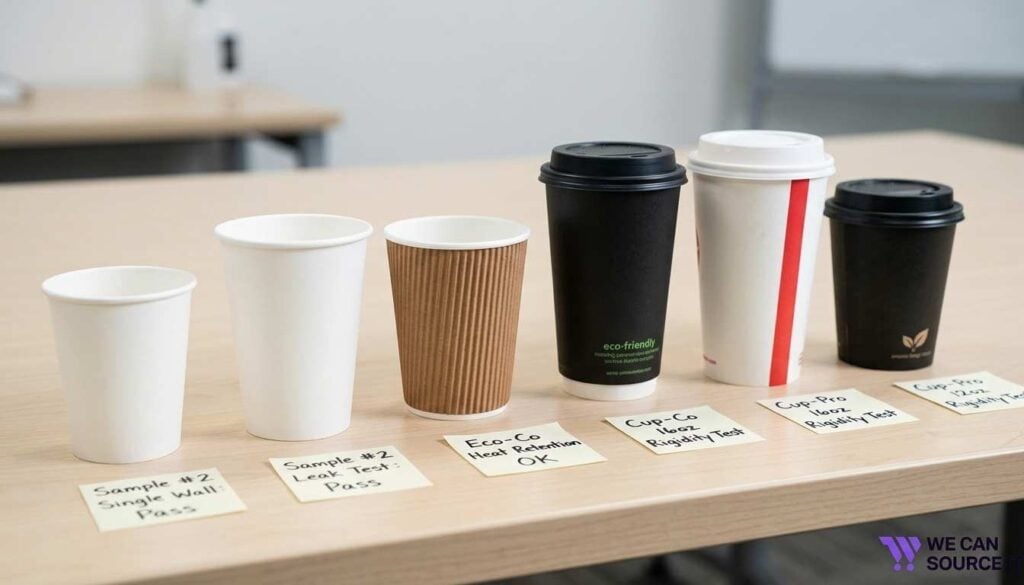
A paper cup testing protocol is a structured process for evaluating cup performance under real café conditions.
Instead of relying on supplier descriptions, the protocol tests how cups behave with actual drinks, lids, and handling.
Typical Sample Testing Steps
| Step | Purpose |
| Order sample cups | Compare multiple suppliers |
| Test with hot drinks | Check insulation and seam integrity |
| Evaluate lid compatibility | Prevent spills |
| Assess durability | Confirm structural strength |
| Gather staff feedback | Identify operational issues |
Key takeaway: Testing multiple performance factors provides a realistic picture of cup quality.
How Many Sample Cups Should You Test?
Testing a single cup is not reliable. Quality consistency can vary within the same batch.
A practical testing approach includes:
- At least 10 cups per supplier
- Testing multiple lids if used
- Evaluating two or three competing cup suppliers
This allows coffee shops to compare:
- Construction consistency
- Manufacturing precision
- Overall reliability
Key takeaway: Always test several cups from each supplier to ensure consistent quality.
How Do You Test Paper Cups with Real Drinks?

Testing with real beverages reveals issues that dry testing cannot detect.
Hot Drink Testing Procedure
- Prepare drinks at typical serving temperatures
- Espresso drinks: 85–90°C
- Fill sample cups with the drink.
- Attach the lid used in daily service.
- Observe the cup for 30 minutes.
What to Check During the Test
- Any liquid leakage at the seam
- Softening of the cup structure
- Lid seal stability
- Exterior heat comfort
Pass criteria: The cup should remain leak-free, stable, and comfortable to hold throughout the test period.
How Can You Check Seam Strength in Sample Cups?
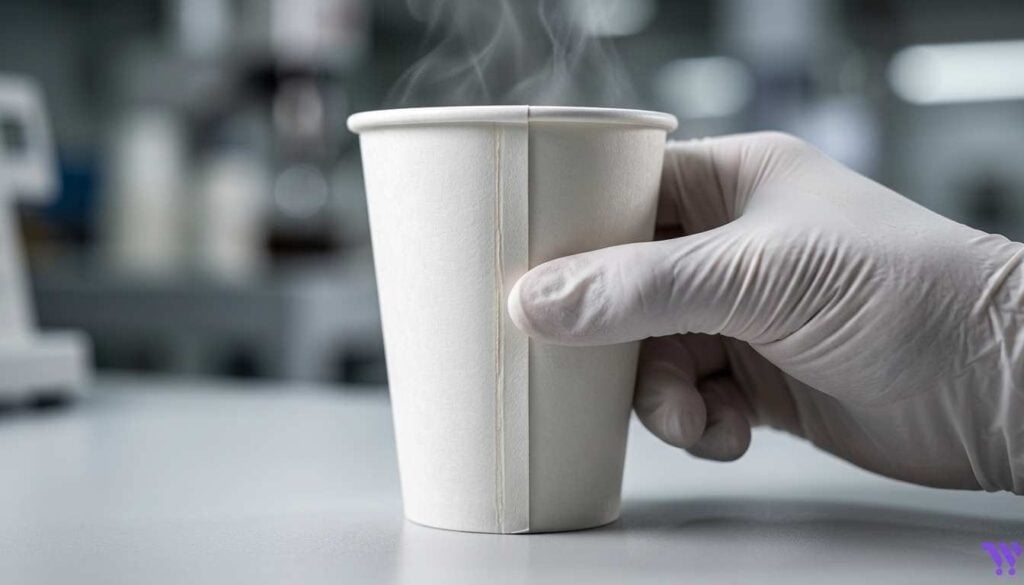
The seam is the most common failure point in disposable coffee cups.
The seam joins the paperboard sheet to form the cup body, and weak bonding can cause leakage when exposed to heat.
Seam Inspection Checklist
After filling the cup:
- Inspect the seam after 10 minutes
- Check again in 30 minutes
- Look for moisture or bubbling
Signs of seam failure include:
- Damp areas along the seam
- Softening of the paperboard
- Visible separation
Key takeaway: A high-quality cup should show no seam leakage even after extended exposure to hot liquid.
How Do You Test Lid Fit and Spill Resistance?
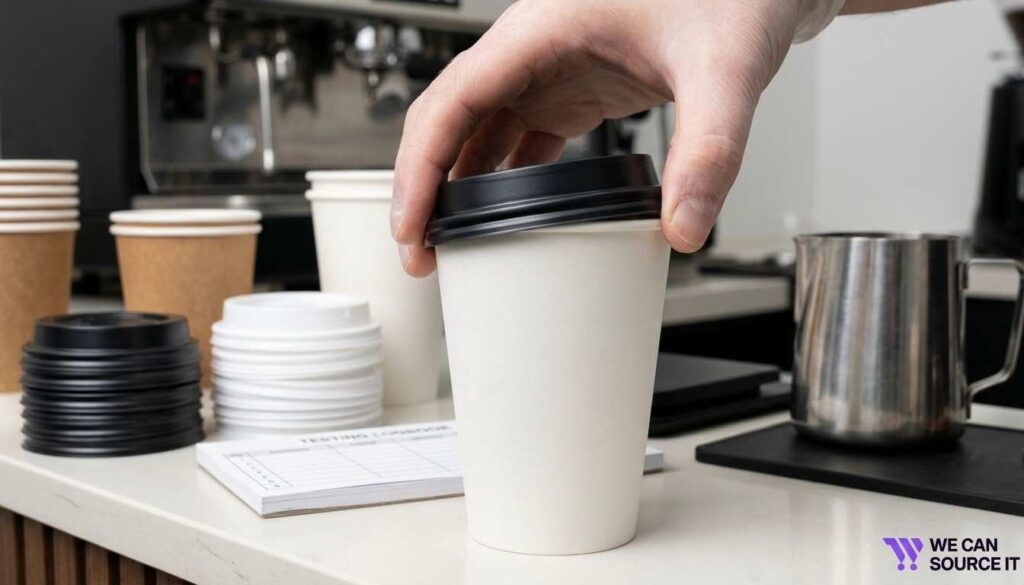
Lid compatibility is critical for takeaway drinks.
Even small variations in rim diameter between suppliers can affect lid performance.
Lid Fit Testing Steps
- Attach lids to several cups from the same sleeve.
- Listen for a clear snap when the lid attaches.
- Rotate the lid gently.
- Tilt the cup to approximately 45 degrees.
What a Good Lid Fit Looks Like
- Lid attaches securely
- Minimal rotation
- No leakage from the rim
Key takeaway: Never assume lids from one supplier will fit cups from another.
How Can Coffee Shops Test Cup Insulation and Comfort?
Customers expect takeaway cups to keep drinks hot while remaining comfortable to hold.
Cup insulation depends on wall construction:
- Single wall cups
- Double wall cups
- Ripple wall cups
Simple Insulation Test
Fill the cup with hot water at 90°C and hold the cup after:
- 1 minute
- 5 minutes
- 10 minutes
Observe:
- Exterior temperature
- Ease of holding
- Heat retention inside the drink
Typical results:
| Cup Type | Insulation Performance |
| Single wall | Requires sleeve |
| Double wall | Moderate insulation |
| Ripple wall | Strong insulation |
Key takeaway: Ripple and double-wall cups usually provide the best customer comfort.
Why Should Baristas Test Sample Cups During Service?

Real café service conditions reveal practical usability issues.
Baristas interact with cups constantly, making their feedback valuable.
Operational Factors to Evaluate
During a trial shift, ask staff to assess:
- Ease of grabbing cups from stacks
- Lid application speed
- Cup writing surface for drink labels
- Cup stability during drink preparation
Baristas often notice problems such as:
- Cups sticking together
- Lids difficult to attach
- Cups collapsing under grip
Key takeaway: Staff testing ensures the cups perform well during busy service periods.
Simple Paper Cup Testing Checklist for Coffee Shops
Before committing to a supplier, confirm the following:
Leak resistance
- No seam leaks after 30 minutes
Rim consistency
- Smooth, evenly rolled rim
Lid compatibility
- Secure snap with no spinning
Heat insulation
- Comfortable for customers to hold
Structural durability
- Maintains shape when gripped
Operational usability
- Easy stacking and handling
Completing this checklist allows cafés to confidently choose a supplier based on performance rather than price alone.
Frequently Asked Questions
Why should coffee shops test paper cups before ordering?
Testing helps identify issues such as leaks, weak seams, and poor lid fit before purchasing thousands of cups.
How long should paper cup tests last?
A practical test should last about 30 minutes with a hot liquid, reflecting typical takeaway drink usage.
Should coffee shops test multiple suppliers?
Yes. Testing two or three suppliers allows cafés to compare quality, insulation performance, and manufacturing consistency.