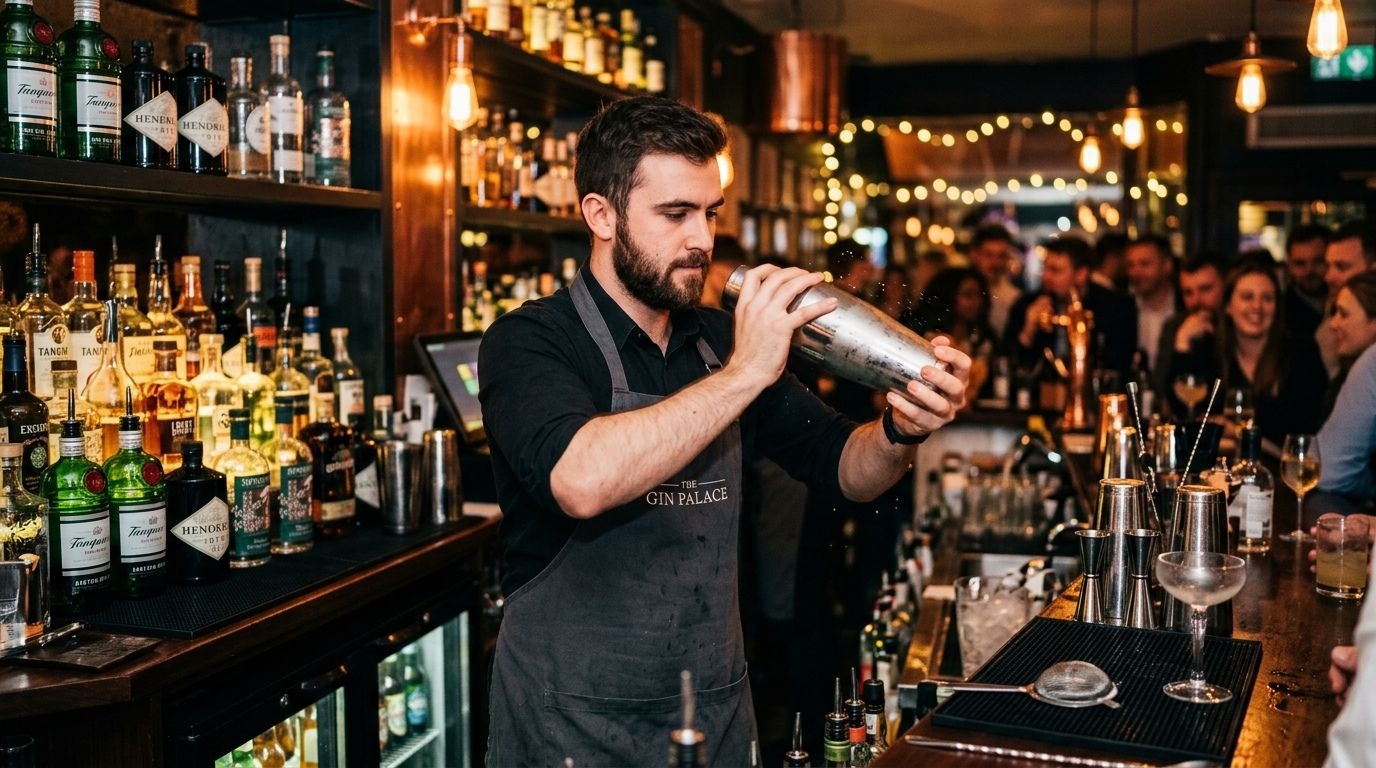
Choosing the right cocktail shaker looks simple at first. It matters a lot once service gets busy.
The wrong shaker slows your team down. A weak seal leads to spills. Poor build quality means constant replacements. These small issues add up quickly during a busy shift.
This guide keeps things practical. It covers the best cocktail shaker options for UK bars, how to choose between them, and which accessories actually help during high-volume service.
Whether you are setting up a cocktail menu for the first time or upgrading your current setup, this guide will help you make the right choice.
What Makes a Cocktail Shaker Right for Professional Bar Use
A cocktail shaker used in a professional UK bar needs to do more than just mix drinks. It must handle pressure, speed, and constant use.
There are three things that matter most.
Durability
A busy bar can produce 100 to 200 shaken drinks in one night. Your shaker needs to handle that without dents, leaks, or wear. Cheap options fail fast in this environment.
Speed and simplicity
Every second counts during service. A shaker that is hard to seal, slow to open, or awkward to clean will slow your team down. Small delays add up quickly.
All-metal construction
In UK professional bars, stainless steel shakers are the standard. Glass Boston shakers are used in some places, but they are not practical for heavy service.
Glass adds weight, absorbs cold, and can break under pressure. Stainless steel is faster, safer, and more reliable. The type of shaker you choose affects all of this.
The Three Types of Cocktail Shaker Explained
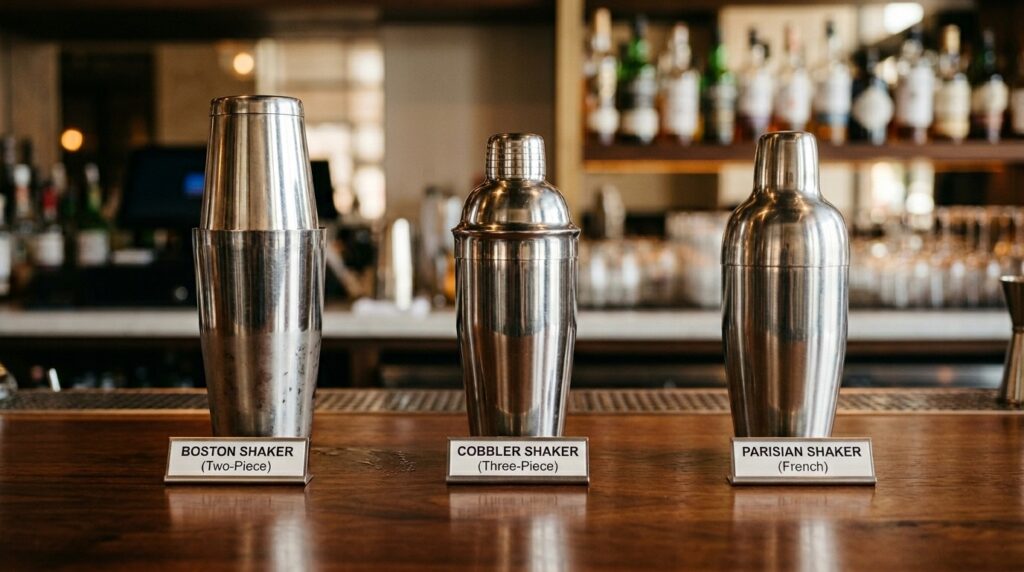
There are three main types used in professional bars. Each one suits a different setup and service style.
Boston shaker
A two-piece design with a large tin and a smaller tin. The tins seal under pressure and are separated with a firm strike after shaking. This type requires a separate strainer.
Cobbler shaker
A three-piece design with a built-in strainer and cap. It is easy to use and common in home bars or low-volume settings. No separate strainer is needed.
Parisian (French) shaker
A two-piece design similar to the Boston, but with a fitted metal cap instead of a second tin. It has a more refined look and is often used in hotel bars and fine dining settings.
Boston Shaker: Why It Is the Professional Standard in the UK
The Boston shaker is the most common choice in UK professional bars. There is a good reason for that.
Once you learn it, the two-tin design is fast and reliable. It seals tightly, chills drinks quickly, and opens with one firm strike.
There are no small parts to lose. No built-in strainers to block. No caps that get stuck during service.
Key advantages for professional use
- ▸ Faster service than cobbler shakers at volume
- ▸ Easy to clean between rounds
- ▸ No suction-lock issues
- ▸ Tins stack together for compact storage
- ▸ Large capacity for making multiple drinks at once
You will need a separate Hawthorne strainer. This is standard in any professional bar, so it is not a drawback.
The typical UK setup uses:
- ▸ One 28oz large tin
- ▸ One 18oz small tin
The large tin sits on the bottom. The small tin goes on top. Press them together at a slight angle to create a seal, then strike to open after shaking.
For new staff, it takes a little practice. After a few sessions, it becomes natural. In experienced hands, it is faster than a cobbler shaker.
Cobbler Shaker: When It Works and When It Does Not
The cobbler shaker is not suited for high-volume cocktail bars. That is a direct point based on real service experience. The built-in strainer creates two common problems.
First, it can seal too tightly when cold. This makes it slow to open during service. Second, the strainer holes block easily with pulp, seeds, or fruit. Clearing it mid-service wastes time.
Where cobbler shakers work well
- ▸ Pubs where cocktails are not a main focus
- ▸ Venues with less experienced staff
- ▸ Pop-up bars and event setups
- ▸ Small menus with only a few cocktail options
If cocktails are a small part of your offer, a cobbler shaker can work. If cocktails drive your sales, use Boston shakers and train your team properly.
Parisian Shaker: The Hotel Bar Choice
The Parisian shaker sits in a more niche category. It has the clean look of a two-piece design, but with a more refined finish than a standard Boston shaker. The fitted metal cap gives it a sleek appearance that suits hotel bars, members’ clubs, and fine dining venues.
In these settings, presentation matters just as much as performance. In terms of use, it works much like a Boston shaker. The difference is in how it seals. Instead of two tins locking under pressure, the Parisian shaker relies on a tight-fitting cap.
Because of this, the cap needs to stay in good condition. Over time, wear can affect how well it seals.
Like the Boston shaker, it also requires a separate strainer. There are a few trade-offs:
- ▸ It costs more than a standard Boston shaker
- ▸ It is less widely available in the UK
- ▸ Replacements can take longer to source
For most pubs and busy bars, it is not the most practical option. But for hotel bars and higher-end venues where appearance matters, it is a strong choice.
How to Choose the Right Cocktail Shaker for Your Bar Type
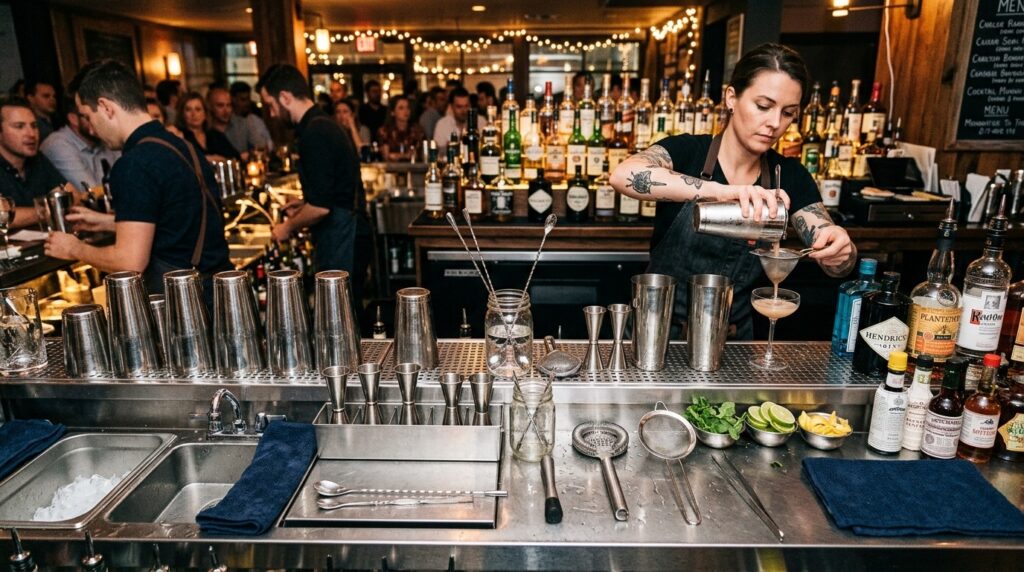
Use this as a simple guide when choosing your setup.
High-volume cocktail bar or dedicated cocktail menu
- ▸ Go with a Boston shaker. Choose an all-metal set with 28oz and 18oz tins.
- ▸ Buy at least two sets per bartender working the cocktail station.
Pub with a secondary cocktail offering
- ▸ A cobbler shaker can work.
- ▸ You can also use one or two Boston shaker sets if you plan to expand your cocktail menu over time.
Hotel bar or fine dining venue
- ▸ Choose a Parisian shaker if presentation is important.
- ▸ If speed and volume matter more, stick with a Boston shaker.
Events and pop-up bars
- ▸ Cobbler shakers are easier for quick setups.
- ▸ If your staff are experienced, a few Boston shaker sets will give better performance.
Budget Guidance
For professional use, always buy commercial-grade. A mid-range stainless steel Boston shaker set usually costs between £15 and £35. It will last much longer than cheaper options.
Buying the cheapest shaker often leads to frequent replacements, sometimes every two to three months in a busy bar.
Essential Cocktail Accessories Every Professional Bar Needs
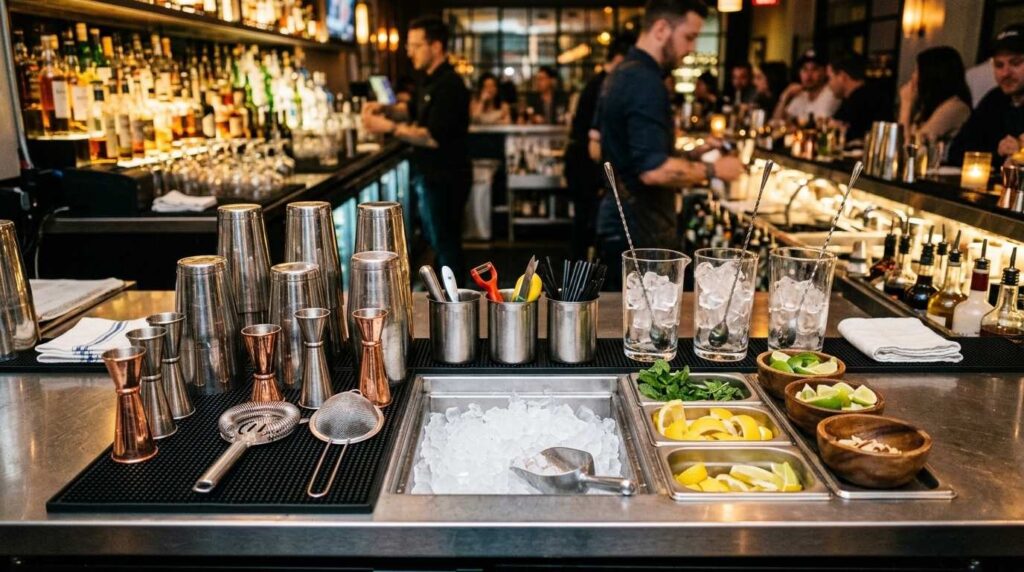
A cocktail shaker is only part of the setup. The accessories around it decide how smoothly your service runs.
Hawthorne strainer
This is the key partner for a Boston shaker. It sits over the tin and strains the drink into the glass. Choose commercial-grade stainless steel. The spring should be tight and secure. If it loosens, ice chips will slip through.
Julep strainer
Used with a mixing glass for stirred drinks. Cocktails like Martinis, Negronis, and Old Fashioneds are stirred, not shaken. A busy bar needs a julep strainer as standard.
Fine mesh strainer
Used for double straining. First through the Hawthorne, then through the fine mesh. This removes small ice shards and pulp. It is essential for smooth drinks like citrus sours or espresso martinis. A small tea strainer works well.
Jigger set
Consistent drinks depend on accurate measuring. The standard setup is 25ml and 50ml. Add 15ml and 30ml for smaller pours. Always choose stainless steel. Plastic wears out quickly and loses accuracy.
Bar spoon
A long spoon with a twisted stem. Used for stirring and layering drinks. The standard length is 30cm, so it reaches the bottom of a mixing glass. Choose stainless steel for durability and smooth rotation.
Mixing glass
Used for stirred cocktails. It should be tall, stable, and have a pouring lip. A weighted base helps keep it steady during use. Crystal versions add a premium look to open bar setups.
Muddler
Used for crushing herbs, fruit, and sugar. Essential for mojitos and similar drinks. Stainless steel is the better option. It is easier to clean and does not absorb flavours.
Speed pourer set
Controls the flow of spirits and speeds up service. These are not legal for measured serving of gin, rum, vodka, or whisky in the UK. They are still widely used for free-pour ingredients and prep work. Keep at least 6 to 8 at your cocktail station.
Common Mistakes When Buying Cocktail Equipment
Avoid these common mistakes. They cause problems during service and cost money over time.
Buying home bar products for professional use
- ▸ Equipment from homeware or lifestyle stores is not built for heavy use. It may look similar, but it wears out much faster.
- ▸ Always buy from a catering or hospitality supplier.
Underestimating how many shakers you need
- ▸ One or two shakers are not enough for a busy bar.
- ▸ If you serve 40 or more cocktails a night, this creates delays.
- ▸ Make sure at least two bartenders can work at the same time without waiting.
Choosing a cobbler shaker because it seems easier
- ▸The built-in strainer works fine at low volume.
- ▸ In a busy bar, it slows things down and can cause issues.
- ▸ If cocktails are important to your business, train your team to use Boston shakers.
Buying cheap jiggers
- ▸ Inaccurate jiggers cost you money on every drink.
- ▸ They also affect quality, since cocktails rely on precise ratios.
- ▸ Use well-made, properly calibrated stainless steel jiggers.
Not keeping a spare Hawthorne strainer
- ▸ Springs can fail without warning.
- ▸ Having a spare ready prevents delays during service.
Where to Buy Professional Cocktail Shakers in the UK
We Can Source It supplies a full range of professional cocktail equipment for UK bars and pubs. This includes Boston shakers, Hawthorne and julep strainers, jigger sets, bar spoons, mixing glasses, muddlers, and speed pourers.
All products are commercial grade and built for daily use in a busy bar. UK delivery is available across the full range. You can browse the complete collection on the Bar Equipment & Supplies category page.
If you need a wider setup, including spirit measures and cellar equipment, check the full guide, “Bar Equipment & Supplies: The Complete UK Buyer’s Guide for Pubs & Bars (2026)”
Frequently Asked Questions
What is the best cocktail shaker for a professional bar in the UK?
The Boston shaker is the standard choice in UK professional bars. Its two-tin all-metal design is faster, stronger, and easier to use at volume than cobbler or Parisian shakers. For best results, use commercial-grade stainless steel in 28oz and 18oz sizes.
What is the difference between a Boston and a cobbler cocktail shaker?
A Boston shaker is a two-piece design that needs a separate strainer. It is faster and better suited for busy bar service. A cobbler shaker is a three-piece design with a built-in strainer. It is easier for beginners, but it can cause issues in high-volume service due to suction sealing and blocked strainers.
Do I need a separate strainer with a Boston shaker?
Yes. A Hawthorne strainer is used with a Boston shaker. It fits over the tin and strains the drink as you pour. A fine mesh strainer is also used when double straining is needed for a smoother finish.
How many cocktail shakers does a bar need?
At a minimum, have two full shaker sets per bartender on the cocktail station. In busy service, one shaker is often in use while the other is being cleaned. High-volume bars usually keep four to six sets available to avoid delays.
Can I use a cocktail shaker for free-pour spirits?
Yes. Most spirits used in cocktails are not subject to UK measured serving rules. Only gin, rum, vodka, and whisky must be served in legal measures when sold on their own. In cocktails with multiple ingredients, these spirits can be free-poured into the shaker using a jigger for accuracy.
Author
We Can Source It, Team
We Can Source It is a UK-based supplier of catering and hospitality equipment for bars, pubs, restaurants, hotels, and event operators across the United Kingdom.