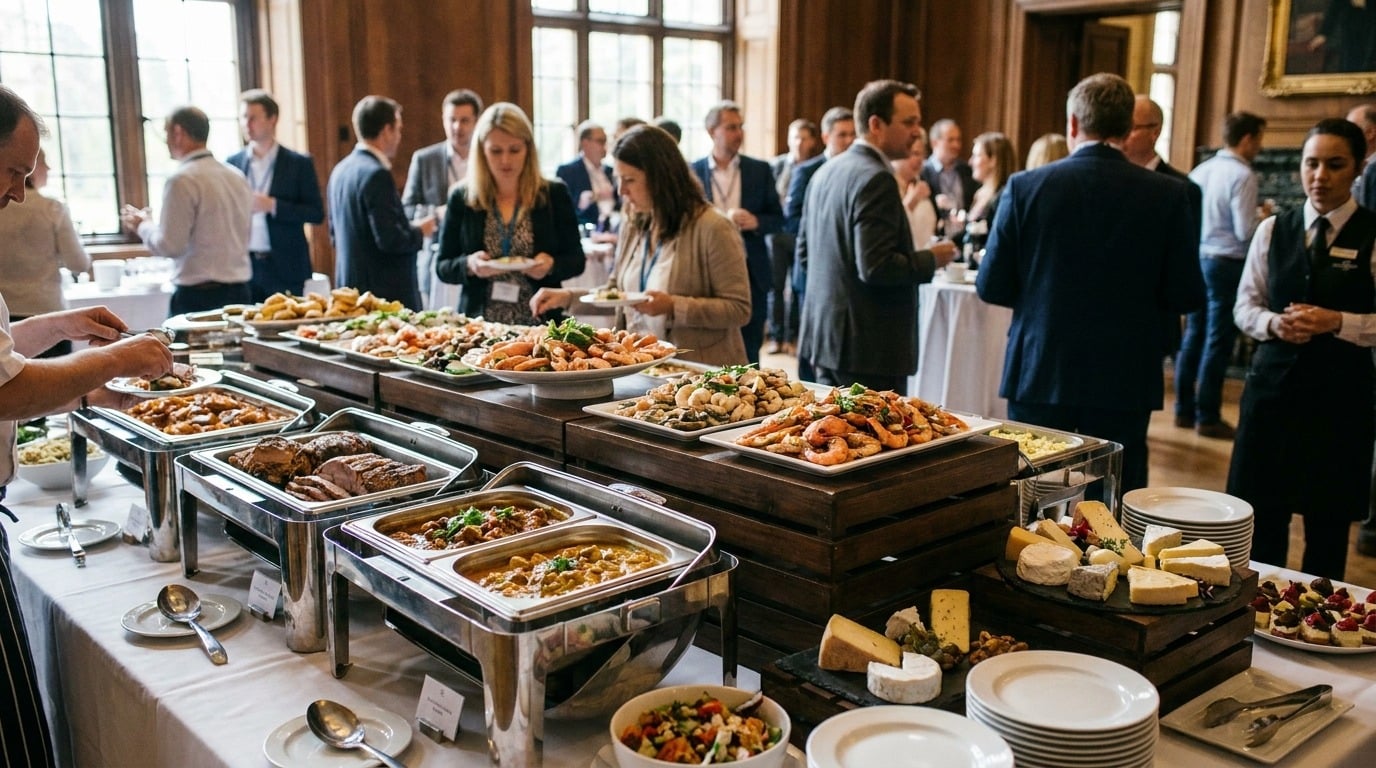
Most buffet guides tell you to “add height” and “vary your textures.” That advice is fine, but it doesn’t help you decide which riser materials survive daily transport, how many chafing dishes you actually need for 100 guests, what a proper setup costs, or which equipment decisions are quietly wasting your budget.
This guide is written for UK caterers, hotels, event companies, and food service operators who need practical answers, not mood boards. You’ll find buying frameworks, real quantity guidance, cost ranges, material comparisons, food safety requirements, layout frameworks, and complete equipment checklists by venue type.
Why Buffet Presentation Directly Affects Your Revenue
A badly laid-out buffet looks cheap, even when the food is excellent. Guests make immediate judgements about food quality based on how it’s displayed. If everything sits flat on a table with no height, no structure, and no visual flow, the perceived value drops, and so does your ability to charge a premium for your service.
For event caterers in particular, the difference between a flat presentation and a structured three-tier display can justify a meaningful uplift in per-head pricing. A professional buffet setup signals competence before anyone takes a single bite.
Beyond perception, there are operational reasons to get this right:
- ▸ Proper height variations reduce reach distances for guests, which improves flow and reduces queuing
- ▸ Structured displays keep food more organised and easier to replenish
- ▸ The right equipment reduces plate waste by making dishes more visible and accessible
- ▸ Professional setups look better in event photography, which directly feeds your marketing
This isn’t just a presentation for its own sake. It’s a commercial decision.
How to Choose Buffet Equipment in 5 Steps
Before buying anything, run through this framework. It stops you from spending on equipment that doesn’t suit your operation.
Step 1 – Guest volume: How many guests do you typically serve? Your answer determines quantities, table lengths, and station count. A 50-person wedding needs a fundamentally different setup from a 250-person conference. (Full quantity breakdowns below.)
Step 2 – Indoor or outdoor: Outdoor and marquee events rule out electric chafers unless you have a guaranteed power supply. Outdoor conditions also mean wind-resistant label holders, weighted riser bases, and covered food protection. Indoor venues with reliable power give you more options and more consistency.
Step 3 – Transport frequency: If you’re moving equipment between multiple venues every week, weight and durability matter more than aesthetics. Acrylic risers and commercial stainless chafers survive the journey better than wooden risers and decorative MDF stands. If you’re equipping a fixed hotel or restaurant buffet, the transport question disappears.
Step 4 – Brand and visual style: Are you positioning as premium, rustic, modern, or high-volume commercial? Your equipment needs to match. Black buffetware with wooden risers reads as boutique. Stainless steel with clear acrylic reads as professional and neutral. Matching material across your full setup always looks more considered than a mix.
Step 5 – Budget: Budget determines quality tier, not just quantity. A £300 starter setup is achievable. A complete hotel buffet operation is a different investment entirely. See the cost section below for realistic UK ranges.
Buffet Equipment Explained: What You Actually Need
Buffet Risers and Display Stands
Risers are the foundation of any professional buffet display. They create height variation, direct the eye, and allow you to present more dishes in a smaller footprint. Without them, everything sits at the same level and competes for attention equally, which means nothing gets noticed.
What to look for:
- ▸ Load-bearing capacity (particularly for GN pans of hot food)
- ▸ Stability on uneven surfaces (common in marquees and venues with older flooring)
- ▸ Surface material (acrylic, wood, metal, or fabric-covered MDF)
- ▸ Stackability for transport and storage
Chafing Dishes and Chafers
Chafing dishes keep hot food at safe serving temperatures throughout a buffet service. They sit above a water bath heated by fuel gel or electric elements. For UK operators, this isn’t optional; hot food must be maintained at 63°C or above, per Food Standards Agency guidance.
Key decisions:
- ▸ Full-size or half-size GN configuration
- ▸ Fuel gel (portable, no power needed) vs electric (more consistent, requires a power supply)
- ▸ Stainless steel vs black finish depending on your aesthetic
- ▸ Whether lids are roll-top or hinged
Cold Display Equipment
Cold food needs just as much thought. Salads, desserts, seafood, and deli items need to stay at or below 8°C during service, with 5°C preferred.
Options include:
- ▸ Ice-bedded display trays
- ▸ Refrigerated countertop displays
- ▸ Chilled ceramic and slate serving boards (for shorter service windows)
- ▸ Insulated serving bowls with ice compartments
Serving Utensils and Accessories
Often an afterthought, but guests notice. Mismatched or worn serving utensils undermine even a beautifully structured display. For a consistent look, match your utensil finish to your chafing dishes’ brushed stainless or black matte, depending on your style direction.
Essential utensils:
- ▸ Serving spoons (slotted and solid)
- ▸ Tongs (various sizes)
- ▸ Ladles (for soups and sauces)
- ▸ Cake slices and spatulas
- ▸ Carving forks and knives if relevant
Label Holders and Allergen Signage
Mandatory under UK allergen legislation. Every dish at a buffet must clearly indicate the presence of the 14 major allergens. Label holders keep signage professional, readable, and upright throughout service. Card frames, A-frame signs, and chalkboard-style holders all work, depending on your event aesthetic.
Types of Buffet Risers: Quick Comparison
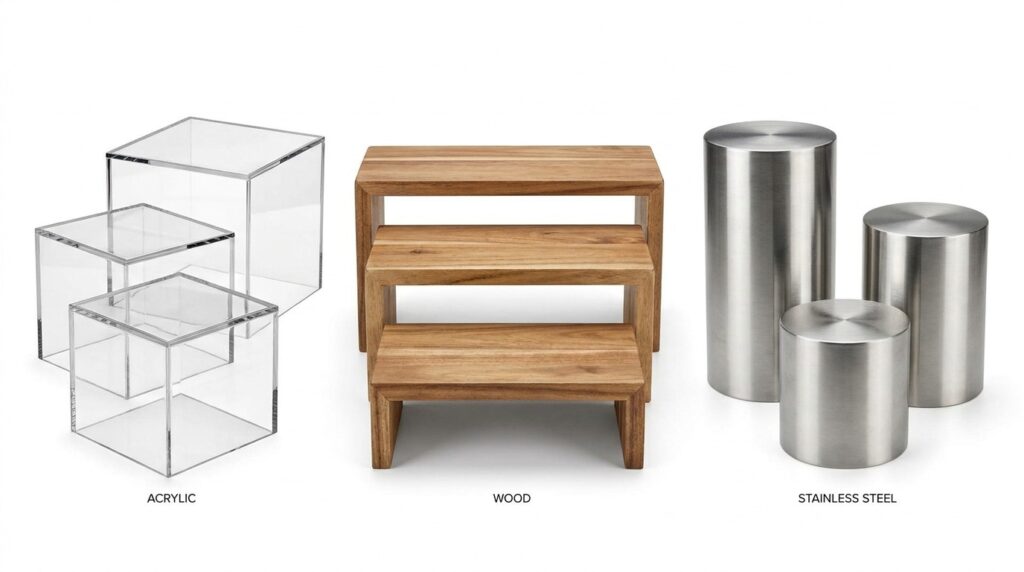
| Equipment | Best For | Lifespan | Cleaning | Transport |
| Acrylic Risers | Corporate, hotel, conference | High | Easy | Excellent |
| Wooden Risers | Weddings, restaurants, events | High | Medium | Good |
| Metal / Steel Risers | Hotels, high-volume catering | Very High | Easy | Medium |
| MDF / Fabric Risers | Occasional themed events | Medium | Medium | Good |
Acrylic Risers
Acrylic is the most popular choice for professional caterers because it’s lightweight, easy to clean, and visually neutral. The clear or frosted finish doesn’t compete with food or table linen, so it works across most event types.
Strengths: very lightweight, easy to wipe clean, stackable, available in tiered sets.
Weaknesses: can scratch over time; cheap versions crack more easily; doesn’t suit rustic or heavily wood-themed setups.
Best for: hotels, corporate events, conference catering, schools and university buffets.
Wooden Risers
Wooden risers have grown significantly in popularity as the hospitality sector has moved toward warmer, more natural aesthetics. They photograph well, work with most colour schemes, and add a sense of quality.
Strengths: strong visual impact, durable if properly finished, supports heavier loads than acrylic.
Weaknesses: heavier to transport, needs maintenance (oiling, avoiding water saturation), can warp in humid environments.
Best for: wedding receptions, restaurant buffets, farm-to-table events, festive settings.
Stainless Steel and Metal Risers
Metal risers and stepped stands are a strong choice for commercial kitchens and high-volume caterers because they’re robust and long-lasting. The clinical look suits hotel breakfast buffets, conference centres, and industrial-aesthetic events.
Strengths: extremely durable, easy to sanitise, handles significant weight loads.
Weaknesses: heavier than acrylic, can look cold in warmer event settings, some versions show fingerprints.
Best for: hotel breakfast lines, conference buffets, high-volume event catering.
Fabric-Covered and MDF Risers
Covered risers typically MDF frames with fitted fabric covers allow caterers to match their display to their event’s colour scheme exactly. Popular for weddings and themed corporate events.
Strengths: highly customisable, lightweight, good for controlled low-traffic events.
Weaknesses: fabric covers need careful cleaning, are not suited to wet or messy food service, limited load capacity. Best for: weddings, gala dinners, themed events.
The 3-Level Buffet Display Formula
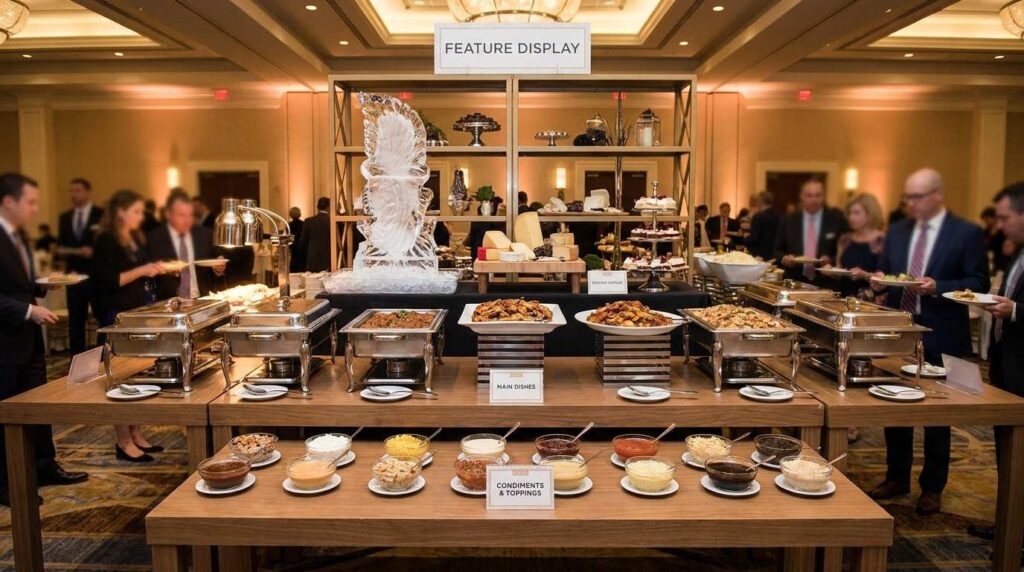
Most caterers know height variation matters. Fewer have a clear system for creating it.
| Level | Height | Best Use |
| Front (Base) | 0-4 inches | Condiments, label holders, bread rolls, small side plates |
| Middle | 6-10 inches | Main dishes, salads, GN pan presentations |
| Rear / Feature | 12-18 inches | Focal dishes, centrepieces, decorative elements, tall vessels |
The purpose of this structure is to make every dish visible from the queue. If your rear dishes are hidden behind mid-level equipment, guests won’t reach for them, which creates an imbalance in consumption and increases waste.
A few working principles:
Don’t mirror both sides. If you have a long table, avoid making each side identical. Slight variation creates visual interest and encourages guests to walk the full length.
Keep the heaviest items at the lowest level. Large GN pans of hot food should sit on sturdy bases at mid-height, not balanced on tall risers.
Feature dishes earn the highest position. Your centrepiece, whether that’s a carved joint, an impressive display, or your most visually appealing dish, should sit at the rear, elevated, so it draws the eye from across the room.
How Much Buffet Equipment Do You Actually Need?
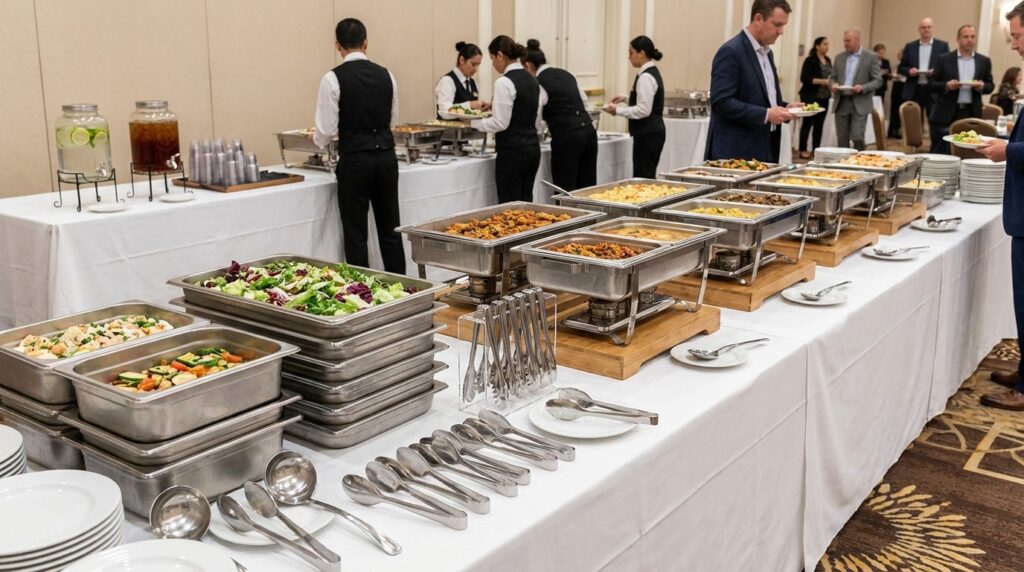
This is the question most guides don’t answer. Use this table as your baseline planning tool. Adjust upward for longer service windows or a wider menu, and plan for one spare set of utensils per station.
| Guests | Chafing Dishes | Risers | Serving Utensils | Drink Dispensers | GN Pans | Table Length |
| 50 | 3-4 | 4-6 | 10-12 | 1-2 | 6-8 | 4-6m |
| 100 | 5-8 | 8-12 | 15-20 | 2-3 | 10-14 | 8-10m |
| 150 | 7-10 | 10-15 | 20-25 | 3-4 | 14-18 | 10-14m |
| 250 | 10-16 | 15-25 | 30-40 | 4-6 | 20-28 | 16-20m |
| 500 | 18-28 | 25-40 | 50-70 | 6-10 | 35-50 | 25-35m |
Notes on the table:
Chafing dish count is based on 4-5 hot dishes being served. If you’re offering 8 hot dishes, increase accordingly. For very long service windows (3+ hours), you may need duplicate chafers so one can be replenished while the other stays in service.
Riser count covers front, mid, and rear levels across the full table run. More risers allow more flexibility in your display structure.
GN pan quantities account for one in-service pan per dish plus one reserve in heated storage for replenishment.
Drink dispensers depend on whether you’re running water only, juice, or a full beverage station.
How Much Does Buffet Equipment Cost in the UK?
No other buying guide publishes real numbers. Here’s an honest breakdown by operation type.
Starter Setup (New Caterer / Small Events)
Covers events up to 50 guests with 3-4 hot dishes.
- ▸ 4 full-size chafing dishes
- ▸ 6 acrylic risers (tiered set)
- ▸ 10-12 serving utensils
- ▸ Basic allergen label holders
- ▸ 1 drink dispenser
Estimated total: £300-£700
This gets you operational. It won’t win aesthetic awards, but it’s functional, food-safe, and professional enough for corporate and private events.
Professional Event Caterer Setup (Mid-Scale)
Covers events up to 100 – 150 guests with 5 – 8 hot dishes, a cold display section, and a drinks station.
- ▸ 8-10 full-size chafing dishes
- ▸ 12-16 risers (mixed acrylic and wooden)
- ▸ 20-25 serving utensils (matched set)
- ▸ Cold display trays and ice beds
- ▸ Allergen signage and label holders
- ▸ 2-3 drink dispensers
- ▸ Transport crates
Estimated total: £1,500-£5,000
At this level, the quality of your presentation becomes a commercial differentiator. Caterers at this investment level typically have coordinated equipment across their full setup.
Hotel or Venue Buffet Setup (Permanent / High-Volume)
Covers a fixed or semi-permanent hotel breakfast or conference buffet running daily.
- ▸ 12-20 electric chafing dishes
- ▸ 20-40 commercial-grade stainless risers and stands
- ▸ Multiple serving utensil sets (rotation between services)
- ▸ Refrigerated cold display counters
- ▸ Sneeze guards and fixed allergen signage
- ▸ Juice and hot beverage dispensers
- ▸ Full crockery and servingware complement
Estimated total: £5,000-£20,000+
Hotels and large venues buying at this scale typically purchase through a single supplier relationship to ensure consistency and negotiate commercial pricing. The investment pays back quickly when equipment is used daily across multiple services.
What Caterers Typically Upgrade First
Based on common purchasing patterns in the UK catering supplies market:
Most new caterers start with chafing dishes and serving utensils, the functional essentials. The first upgrade is almost always risers, once they realise flat presentations are holding back their visual quality. Display systems and matched equipment sets come later, once the business is established and the ROI on premium presentation is clearer.
Hotels and fixed-venue operators tend to prioritise durability from day one, investing in commercial stainless equipment that will handle daily sanitisation and heavy use. Wedding caterers and event specialists spend proportionally more on presentation equipment, wooden risers, black buffetware, and modular display systems because the visual quality directly influences their pricing and referral rate.
Buffet Table Spacing and Clearance Guide
This is practical information almost no competitor covers, but it makes a real difference to how smoothly a service runs.
| Element | Recommended Space |
| Guest queue lane width | 1.2m minimum |
| Staff access behind the buffet | 1.0m minimum |
| Double-sided buffet (total clearance) | 2.0m between table backs |
| Drink station width | 1.5m minimum |
| Wheelchair accessible queue lane | 1.5m minimum |
| Emergency exit clearance | Check venue requirements, never block |
Why this matters in practice:
A queue lane under 1.0m causes congestion, particularly with guests carrying plates. Staff access under 0.8m makes replenishment difficult, which means service quality drops and replenishment takes longer. For events with 150+ guests, building two metres of clearance either side of your buffet tables prevents most flow problems before they start.
For double-sided buffets where guests serve from both sides of a central run, the two-metre clearance between table backs allows two parallel queues to operate without interference.
Buffet Equipment Checklist by Venue Type
Different venues have different requirements. Here’s a practical breakdown.
Hotel Breakfast Buffet Equipment
Hotel breakfast buffets run for extended periods, require self-replenishment, and need to look fresh throughout a long service window.
Essential: Electric chafing dishes (consistent heat, no fuel management), Juice dispensers and cereal dispensers, Toaster station with crumb trays, Cold display for yoghurts, fruits, and cheese, Label holders with daily menu inserts, Tiered fruit stands, Stainless steel risers (easy sanitisation, multiple uses daily), Stainless steel serving utensils, multiple sets for rotation
Nice to have: sneeze guards, heated plate dispensers, egg station equipment for live cooking.
Wedding Buffet Equipment
Weddings demand visual impact alongside function. The display is part of the photography.
Essential: Wooden or fabric risers (warm aesthetic, photographs well), chafing dishes in brushed stainless or black finish, Decorative serving boards and slate platters for cold items, Elegant serving utensils (matching set), Allergen cards in presentation frames, Table linen and runners, Drinks station with dispensers and glassware risers
Nice to have: personalised name cards, candle holders integrated into display, dessert tiered stands for the cake area.
Corporate Event and Conference Buffet
Corporate clients want reliability, speed of service, and professional presentation.
Essential: Chafing dishes (full-size for volume), Acrylic risers (neutral, quick to set and clear), Clear allergen signage (corporate clients are increasingly diligent on this), Stainless serving utensils, Napkin holders and dispenser systems, Drink station with water dispensers and cups, Dessert display stand
Key consideration: flow management is critical for corporate buffets. Queues form fast. A well-structured layout reduces the service window and keeps guests happy.
School and University Catering Buffets
High volume, robust equipment, easy cleaning, and safety are the priorities.
Essential: Commercial-grade stainless steel chafing dishes, Simple risers that are quick to set up and break down, Sneezeguards,s Large-format serving utensils, Allergen signage (increasingly important in educational settings)
Outdoor and Marquee Events
Outdoor events present the biggest operational challenges: uneven ground, wind, humidity, and lack of reliable power.
Essential: Fuel gel chafing dishes (no power dependency), weighted or wide-base risers (stability on grass or uneven flooring), Covers and canopies for food protection, Extra serving utensils (outdoor conditions mean higher contamination risk), wind-resistant label holders, Bug-proof covers for cold food when not being actively served.
Example Buffet Layouts
Layout for 50 Guests
For 50 guests, a single run of two or three trestle tables works well. The goal is a simple loop flow: guests enter at one end, serve themselves, and exit at the other.
Suggested layout: Table 1: Cold starters, salads, and bread (4m run) Table 2: Hot mains with three to four chafing dishes across two height levels (4-5m run) End station: Desserts, drinks, condiments (1.5m)
Set risers at the rear of each section to bring feature dishes to eye level. Allergen cards should sit beside each dish, not grouped at one end.
Layout for 100 Guests
At 100 guests, a single queue creates bottlenecks. The most effective approach is a double-sided layout with two runs of tables facing each other, separated by a central island that guests can access from both sides.
Suggested approach: Mirror cold items on both sides (salads, breads). Place hot items in the centre where possible to reduce queue concentration. Operate two drink and dessert stations at opposite ends of the room.
Layout for 250+ Guests
At scale, the biggest risk is queue failure. The priority is getting food to people quickly.
Principles: Minimum four service stations, ideally six. Duplicate the most popular dishes across stations. Hot food stations at each corner if the venue allows. Dedicated dessert and drinks run separate from mains. Staff each station to maintain appearance and assist guests
At this scale, branded or coordinated equipment creates a much stronger visual impression than a mix of items from different suppliers.
UK Food Safety Requirements for Buffet Displays
Hot Holding Temperature
Hot food on display must be kept at 63°C or above throughout service. This applies to food in chafing dishes, heated counters, and any other hot-holding equipment.
If food drops below 63°C, it enters the temperature danger zone where bacterial growth accelerates. The Food Standards Agency advises that food should not remain in the danger zone (8°C-63°C) for more than two hours in total.
Practical implication: check chafing dish fuel levels every 30-45 minutes. Electric chafers are more consistent, but if using fuel gel, plan your refuelling schedule before service starts.
Cold Holding Temperature
Cold food on display should be kept at 8°C or below, with 5°C recommended for best practice. If using ice beds, ensure ice is maintained throughout service.
Time Limits for Buffet Display
Most commercial operators work to a two-to-four-hour service window, with food being replenished from refrigerated or heated storage rather than sitting continuously. If food has been held between 8°C-63°C for two hours, it should be discarded rather than returned to storage.
Allergen Labelling at Buffets
Under UK allergen legislation (retaining EU Regulation 1169/2011), food businesses must provide allergen information for all food sold or served. At buffets, this means clear labelling beside each dish identifying the 14 major allergens:
Celery, Cereals containing gluten, Crustaceans, Eggs, Fish, Lupin, Milk, Molluscs, Mustard, Nuts (tree nuts, specified), Peanuts, Sesame, Soybeans, Sulphur dioxide/sulphites.
Label holders beside each dish are the most practical and professional solution. For further regulatory guidance, refer to the Food Standards Agency.
Cross-Contamination at Buffet Stations
One utensil per dish, not shared between dishes. Separate serving equipment for allergen-free dishes. Clear verbal guidance to guests if dishes contain common allergens. Staff present at stations where high-risk food is served
10 Common Buffet Display Mistakes Caterers Make
1. Everything at the Same Height. If every dish sits flat on the table, guests see a wall of food with no focal point. Even two levels of height change everything.
2. Blocking Sightlines. Tall risers at the front hide the dishes behind them. Work front-to-back: lowest items nearest the guest, tallest at the rear.
3. Overcrowding Platters. A platter that’s completely full at the start looks great for about ten minutes. Under-fill slightly and replenish more frequently for a cleaner look throughout service.
4. Unstable Risers on Uneven Ground. A riser that wobbles under weight is a liability for hot food. Always test stability before service. Non-slip matting helps significantly on hard or uneven surfaces.
5. No Replenishment Strategy. Running out of dishes halfway through service or letting platters sit nearly empty looks unprepared. Plan your replenishment schedule before the event.
6. Mismatched Equipment. A mix of acrylic, wooden, and metal risers with chafing dishes in different finishes looks accidental. Consistency across your equipment set creates a professional impression.
7. Poor Allergen Signage. Small handwritten cards that fall over are not adequate. Label holders beside each dish with clear, consistent labelling are both more professional and more compliant.
8. Ignoring Queue Flow. Set up from the perspective of a guest joining the queue, not from behind the table. Walk the queue before service starts.
9. Under-investing in Serving Utensils. Worn, stained, or mismatched serving spoons undermine an otherwise professional display. Budget for a consistent matched set and rotate between events.
10. No Contingency for Equipment Failure. Fuel gel runs out. Electric chafers lose power if a breaker trips. A backup fuel supply and basic knowledge of the venue’s electrical capacity are worth building into your pre-event checklist.
Buffet Equipment Buying Mistakes That Waste Money
These are the purchasing decisions that caterers regret most.
Buying residential-grade risers. Consumer risers are not built for commercial load, repeat transport, or daily sanitisation. They look similar in a product photo but fail quickly in professional use.
Mixing GN standards. If your chafing dishes take GN 1/1 pans and you buy GN 2/3 pans, they won’t fit. Standardise your entire system before purchasing GN pans in bulk.
Buying fuel gel without testing burn time. Not all fuel gel products burn for the same duration. Buy a single unit, test it under real conditions, and only bulk-order a brand you’ve verified.
Choosing appearance over durability for transport-heavy operations. Wooden risers look excellent but need proper care to survive regular van transport. If you’re running five events a week, durability has to come before aesthetics.
Buying individual items instead of coordinated sets. A set of eight matching chafing dishes bought together will always look more professional than eight chafers sourced from different suppliers at different times.
Under-ordering serving utensils. A common error. Guests drop them, they go missing during service, and you can’t run a clean replenishment without spare sets. Order more than you think you need.
Transport and Storage: What Most Guides Miss
For caterers running events off-site, the journey from kitchen to venue is where equipment gets damaged, scratched, and broken.
Acrylic risers are the best choice for transport-heavy operations. Lightweight, stack efficiently, and don’t warp or split if properly stored. Wrap in cloth or use padded storage sleeves to prevent scratching.
Wooden risers need more care. They can warp with moisture and crack on impact. Store in padded crates and avoid stacking heavy items on top.
Chafing dishes should nest inside each other with lids stored separately, or be transported in purpose-made cases. Lids are the most commonly damaged component.
Vehicle and storage considerations:
Use crates or roll cages with padding between items. Secure loads to prevent shifting on corners. Don’t stack chafing dishes more than two or three high without a rack system. Keep heavy steel items at the bottom; acrylic and fabric risers on top. Transport fuel gel separately from food and equipment where possible
Storage between events: clean and dry all equipment before storage. Moisture left inside chafing dishes causes rust on stainless steel items. Store label holders flat to prevent warping.
Buffet Display Trends for 2026
Sustainable and Natural Materials. Hotels and event operators are moving toward natural textures, such as raw wood, slate, stone, linen, and terracotta. Bamboo risers and recycled material serving boards are increasingly popular with corporate clients who have sustainability commitments.
Black Buffetware. Matte black chafing dishes, black serving utensils, and black riser sets have moved from niche to mainstream. Black equipment makes food colours pop, works with both light and dark linen, and photographs strongly.
Minimalist Hotel Buffets. Clean lines, consistent equipment, strong height variation, and simple label systems are preferred over the highly decorated maximalist approach. The goal is a professional, editorial look.
Grab-and-Go Breakfast Stations. Many hotels and corporate venues have moved toward grab-and-go configurations for breakfast and morning breaks. Individual portion display, sealed packaging for key items, and clear label systems are now standard requirements.
Modular Buffet Systems. Modular display systems where individual risers, supports, and surface elements can be reconfigured for different events are gaining traction because they offer flexibility without requiring a large inventory.
Complete Buffet Equipment Buying Checklist
Hot Food Equipment
- [ ] Chafing dishes (full-size) quantity per guest count guide above
- [ ] Chafing dishes (half-size) for smaller portions or variety
- [ ] GN pans (1/1, 1/2, 1/3) in matching standard
- [ ] Fuel gel – minimum two cans per chafer for a four-hour service
- [ ] Electric chafers if reliable power is available
- [ ] Water baths cleaned and tested before events
Cold Food Equipment
- [ ] Ice-bed display trays
- [ ] Insulated serving bowls
- [ ] Refrigerated countertop display units (for high-volume operations)
- [ ] Chilled serving boards or slate platters
Risers and Display
- [ ] Tiered riser sets (minimum two height levels)
- [ ] Feature riser for centrepiece (12-18 inch height)
- [ ] Stable bases tested for uneven surfaces
- [ ] Matching material across the set
Serving Equipment
- [ ] Slotted and solid serving spoons (multiple per station)
- [ ] Tongs (multiple sizes)
- [ ] Ladles
- [ ] Cake slices and spatulas
- [ ] Carving equipment if required
- [ ] Spare utensil sets for rotation
Signage and Compliance
- [ ] Allergen label holders
- [ ] Allergen cards for each dish
- [ ] Dish name labels
- [ ] Sneeze guards were required
Drinks Station
- [ ] Juice or water dispensers
- [ ] Cup holders or dispenser
- [ ] Drip trays
- [ ] Ice bucket and tongs
Setup and Logistics
- [ ] Table linen (measured to table dimensions)
- [ ] Crumb trays beneath bread and pastry stations
- [ ] Non-slip matting under risers where needed
- [ ] Transport crates or padded bags for equipment
- [ ] Spare fuel gel
- [ ] Backup serving utensils
FAQ: Buffet Equipment UK
What temperature should a chafing dish maintain?
Chafing dishes should maintain food at 63°C or above throughout service, in line with Food Standards Agency hot holding guidance. Check fuel levels every 30-45 minutes during service.
How many chafing dishes do I need for 100 guests?
Plan for 5-8 full-size chafing dishes for 100 guests, depending on how many hot dishes you’re serving. A general guide is one chafing dish per dish, plus reserves for replenishment during longer services.
How many risers do I need for a buffet?
For 50 guests, 4-6 risers cover a typical setup. For 100 guests, 8-12 gives you proper height variation across the full table run. See the full quantity table above.
What are the best buffet risers for transport?
Acrylic risers are the best choice for frequent transport, lightweight, stackable, and easy to clean. Wrap in cloth or padded sleeves to prevent scratching.
Do buffets need allergen signage?
Yes. Under UK allergen legislation, all food businesses must provide clear allergen information. Label holders beside each dish with the 14 allergens marked are the standard approach.
What is a GN pan?
GN stands for Gastronorm, a standardised pan sizing system used throughout professional catering. GN 1/1 is the full size (530mm × 325mm); GN 1/2 is half that. Verify your GN standard before bulk-ordering GN pans.
How long can food sit on a buffet?
The FSA guidance effectively means food should not remain between 8°C-63°C for more than two hours in total. Most operators plan for a two-to-four-hour service window with replenishment from refrigerated or heated storage.
What’s the difference between fuel gel and electric chafing dishes?
Fuel gel chafers use cans of alcohol-based gel portable, no power needed, ideal for outdoor events. Electric chafers plug into mains power and offer more consistent heat. Best for venues with a reliable power supply.
How much does a basic buffet equipment set cost in the UK?
A starter setup covering events up to 50 guests typically costs £300-£700. A mid-scale professional caterer setup runs £1,500-£5,000. A full hotel or venue setup is typically £5,000-£20,000 or more, depending on the operation.
Getting Your Buffet Equipment Right
A professionally equipped buffet isn’t just about presentation; it’s about running a service that looks good, keeps food safe, keeps guests happy, and reflects well on your business every time.
The caterers who get this consistently right are the ones who’ve standardised their equipment, invested in durability for the type of work they actually do, trained their teams on setup and food safety, and built replenishment systems that keep the buffet looking fresh from the first guest to the last.
For more on how professional tableware and servingware choices affect your overall food presentation, see our restaurant tableware and crockery buyer’s guide. It covers the same commercial decision-making framework for your table setting as this guide does for your buffet display.
Browse our full range of buffet equipment, display risers, chafing dishes, and catering supplies at WeCanSourceIt, everything in one place, with UK delivery.