Setting up a bar for the first time is expensive enough without wasting money on the wrong equipment. Most new operators make one of three mistakes. They either buy too much too early, choose the cheapest option and replace it a few months later, or skip compliance essentials to save money and run into problems during inspection.
This guide explains how to stock a bar in the UK without overspending. You’ll learn what equipment to buy first, what can wait until later, realistic startup cost estimates, and the practical decisions that help a new bar run smoothly from day one.
Start With Your Bar Concept, Not a Shopping List
One of the biggest mistakes new operators make is buying equipment before defining their bar concept.
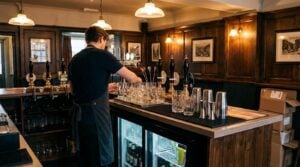
A traditional pub serving draught beer, wine, and spirits needs very different equipment from a cocktail bar. An outdoor events bar also requires different kit compared to a hotel or restaurant bar. What you buy should always depend on what you plan to serve and how you plan to serve it.
Before spending anything, answer these three questions first:
- ▸ What is your main drink offer? Draught beer, cocktails, wine, spirits and mixers, or a mix of everything?
- ▸ What is your realistic peak service volume? A 40-cover bar operates very differently from a 150-cover venue.
- ▸ What infrastructure is already installed? Gas lines, drainage, cellar cooling, and electrical capacity all affect the equipment you can use.
Once you have clear answers, it becomes much easier to build a practical equipment list based on your actual needs instead of copying someone else’s setup.
How Much Does It Cost to Stock a Bar in the UK?
Understanding the cost of stocking a bar helps you plan your budget properly and avoid overspending in the wrong areas. The total can vary a lot depending on your bar type, size, and service style, but the ranges below provide a realistic starting point for most UK pubs and bars.
Essential Compliance and Service Equipment: £500 to £1,500
This includes stamped spirit measures and optics, paper straws, bar mats, drain mats, ice scoops, bottle openers, and basic bar tools.
These are the core essentials every bar needs to operate legally and efficiently, regardless of concept or size.
Glassware: £400 to £1,200
For a typical 50-cover bar, this usually means buying around 2.5 times your cover count across pint glasses, tumblers, and wine glasses.
Commercial-grade glassware from a trade supplier is normally far more cost-effective long-term than buying retail-quality stock.
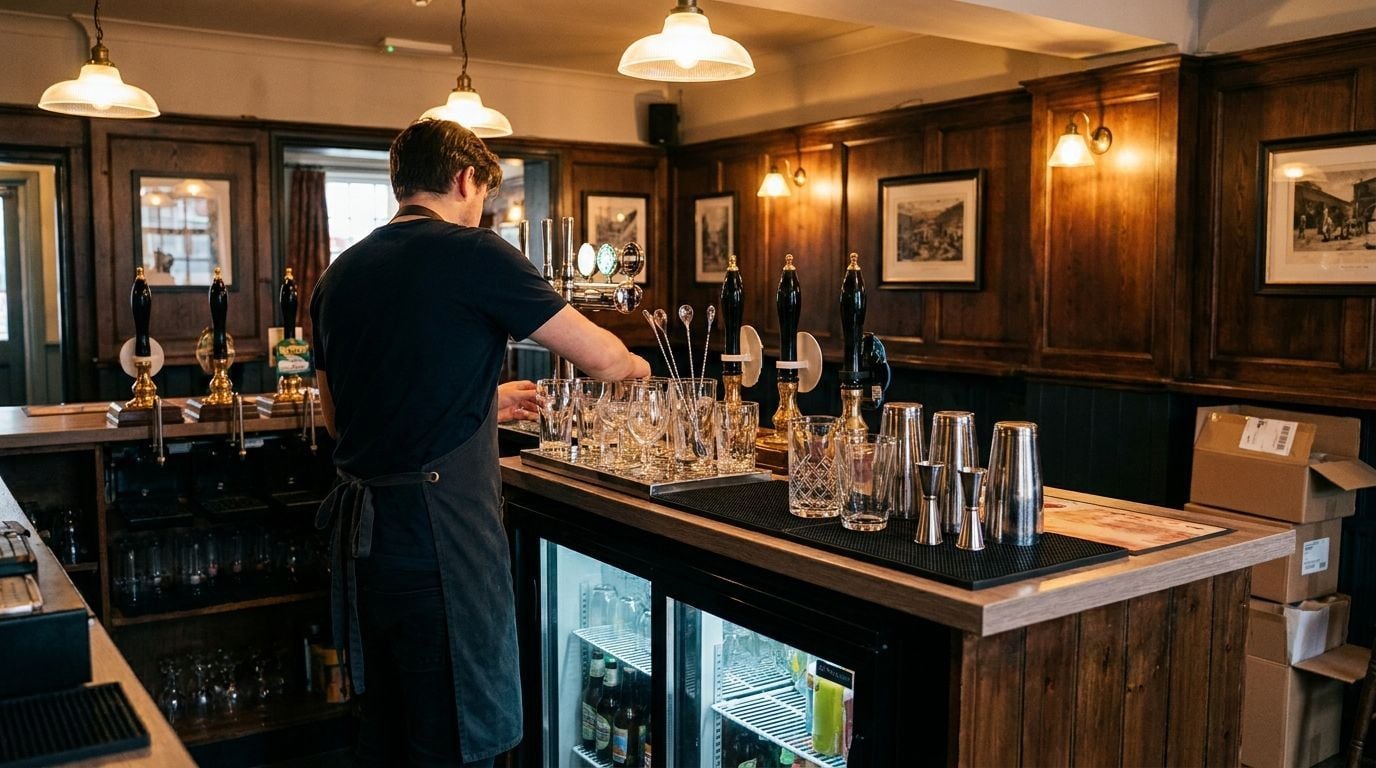
Draught Beer Equipment: £1,500 to £5,000
In many cases, draught systems are supplied or partially subsidised by a brewery or beer supplier through a loan agreement.
Before signing anything, make sure you fully understand the terms. If you are purchasing independently, you will need to budget for fonts, beer lines, cellar cooling, and management equipment.
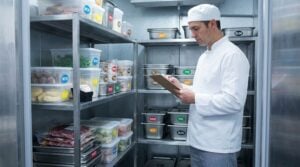
Refrigeration and Storage: £800 to £3,000
This covers under-counter bottle coolers, back-bar fridges for wine and mixers, and any additional cellar cooling not included in a brewery agreement.
The exact cost depends heavily on the size of your venue and drink volume.
Cocktail Equipment: £200 to £600
If cocktails are part of your menu, you will need equipment such as Boston shakers, jiggers, strainers, muddlers, mixing glasses, bar spoons, and speed pourers.
A basic commercial cocktail setup does not need to be expensive, but quality tools make service much easier.
Total Equipment Budget for a Small to Medium UK Bar
For most small to medium-sized UK bars, a realistic starting equipment budget is around:
£3,500 to £10,000
This estimate covers equipment only.
It does not include:
- ▸ Premises licence costs (£100 to £1,900 depending on rateable value)
- ▸ Personal licence and APLH qualification costs
- ▸ Initial alcohol and stock inventory
- ▸ Staff wages
- ▸ Interior fit-out or renovation work
Planning for these extra costs early helps avoid cash flow problems during the opening stage.
What to Buy First: The Non-Negotiables
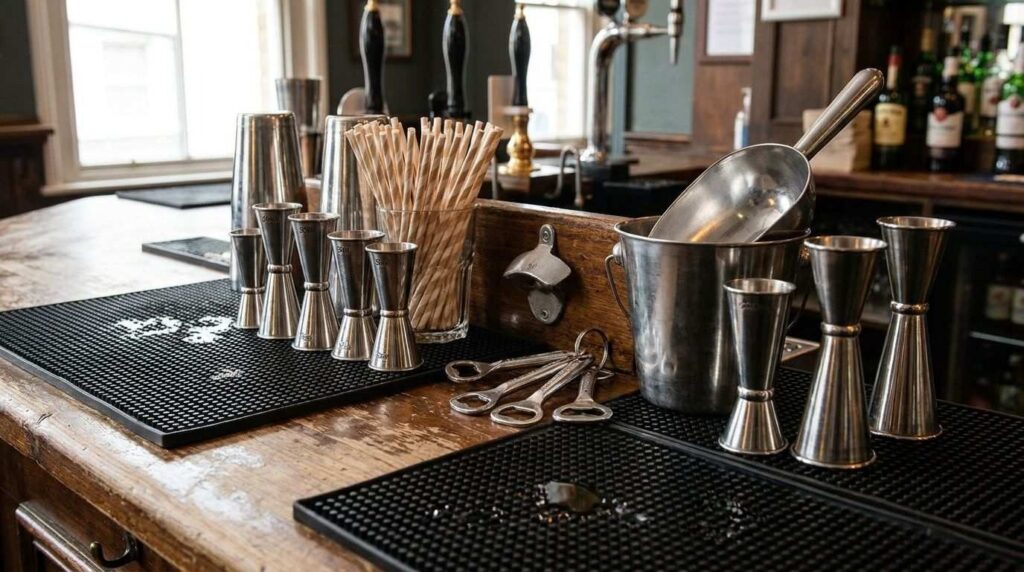
When your budget is tight, buy equipment based on two things first: legal compliance and day-to-day operational needs.
Everything below should be in place before opening day.
Government-Stamped Spirit Measures
Under the Weights and Measures (Intoxicating Liquor) Order 1988, gin, rum, vodka, and whisky must be served using stamped 25ml or 35ml measures.
A quality set of stamped thimbles usually costs between £20 and £50. Wall-mounted optics typically cost around £15 to £40 per bottle.
This is a legal requirement, not an optional upgrade. The cost is relatively small, so there is no reason to delay it.
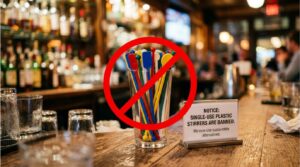
Paper Straws and Compliant Stirrers
Plastic stirrers were banned under the Environmental Protection Regulations 2020, so paper or wooden alternatives are now the standard choice.
Most bars use durable 3-ply paper straws for everyday service. Budget around £30 to £60 for your initial stock.
Bar Mats and Drain Mats
Without proper drainage protection, your bar area quickly becomes messy, slippery, and difficult to manage during service.
Basic bar mat and drain mat coverage for a service station usually costs between £40 and £100, depending on the setup size.
Ice Scoop and Ice Management
Under UK food safety law, ice is treated as food.
That means you need a dedicated stainless steel ice scoop stored properly beside the ice well. Never use glassware to scoop ice, as broken glass contamination is a serious risk.
A good quality scoop and holder can usually be purchased for under £20.
Bottle Openers
Every bar section should have at least two bottle openers, including one wall-mounted opener for faster service during busy periods.
Budget around £15 to £40 for a reliable setup.
Glasswasher
If you expect any meaningful drink volume, a commercial glasswasher is essential.
A basic under-counter unit usually costs around £800 to £1,200. Without one, your team will struggle to keep up during busy service, especially when glassware runs low.
If your budget is extremely limited, a commercial dishwasher with a glasswash cycle can work as a temporary solution.
The Second Priority: Service Efficiency
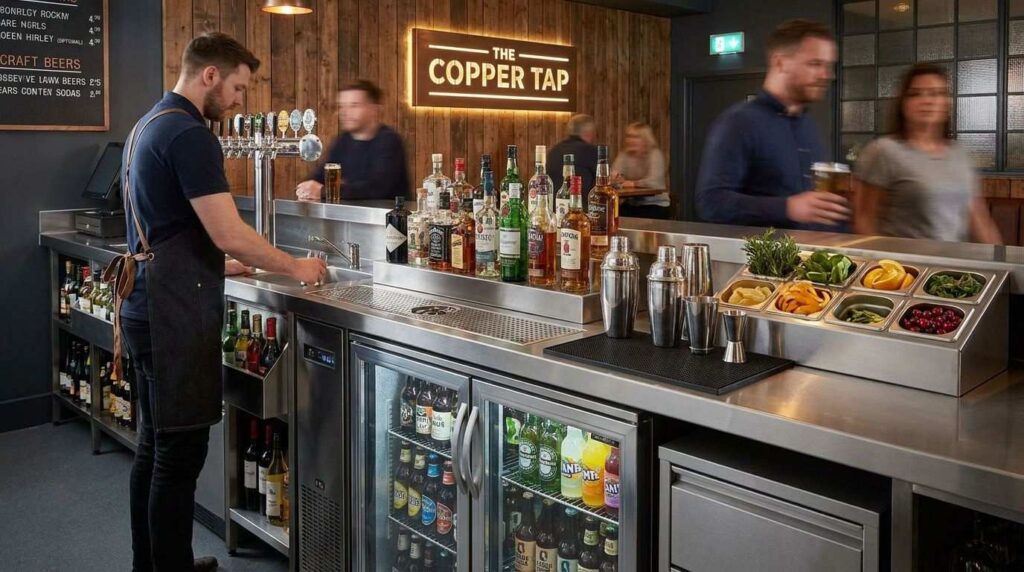
Once the legal and operational basics are covered, the next goal is improving speed, consistency, and workflow behind the bar.
Speed Rail
A speed rail mounted under or beside the bar keeps your most-used spirits and mixers within easy reach.
It is one of the cheapest upgrades you can make, but it has a huge impact on service speed. Budget around £30 to £80.
Under-Counter Bottle Coolers
Keeping fast-moving bottled beers, mixers, and wines chilled and close to the service area helps reduce wait times during busy periods.
A single under-counter bottle cooler generally costs between £300 and £600.
Drip Trays
Drip trays placed under optics and pour stations help keep the bar clean while reducing waste and sticky surfaces.
Budget around £20 to £60, depending on size and layout.
Cocktail Shaker Set
If cocktails are part of your menu, a Boston shaker setup is considered the professional standard.
A basic commercial set usually includes:
- ▸ Two shaker tins
- ▸ A Hawthorne strainer
- ▸ A jigger for accurate measuring
A reliable starter setup generally costs between £40 and £80.
Bar Caddies and Condiment Holders
Keeping straws, garnishes, napkins, and condiments organised makes service smoother and helps staff work faster during busy sessions.
Most setups cost around £20 to £50, depending on size and style.
The Third Priority: Customer Experience and Presentation
Once your compliance essentials and service equipment are covered, you can start investing in presentation and customer experience.
These items are not essential for opening day, but they help your bar feel more polished and premium.
Examples include:
- ▸ Wine and champagne ice buckets with stands for tableside service
- ▸ Premium glassware for cocktails, gin, wine, or craft beer
- ▸ Branded or printed paper straws
- ▸ Cocktail garnish picks and presentation accessories
- ▸ Spirit chillers for premium vodka or gin service
None of these directly improves compliance or core service speed. Their value comes from improving the customer experience and supporting higher-value drink sales.
Treat these as third-phase purchases once the business starts generating steady revenue.
Where Budget Bars Go Wrong
A tight budget is not usually the problem. Poor purchasing decisions are.
Here are some of the most common mistakes new bar operators make.
Buying the Cheapest Glassware
Cheap glassware often costs more in the long run because it breaks faster.
For example, a 40p glass that survives 20 washes may end up costing more over a year than a £1.20 commercial-grade glass that lasts through 150 washes.
Buying commercial-quality glassware from a trade supplier is usually the smarter long-term investment.
Skipping the Glasswasher to Save Money
Trying to run a busy bar without a commercial glasswasher creates problems very quickly.
Your team cannot turn glasses around fast enough during peak service, which leads to slower orders, customer complaints, and eventually running out of clean glassware mid-session.
A commercial glasswasher is operationally essential, not a luxury extra.
Forgetting to Budget for Breakage
Glassware breakage is part of running a bar.
Most venues lose around 15 to 25 per cent of their glassware each year, yet many new operators forget to include replacement costs in their budget planning.
It is far better to plan for breakage early than absorb surprise costs later.
Buying Non-Compliant Spirit Measures
Second-hand spirit optics and thimbles without a government crown stamp are not legally compliant for serving gin, rum, vodka, or whisky, even if the measurements appear accurate.
Always verify the official stamp before purchasing or using second-hand measuring equipment.
Ordering Glassware You Do Not Need
Many new bars overbuy specialist glassware before understanding what actually sells.
A traditional pub does not need cocktail coupes on day one. A venue without cocktails does not need mixing glasses.
Start with the essentials for your actual menu and expand your range as customer demand grows.
New vs Second-Hand Bar Equipment: What Should You Buy Used?
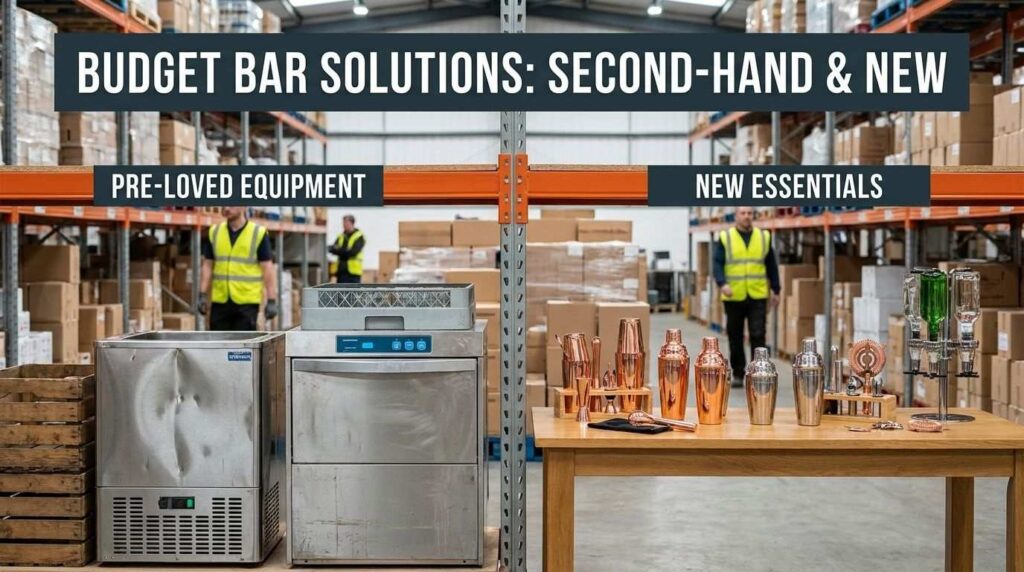
Buying second-hand equipment is one of the easiest ways to reduce startup costs, but only if you know which items are safe to buy used and which are better purchased new.
Some categories carry very little risk second-hand. Others can create hygiene, compliance, or reliability problems that end up costing more later.
Best Bought New
The following items are usually worth buying brand new:
- ▸ Spirit measures and optics – compliance can be difficult to verify second-hand
- ▸ Paper straws and other consumables – for obvious hygiene reasons
- ▸ Bar mats and drain mats – used mats wear down quickly and can hold bacteria
- ▸ Glasswasher chemicals and cleaning supplies
These items are relatively affordable, so the savings from buying used are usually not worth the risk.
Reasonable to Buy Second-Hand
Buying used can make good financial sense for larger equipment items, especially when purchased from a reputable commercial supplier.
Good second-hand options include:
- ▸ Under-counter fridges and bottle coolers
- ▸ Ice buckets and stands
- ▸ Speed rails and bar organisation accessories
- ▸ Commercial glasswashers with service history and verified working condition
Always check cooling performance, damage, and overall condition before purchasing.
Saving 30 to 50 per cent on a used bottle cooler or commercial glasswasher can be a smart investment. Saving a few pounds on unstamped spirit measures, however, is a Trading Standards risk that simply is not worth taking.
A Phased Budget Plan for Stocking a Bar
The easiest way to manage your spending is by breaking purchases into phases.
Use the framework below as a practical starting point, then adjust it based on your venue size, service style, and drink menu.
Phase 1: Compliance and Core Service
Estimated Budget: £500 to £1,500.
Focus on the essentials needed to open legally and operate safely.
This includes:
- ▸ Stamped spirit measures
- ▸ Bar mats and drain mats
- ▸ Ice scoop and holder
- ▸ Bottle openers
- ▸ Paper straws and wooden stirrers
- ▸ Basic bar tools
These items should always come first.
Phase 2: Service Efficiency
Estimated Budget: £1,500 to £4,000
Once the basics are covered, invest in equipment that improves speed and workflow behind the bar.
This stage usually includes:
- ▸ Commercial glassware
- ▸ Glasswasher or commercial dishwasher
- ▸ Under-counter bottle coolers
- ▸ Speed rails
- ▸ Drip trays
- ▸ Cocktail shaker sets
- ▸ Bar organisation accessories
These purchases help staff work faster and improve customer service during busy periods.
Phase 3: Customer Experience and Presentation
Estimated Budget: £500 to £1,500
This phase focuses on presentation, upselling, and creating a more premium customer experience.
Examples include:
- ▸ Ice buckets and stands
- ▸ Premium glassware ranges
- ▸ Cocktail presentation accessories
- ▸ Branded paper straws
- ▸ Concept-specific presentation items
These upgrades are valuable, but they are best added once revenue starts flowing consistently.
We Can Source It supplies a full range of commercial bar equipment and hospitality supplies, including stamped spirit measures, glassware, paper straws, cocktail tools, bottle coolers, and bar organisation accessories.
All products are commercial grade and available for UK delivery.
👉 You can also read our complete guide to pub and bar supplies Uk to understand every equipment category in more detail before finalising your budget.
Frequently Asked Questions
How much does it cost to stock a bar in the UK?
For a small to medium UK bar, equipment costs usually range from £3,500 to £10,000. This covers compliance essentials, glassware, refrigeration, and basic service equipment. It does not include licences, alcohol stock, wages, or fit-out costs.
What do I legally need before opening a bar in the UK?
You need a premises licence, a personal licence holder during alcohol sales, and government-stamped spirit measures for gin, rum, vodka, and whisky. You must also comply with UK regulations covering straws and stirrers.
Can I buy second-hand bar equipment?
Yes. Under-counter fridges, glasswashers, ice buckets, and bar accessories are commonly bought second-hand. However, spirit measures and optics should be new or fully verified as compliant.
What is the minimum equipment needed to open a bar?
Most bars need stamped spirit measures, glassware, bar mats, bottle openers, ice management tools, compliant straws, and a reliable glasswashing setup before opening.
How much glassware should a new bar order?
A common starting point is 2.5 times your cover count. For example, a 50-cover bar would usually need around 125 pint glasses, 125 wine glasses, and 125 tumblers.
Author
We Can Source It, Team
We Can Source It is a UK-based supplier of commercial catering and hospitality products for bars, pubs, restaurants, hotels, cafés, and event venues across the UK.