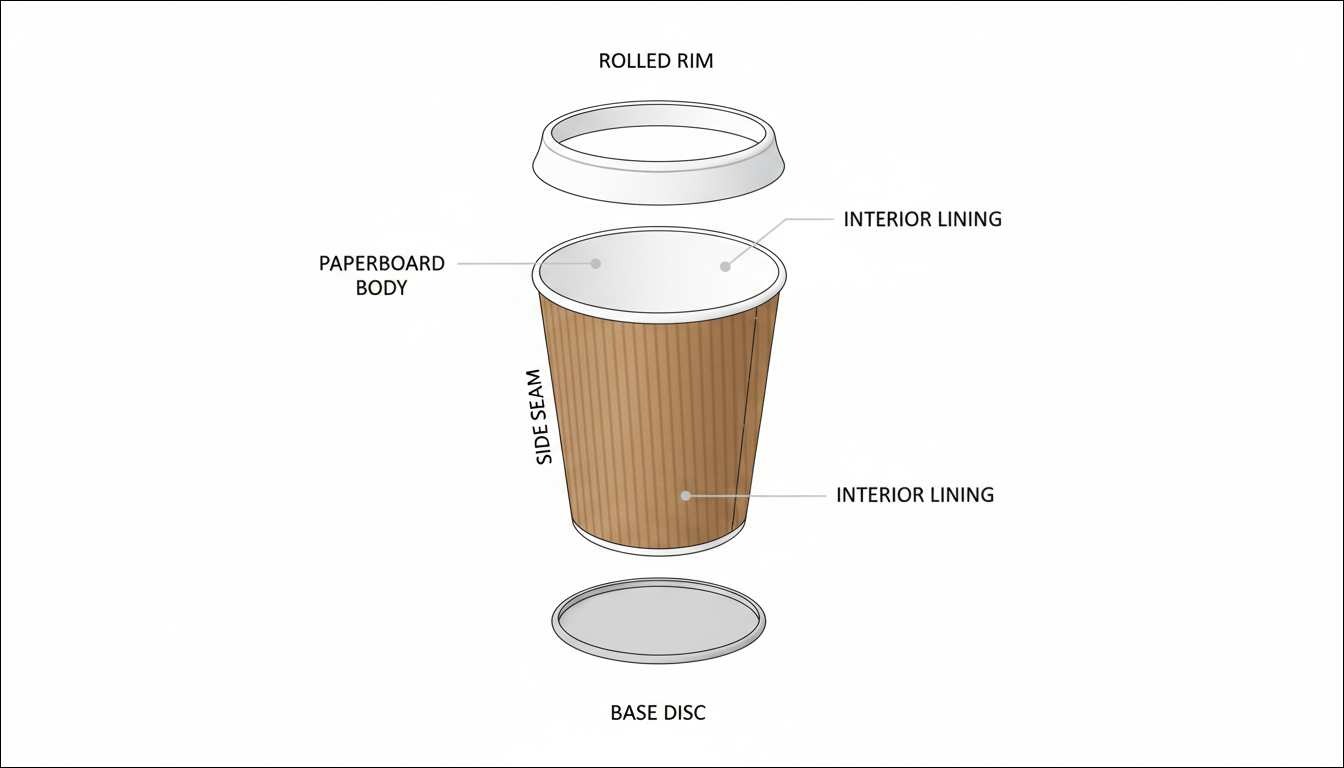
If you buy packaging for a UK coffee shop, understanding paper coffee cup construction helps you avoid common problems like leaking seams, poor lid fit, weak rims, and uncomfortable hot-cup handling. In practical terms, paper coffee cup construction is the way the cup body, lining, seam, base, and rim are designed and sealed to control heat, prevent leaks, and support recyclability pathways.
This guide is written for UK operators who need clear, useful answers before ordering stock or testing samples. It explains how paper coffee cups are made, what each part does, and which construction details matter most in real service conditions.
What is paper coffee cup construction, and why does it matter?
Paper coffee cup construction refers to the cup’s physical build: the paperboard shell, liquid-resistant lining, side seam, base seal, rolled rim, and wall type (single, double, or ripple). These details directly affect performance, cost, and customer experience.
Why it matters in the UK coffee trade:
- Leak prevention: Poor seam bonding is a common failure point
- Heat comfort: Wall construction changes how hot the cup feels in the hand
- Lid fit: Rim consistency affects sealing and spill risk
- Waste and cost control: Construction impacts sleeves, breakage, and returns
- Sustainability claims: Lining type affects disposal and recyclability options
Key takeaway: Two cups can look similar at first glance, but their construction quality can produce very different results during service.
How are paper coffee cups made?
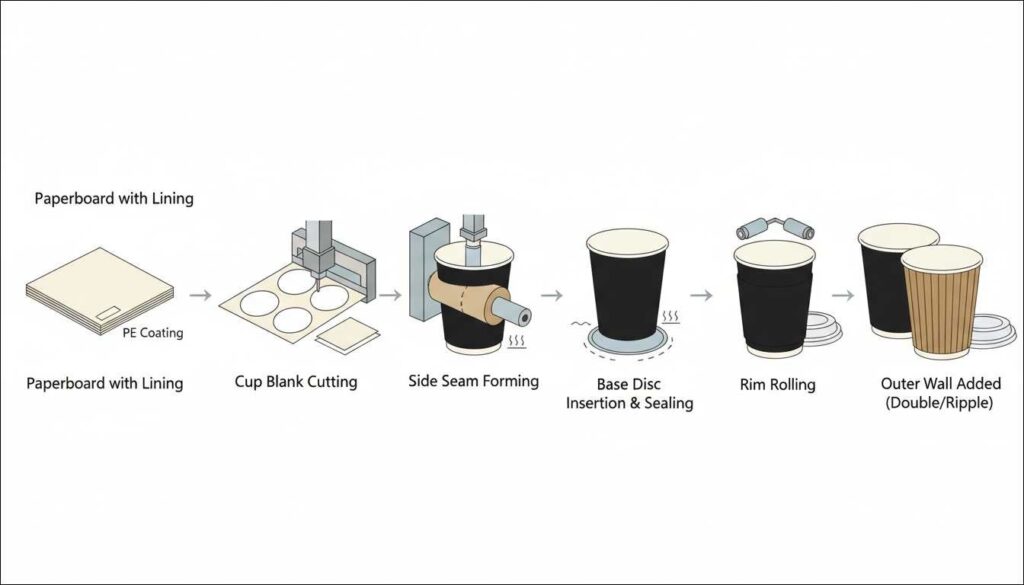
Paper coffee cups are made by shaping lined paperboard into a tapered cup, sealing a side seam, attaching a base disc, and rolling the rim to create strength and lid compatibility.
That is the core of how paper coffee cups are made, but the quality of each step determines how the cup performs with hot drinks.
Typical production stages (simplified)
- Paperboard is coated with a liquid barrier lining (PE, PLA, or aqueous coating)
- Cup blanks are cut from lined paperboard sheets.
- The side seam is formed and sealed to create the cup body.
- A base disc is inserted and heat-sealed to the body.
- The top edge is rolled into a rim for rigidity and lid fit.
- Outer wall layers are added (for double-wall or ripple wall cups)
For buyers, the key point is not the machinery itself. It is whether the finished cup has:
- Even rim rolling
- Secure seam sealing
- Consistent dimensions
- Stable lid compatibility
What are the parts of a paper coffee cup?
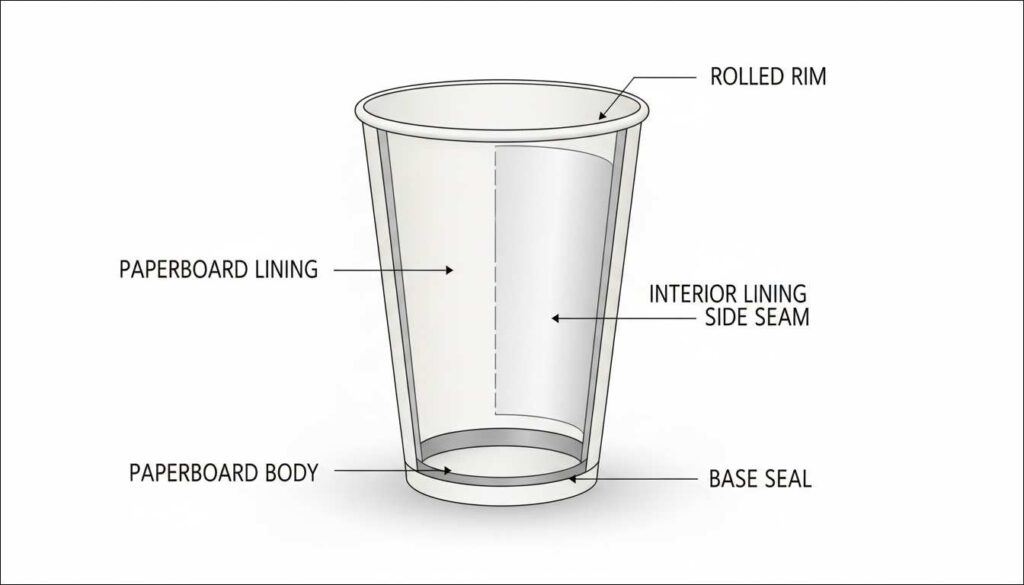
The main parts of a paper coffee cup are the paperboard body, interior lining, side seam, base, and rim. Together, these make up the basic paper cup anatomy.
Paperboard body
The paperboard body is the structural shell of the cup. It gives the cup shape and strength.
What it affects:
- Cup rigidity when held
- Resistance to crushing during service
- Print surface quality (for branded cups)
- Overall feel and perceived quality.
In UK foodservice use, paperboard may be described as virgin fibre or include recycled content, but it must still meet food-contact standards.
Interior lining
The interior lining is the moisture barrier that stops liquid from soaking into the paperboard. Without it, the cup would soften and fail quickly.
Common lining types:
- PE lining (polyethene): proven, common, low-cost
- PLA lining: plant-based, industrial composting route only
- Aqueous coating: designed for improved recyclability in some systems (claims must be verified)
What it affects:
- Leak resistance
- Heat tolerance
- Disposal pathway options
- Sustainability messaging
Side seam
The side seam is where the paperboard blank is joined to form the cup shape. This is one of the most important coffee cup construction details.
Why it matters:
- It is a frequent leak point in low-quality cups
- Weak seams can separate under heat or pressure.
- Seam unevenness can affect lid fit and appearance
In real use, seam quality matters more than many buyers expect.
Base
The base is a separate disc sealed into the bottom of the cup. It must be properly bonded to prevent leakage and maintain the structure.
What a poor base seal can cause:
- Slow leaking at the bottom edge
- Softening under prolonged hot liquid contact
- Customer complaints and counter mess
Rim
The rim is the rolled top edge of the cup. It adds rigidity and creates the seal point for the lid.
Why the rim matters:
- Supports secure lid attachment
- Improves drinking comfort
- Reduces deformation when carrying hot drinks
An uneven rim is a common cause of loose or spinning lids.
What are the basic paper cup anatomy buyers should check first?
The short answer: Before buying in bulk, check seam integrity, rim consistency, base sealing, and lining type. These four areas predict most performance issues.
Here is a practical buyer checklist for the paper coffee cup structure:
| Construction Element | What to Check | Why It Matters |
| Side seam | No bubbling, gaps, or dampness after hot fill test | Prevents leaks |
| Rim | Smooth, even roll all around | Improves lid seal |
| Base seal | No seepage after 20–30 minutes | Prevents bottom leaks |
| Lining | Clear material type and certification info | Supports disposal planning |
| Cup wall | Appropriate type for drink service | Controls heat comfort and cost |
Key takeaway: If a supplier cannot clearly explain the cup lining and rim diameter, treat that as a warning sign.
How does wall construction change cup performance?
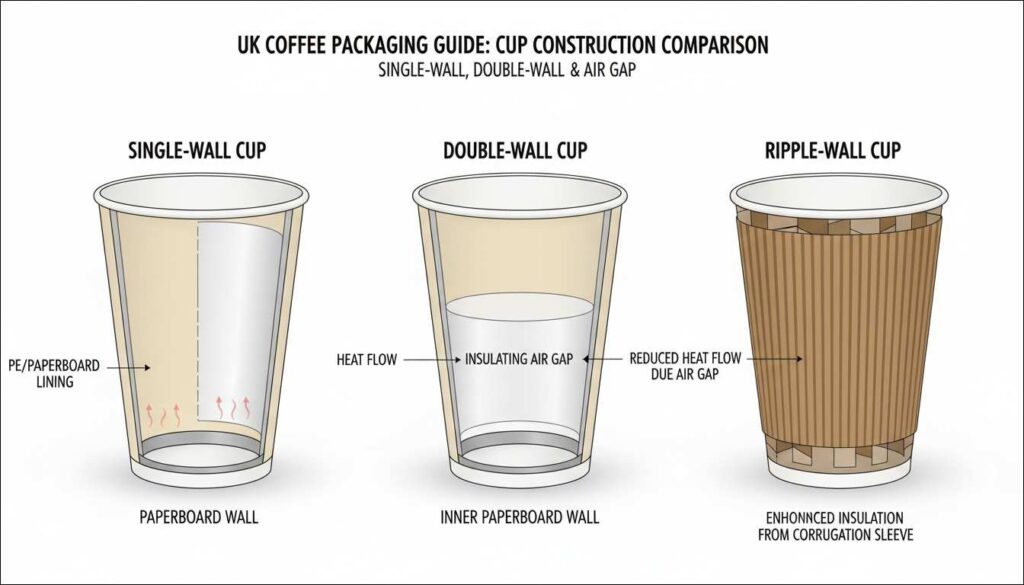
Wall construction is the biggest structural difference affecting insulation, hand comfort, and total cup system cost.
Single-wall cups
Single-wall cups use one layer of lined paperboard. They are usually the lowest-cost option per cup.
Pros:
- Lower unit cost
- Good for cold drinks
- Lower bulk per case
Cons:
- Minimal insulation for hot drinks
- Usually need a sleeve.
- Can feel hot quickly in the hand
Double-wall cups
Double-wall cups add a second paperboard layer with an air gap. This improves heat insulation and removes the need for a sleeve in many cases.
Pros:
- Better hand comfort
- Cleaner presentation than cup + sleeve
- Good for standard hot takeaway drinks
Cons:
- Higher unit cost than single-wall
- More storage space than a single wall
Ripple wall cups
Ripple wall cups use a corrugated outer layer that traps air for stronger insulation and grip. Many UK coffee shops prefer them for hot drinks.
Pros:
- Excellent insulation
- Strong grip due to textured outer wall
- Premium feel
Cons:
- Bulkier storage footprint
- May cost slightly more than a double wall
Which paper coffee cup construction details affect lids, leaks, and heat most?
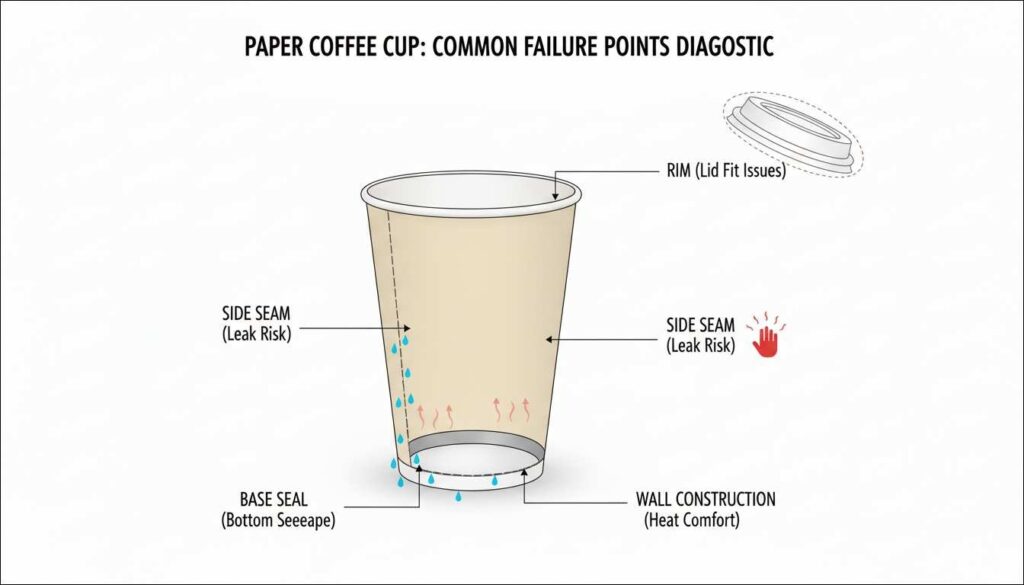
Rim quality, seam integrity, and wall construction have the biggest effect on service performance.
Most important performance links
- Rim quality → lid seal and spill prevention
- Seam quality → leak resistance
- Wall construction → heat insulation and hand comfort
- Lining type → moisture resistance and disposal pathway
- Base seal quality → stability and bottom leak prevention
If you are testing samples, focus on these before comparing branding, print finish, or price.
How should UK coffee shops test cup construction before ordering?
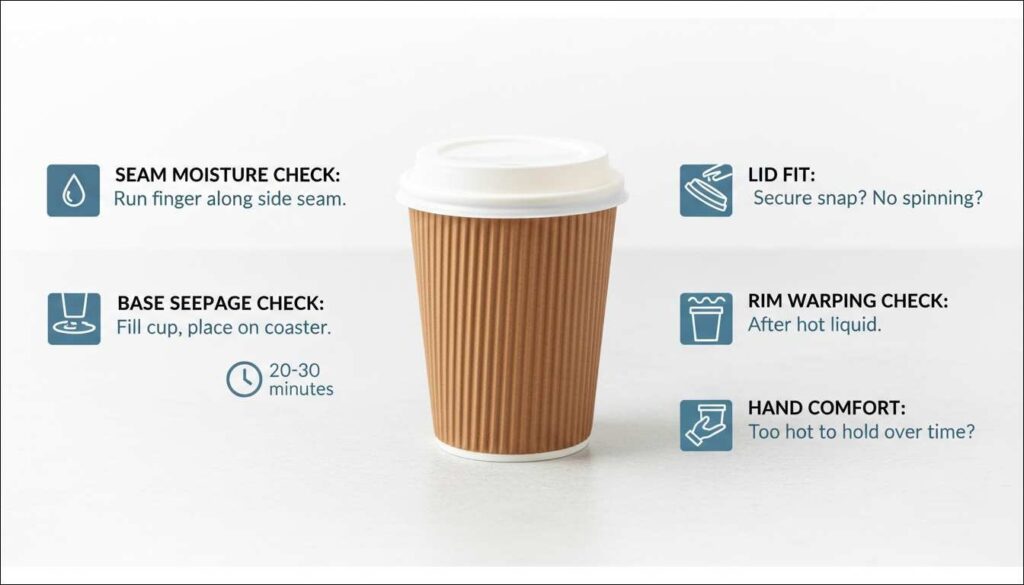
Run a simple hot-fill test with your actual lids and drinks before placing a bulk order. This is the fastest way to validate paper coffee cup construction in real conditions.
Quick test method (practical)
- Fill sample cups with hot water or your standard coffee temperature
- Fit the lids you plan to use
- Leave for 20–30 minutes.
Check:
- Seam for moisture
- Base for seepage
- Lid fit (secure snap, no spinning)
- Rim shape (no warping)
- hand comfort over time
If possible, let staff test during service. Baristas often spot stacking, handling, and lid-fit issues quickly.
FAQ
What is the most important part of paper coffee cup construction?
The side seam and rim are the most critical for day-to-day performance. The seam affects leaks, while the rim affects lid fit and spill prevention.
Are all paper coffee cups made the same way?
No. The general process is similar, but materials, seam quality, rim consistency, and wall construction vary significantly between manufacturers and suppliers.
Does lining type affect cup performance or just sustainability?
Both. Lining type affects moisture resistance and disposal options, and in some cases can also affect heat performance and handling at high temperatures.