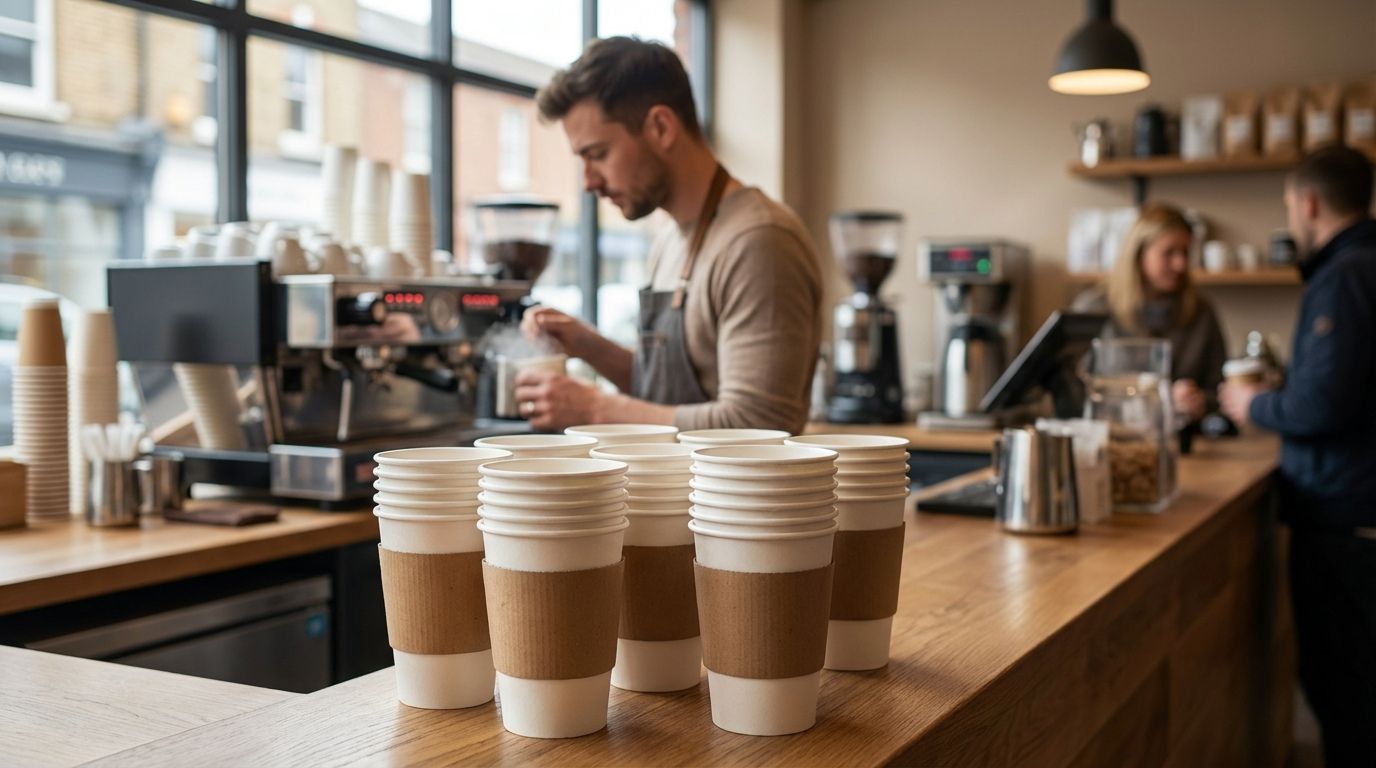
If you run a UK coffee shop, single wall cups are only worth it when your priority is the lowest upfront unit cost and you are willing to manage sleeves, slower service, and a lower perceived quality. For most hot drink operations, they are not the cheapest option in practice once you add sleeve cost, staff handling time, and customer comfort.
This conclusion comes from how takeaway coffee packaging is used in real service: a cup is not just a container; it affects speed, heat protection, spills, and brand perception. For hot drinks, single wall paper cups can still work, but they make the most sense in tightly cost-controlled, high-turnover setups where every penny matters and customers are not holding the cup for long.
Why do some UK coffee shops still use single wall cups?
Single wall cups remain popular because their base price is lower than double wall or ripple wall cups. They are widely available, simple to source, and suitable for businesses that want low packaging spend per unit.
Single wall paper cups are usually chosen for:
- Budget-led takeaway operations
- Cafés using separate cardboard sleeves
- Cold drinks or short-hold hot drinks
- Businesses that already buy sleeves in bulk
- Operators with tight menu margins
For many shops, the appeal is simple: the cup itself looks cheaper on the supplier price list. That makes single wall coffee cups attractive during initial purchasing decisions, especially for new cafés comparing packaging only by per-unit price.
Are single wall cups good for hot drinks?
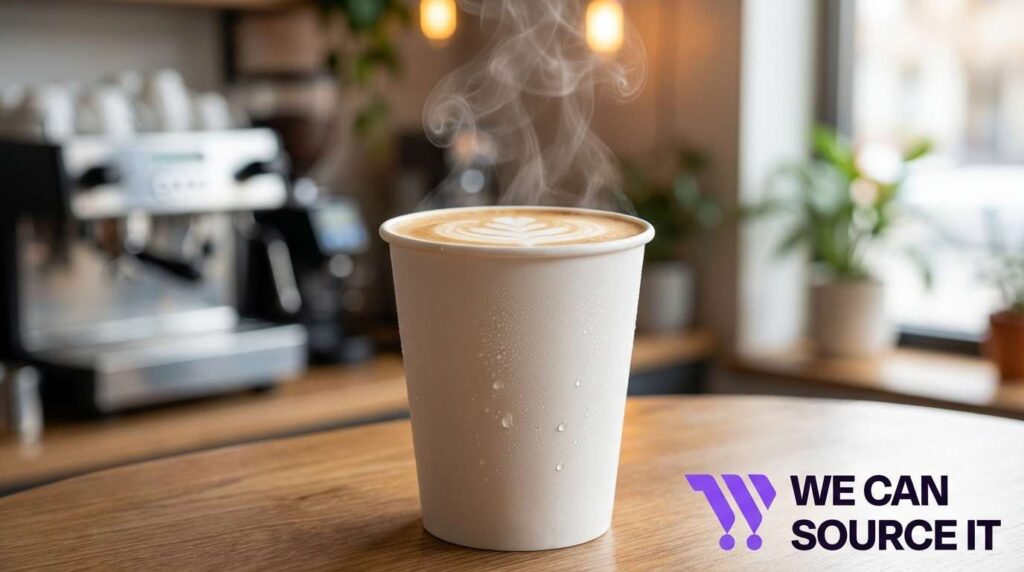
Yes, but only if you use them correctly. Single wall hot cups can hold hot drinks safely, but by themselves they provide minimal insulation. For most coffee shop service, that means you will usually need a sleeve.
Without a sleeve, customers may find the cup uncomfortable to hold within a minute or two, especially for:
- Freshly made lattes
- Americanos
- Filter coffee
- Larger 12 oz and 16 oz drinks
That is why single wall cups are often better for:
- Shorter drinks
- Quick-serve environments
- Customers who drink immediately
- Orders where sleeves are automatically added
Key takeaway: Single wall cups can work for hot drinks, but they are rarely the best standalone option for comfort.
What is the true cost of single wall cups once you add sleeves?
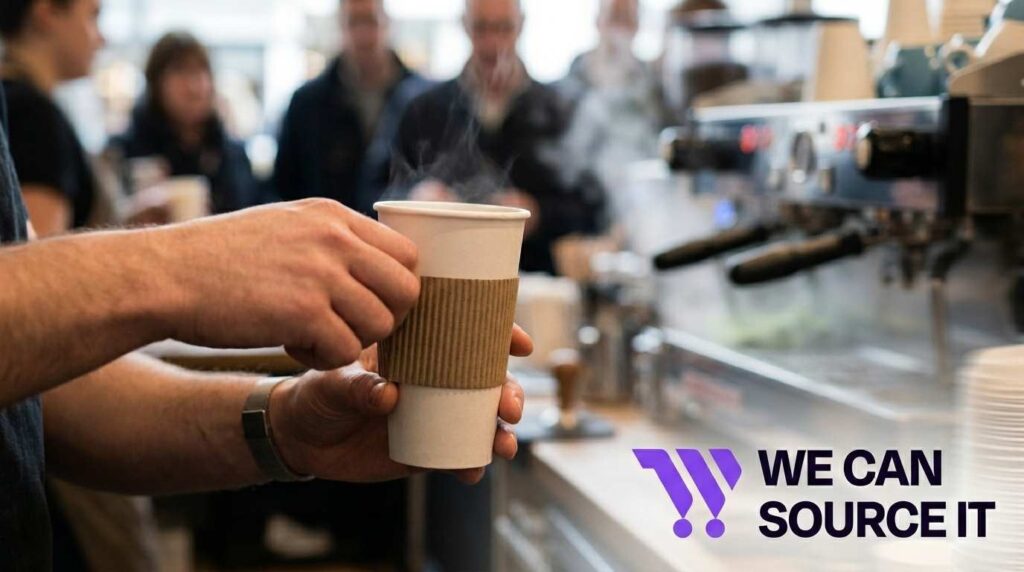
The true cost of single wall cups is often much higher than the cup price alone suggests. In many UK coffee shops, once you add sleeves, the real cost gets close to double wall cups and can sometimes approach ripple wall pricing.
Here is the practical cost structure:
| Cost factor | Single wall cups | What it means in practice |
| Cup unit price | Lowest | Looks cheapest upfront |
| Sleeve cost | Extra | Added cost per hot drink |
| Staff handling time | Higher | Someone must apply the sleeve |
| Storage space | Medium | You store cups and sleeves |
| Customer comfort | Lower without sleeve | Higher chance of heat complaints |
| Perceived quality | Basic | Less premium presentation |
The important point is that single wall paper cups shift part of the cost into separate packaging and labour.
That creates hidden costs such as:
- Extra sleeve purchasing
- More counter handling during busy periods
- More inventory lines to manage
- Greater chance of service inconsistency if sleeves are forgotten
If your staff are serving high volumes in a morning rush, even a small extra handling step matters. Over time, that affects workflow more than many owners expect.
When are single wall cups actually worth it?
Single wall cups are worth it when your business model values low upfront spend over premium presentation or convenience. They make the most sense in specific use cases, not as the default choice for every coffee shop.
They are often a practical fit for:
Budget-led takeaway businesses
If your packaging spend is tightly controlled and you already use sleeves efficiently, disposable single wall cups can still be a sensible option.
Cold drink service
For iced drinks, single wall cups are usually fine because insulation is less important and a sleeve is often unnecessary.
Secondary coffee offers
If coffee is not your main revenue stream, such as in a bakery, gym, or convenience-led setup, single wall cups may be enough.
Simple, low-branding operations
If the cup is purely functional and you do not need a premium takeaway experience, the lower-cost format may be acceptable.
They are less compelling for speciality cafés, premium takeaway brands, and customer experience-focused shops.
How do single wall cups compare with double wall and ripple wall cups?
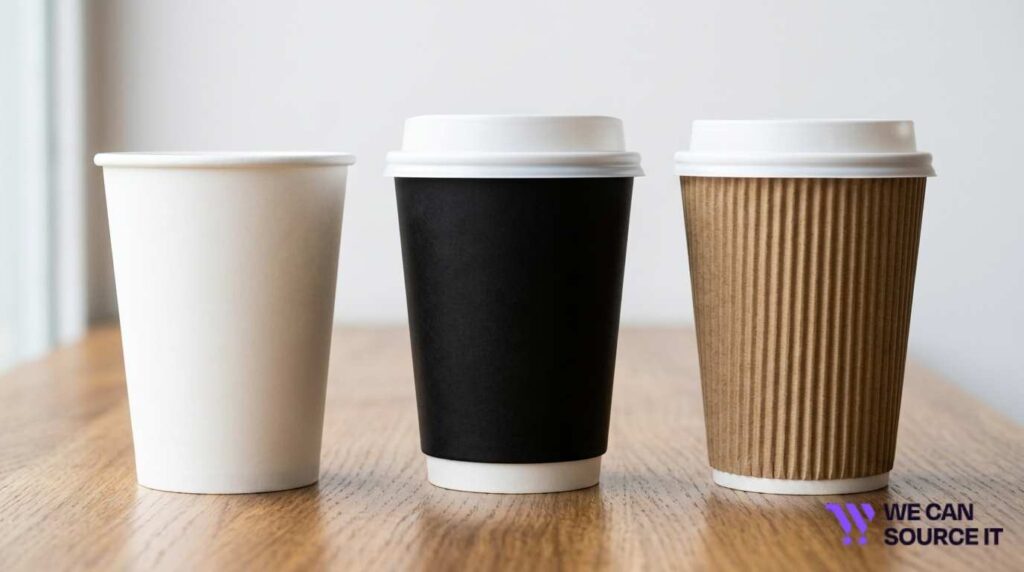
Single wall cups are the cheapest to buy, but usually the weakest option for heat insulation and convenience. Double wall and ripple wall cups cost more upfront, but they remove the need for sleeves and create a better hand feel.
Single wall vs double wall
- Single wall: Lower unit cost, requires sleeve for hot drinks
- Double wall: Better insulation, smoother finish, no sleeve needed
Single wall vs ripple wall
- Single wall: Most budget-friendly, more basic presentation
- Ripple wall: Best grip, stronger heat protection, more premium look
For many UK operators, the comparison comes down to this:
Single wall cups save money only if your sleeve cost and operational friction stay low.
If your customers regularly carry drinks for longer, or if your team is serving at speed, double wall or ripple wall often become the smarter commercial choice.
Are single wall paper cups the best choice for takeaway coffee cups in the UK?
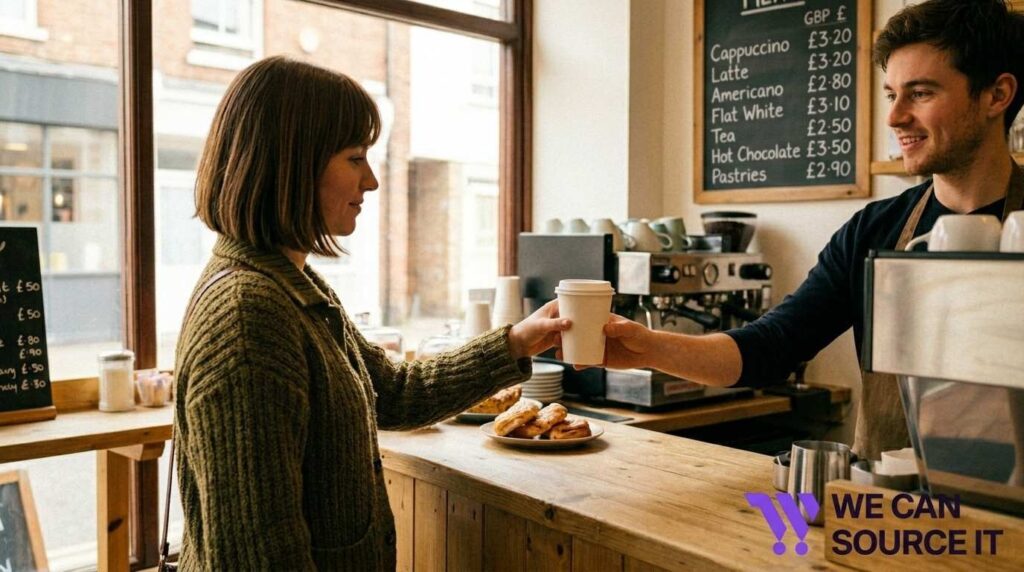
Not for most hot drink-focused coffee shops. In the UK takeaway market, customers expect cups to be comfortable to hold, easy to carry, and reliable with lids.
That is why many coffee shops choose other coffee shop disposable cups for core hot drink service. Single wall cups can still fit into a broader packaging mix, but they are usually best used as:
- A low-cost option for smaller drinks
- A cold drink format
- A backup packaging line
- A value-led option where sleeves are standardised
For paper cups for hot drinks, the better question is not “Are single wall cups usable?” but “Do they still save money once the full service setup is included?”
In many cases, the answer is no.
What should UK coffee shops check before choosing single wall cups?
Before buying single wall coffee cups in bulk, test the full serve process, not just the cup. The right decision depends on how the cup performs in your shop, with your drinks, lids, and service speed.
Check these before ordering:
- Does the cup become too hot without a sleeve?
- Does the sleeve fit securely and apply quickly?
- Does the lid seal properly on the rim?
- Does the cup still feel on-brand for your takeaway offer?
- Is the combined cost still clearly lower than double wall?
This is especially important for takeaway coffee cups UK buyers who want cost control without reducing customer experience.
Key takeaway: If you need sleeves on nearly every hot drink, compare the total packaging setup, not just the cup price.
FAQ
Do single wall cups always need sleeves for hot drinks?
For most hot drinks, yes. Single wall cups can become uncomfortable quickly, especially for larger drinks like 12 oz lattes or Americanos.
Are single wall cups cheaper than ripple wall cups?
Only on the base cup price. Once you add sleeves and handling time, the total cost gap often narrows significantly.
Are single wall cups suitable for all coffee shops?
No. They suit budget-focused or simple operations best, but they are usually less effective for premium takeaway service or high-comfort hot drink sales.