I’ve worked with UK foodservice packaging and coffee shop procurement teams for years, reviewing cup performance, supplier specs, and waste outcomes in real operations. PE-lined paper cups remain the most widely used option in UK cafés because they balance cost, durability, and heat resistance.
PE-lined paper cups are the most cost-effective and reliable option for hot drinks in the UK, but they are not widely recyclable through standard kerbside systems and require dedicated cup recycling streams.
What are PE-lined paper cups and how do they work?
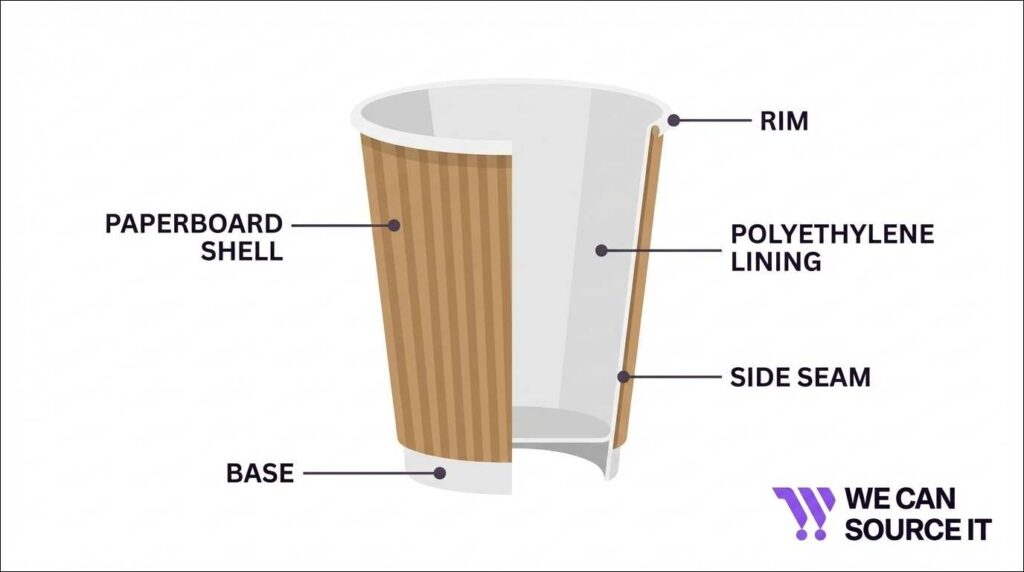
PE-lined paper coffee cups are standard paper cups with a thin plastic (polyethene) coating that prevents leaks.
Key components:
- ▸Paperboard shell: Provides structure
- ▸PE lining (5–10%): Waterproof barrier
- ▸Sealed base + side seam: Prevents leakage
Why it matters: Without the PE layer, hot liquids would soak through the paperboard within minutes.
Key takeaway: PE lining is essential for performance, but it creates recycling challenges.
Why are PE-lined paper cups still the UK standard?
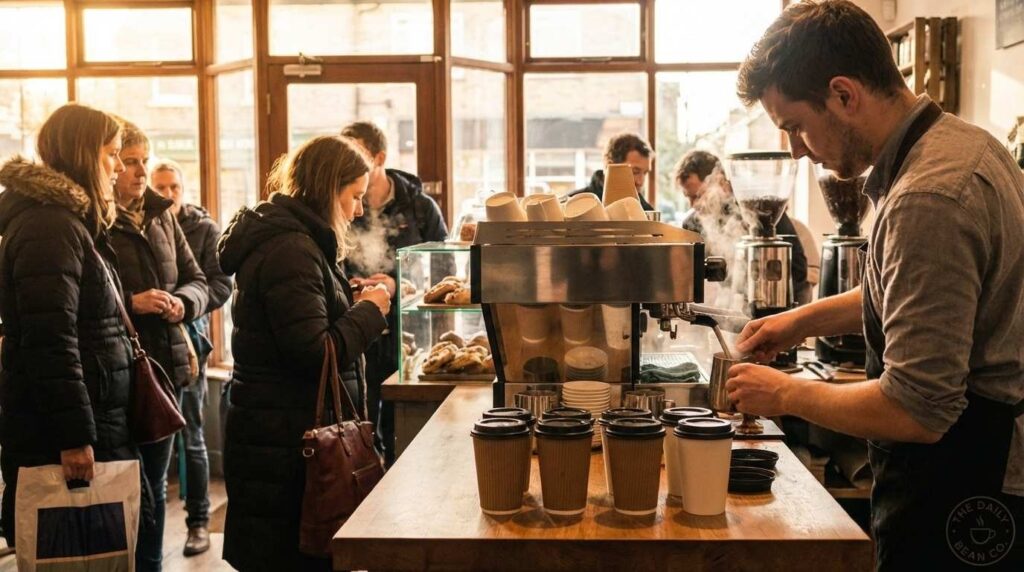
They dominate because they are reliable, scalable, and affordable.
Main reasons UK cafés use them:
- ▸Proven performance: Handles high temperatures without softening
- ▸Lowest cost per unit: Cheaper than PLA or aqueous alternatives
- ▸Widely available: Every major UK supplier stocks them
- ▸Consistent quality: Fewer defects in high-volume use
In real café operations:
PE-lined cups are less likely to fail during busy service periods, especially for takeaway drinks.
Key takeaway: Most UK coffee shops choose PE-lined cups for operational reliability, not sustainability.
How much do PE-lined paper cups cost in the UK?
PE-lined cups are typically the least expensive hot drink cup option.
Typical cost breakdown (UK market):
Cost Element Estimated Range
| Cost Element | Estimated Range |
| Cup (12 oz) | £0.04 – £0.08 |
| Lid | £0.02 – £0.05 |
| Sleeve (if needed) | £0.02 – £0.04 |
What affects pricing:
- ▸Order volume (bulk = lower cost)
- ▸Wall type (single vs double vs ripple)
- ▸Custom printing
- ▸Supplier location
Real insight:
A single-wall PE cup + sleeve often costs the same as a ripple-wall PE cup—but with more labour and waste.
Key takeaway: PE-lined cups offer the best price-to-performance ratio, especially at scale.
How well do PE-lined cups perform for hot drinks?
PE-lined cups deliver excellent heat resistance and leak protection.
Performance strengths:
- ▸High heat tolerance: Handles ~90°C напитки without breakdown
- ▸Leak resistance: Strong seal when manufactured correctly
- ▸Structural integrity: Maintains shape during use
Where performance depends on design:
- ▸Single wall: Needs a sleeve
- ▸Double wall: Better insulation
- ▸Ripple wall: Best grip and heat comfort
In practice:
Most complaints about “bad cups” are due to poor manufacturing, not the PE lining itself.
Key takeaway: PE lining is not the weak point—construction quality is.
Can PE-lined paper cups be recycled in the UK?
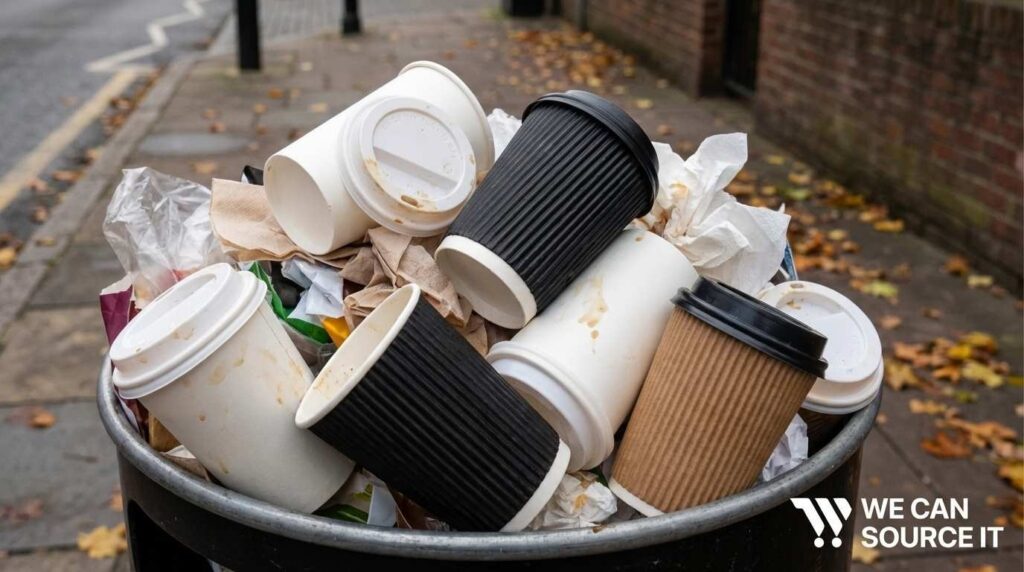
Not in standard kerbside recycling.
Why recycling is difficult:
- ▸The plastic lining is bonded to the paper fibre
- ▸Standard paper mills cannot easily separate materials
Current UK recycling reality:
- ▸Kerbside recycling: Not accepted
- ▸Dedicated cup recycling: Required
- ▸General waste: Most common outcome
Available solutions:
- ▸Specialist schemes (e.g., in-store collection bins)
- ▸Cups sent to facilities that separate PE from fibre
Important:
Without a dedicated system, PE-lined cups usually end up in a landfill or incineration.
Key takeaway: Recyclable does not mean widely recycled in the UK.
Are PE-lined cups affected by UK regulations?
Yes, especially under packaging and plastic-related policies.
Key regulations impacting PE cups:
1. Extended Producer Responsibility (EPR)
- ▸Businesses pay fees based on packaging impact
- ▸Less recyclable packaging = higher cost
2. Plastic Packaging Tax
- ▸Applies if the plastic content lacks 30% recycled material
- ▸Some PE-lined cups may be affected, depending on the classification
3. Waste transparency pressure
- ▸Increasing demand for clear disposal labelling
What this means for cafés:
- ▸Costs may rise over time
- ▸Suppliers may shift toward alternative linings
Key takeaway: Regulation is pushing the market away from traditional PE-lined cups.
PE vs PLA vs Aqueous: which is better in the UK?
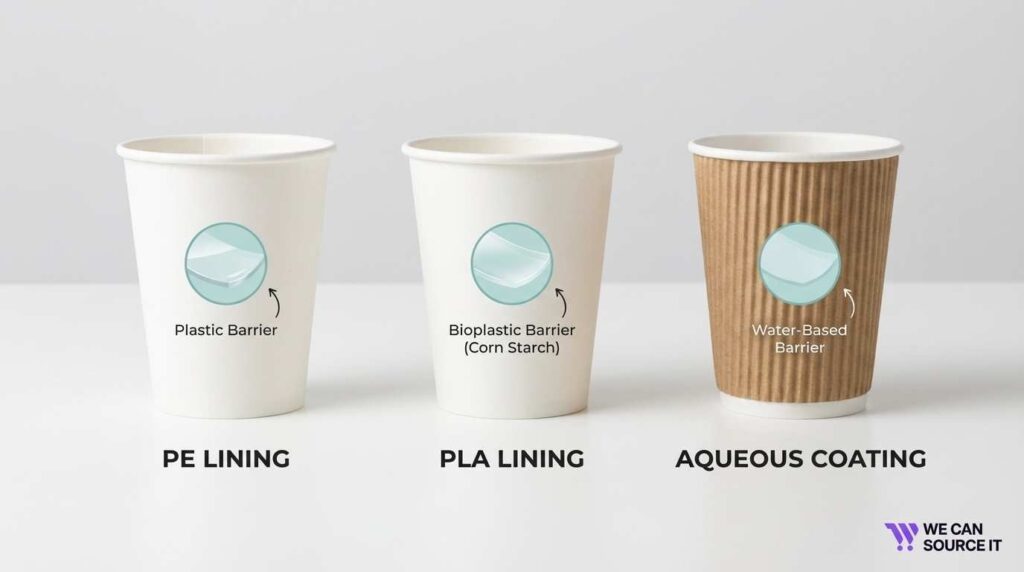
Each lining type solves a different problem; there is no universal “best” option.
Comparison:
| Feature | PE Lining | PLA Lining | Aqueous Coating |
| Cost | Lowest | Higher | Medium–High |
| Performance | Excellent | Good | Good |
| Recyclability | Limited | Not recyclable | Potentially recyclable |
| Compostability | No | Industrial only | No |
| UK infrastructure fit | Low | Low | Improving |
Practical decision:
- ▸Choose PE → for cost and reliability
- ▸Choose PLA → only if composting exists
- ▸Choose aqueous → for future-ready recycling
Key takeaway: PE wins on cost and performance, but loses on end-of-life sustainability.
When should UK coffee shops choose PE-lined cups?
They are the best choice when cost and reliability matter most.
Ideal use cases:
- ▸High-volume takeaway cafés
- ▸Drive-through operations
- ▸Businesses with tight margins
- ▸Shops without recycling infrastructure
When to avoid:
- ▸Strong sustainability positioning
- ▸Eco-conscious customer base
- ▸Locations with recycling mandates
Real-world pattern:
Many cafés start with PE cups, then upgrade as brand and margins grow.
Key takeaway: PE-lined cups are a practical starting point, not a long-term sustainability solution.
How to choose a good PE-lined paper cup supplier
Not all PE cups perform the same; supplier quality matters.
What to check:
- ▸Seam strength (no leaks after 30 minutes)
- ▸Rim consistency (tight lid fit)
- ▸Certification (FSC, food safety)
- ▸Consistent batch quality
Simple test:
- ▸Fill with hot water
- ▸Leave for 30 minutes
- ▸Check for leaks, softness, or deformation
Key takeaway: Poor-quality cups cost more in the long run through waste and complaints.
Are PE-lined paper cups still worth it in the UK?
Yes, but with clear limitations.
- ▸Best for: Cost, durability, high-volume use
- ▸Biggest drawback: Limited recyclability
- ▸Future outlook: Gradual shift toward recyclable coatings
PE-lined paper coffee cups remain the most practical option today, but they are not aligned with where UK packaging regulations and sustainability expectations are heading.
FAQ
Are PE-lined paper cups safe for hot drinks?
Yes. They are designed for high-temperature liquids and are widely used across UK cafés.
Why can’t PE-lined cups be recycled easily?
The plastic lining is fused to paper, making separation difficult in standard recycling systems.
Should I switch from PE to eco-friendly cups?
Only if your waste infrastructure supports it. Otherwise, the environmental benefit may not be realised.