As packaging consultants working with UK coffee operators and suppliers, we regularly review specifications for paper coffee cups across independent cafés and multi-site takeaway businesses. One issue consistently confuses: paper cup materials and linings.
Paper cup materials and linings determine durability, heat performance, recyclability, compostability, cost, and regulatory compliance. In the UK, most disposable coffee cups use paperboard with either a PE lining, PLA lining, or an aqueous coating — and each option has different environmental and operational implications.
If you are buying cups for a coffee shop, understanding these differences prevents costly mistakes.
What are paper cup materials and linings?
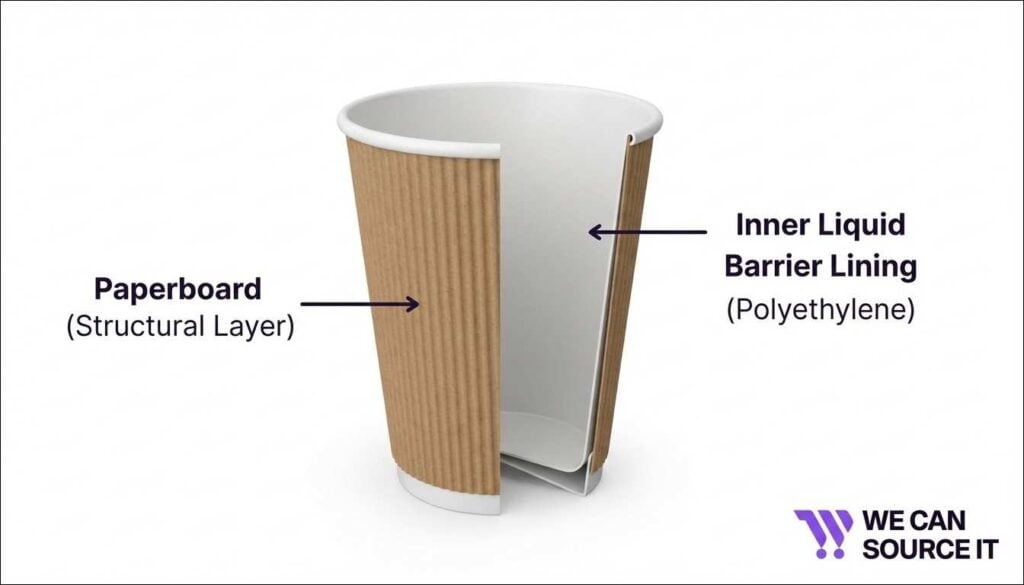
Paper cups are made from two core components: paperboard (structure) and a liquid-proof lining (barrier).
The paperboard provides:
- Structural strength
- Print surface for branding
- Heat resistance
- Rigidity for lids
The lining provides:
- Waterproof protection
- Heat tolerance
- Food safety compliance
- Leak prevention
Without a lining, hot drinks would soak through the cup within minutes.
Key takeaway: The lining, not the paper, determines recyclability and compostability.
What materials are used in paper coffee cups?
The main structural material in paper coffee cups is food-grade paperboard.
1. Virgin Paperboard
Most UK coffee cups use virgin fibre.
Why?
- Stronger and more consistent
- Better for food contact compliance
- Handles heat better
- Cleaner print finish
It is typically sourced from managed forests and may carry FSC certification.
2. Recycled Content Paperboard
Some eco-focused cups include recycled fibre.
Benefits:
- Reduced raw material use
- Lower carbon footprint potential
Limitations:
- Must meet strict food safety standards
- Slightly lower strength in some cases
For high-volume takeaway coffee cups, virgin board remains the most reliable option.
What is PE lining (Polyethene) in paper cups?
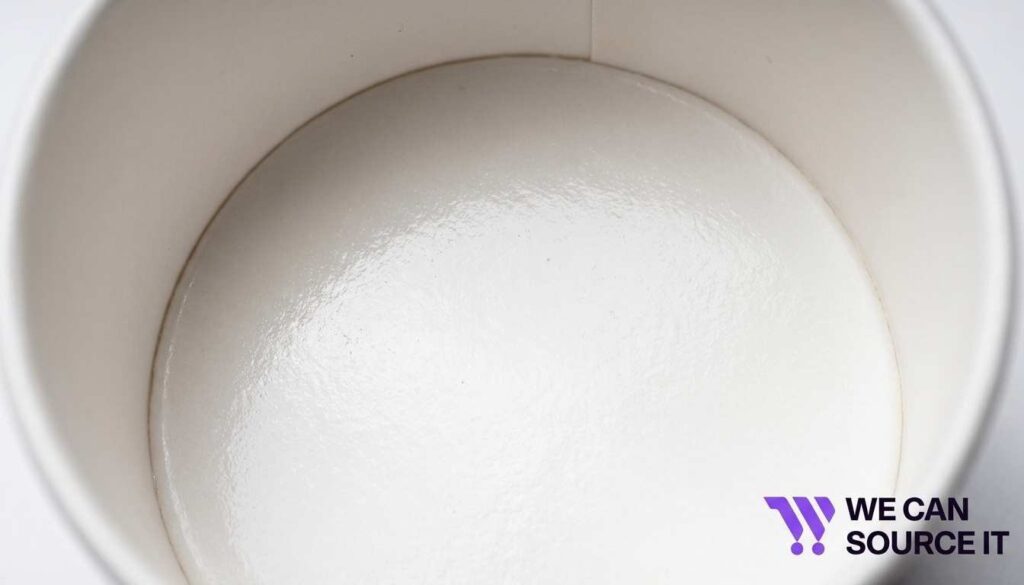
PE lining is the traditional plastic coating used inside most disposable coffee cups.
It is a thin polyethene layer bonded to the inner wall.
Advantages
- Excellent liquid-proof lining
- Strong heat resistance
- Lowest cost option
- Proven durability
- Reliable for hot drinks
Disadvantages
- Not recyclable in standard UK kerbside recycling
- Requires specialist cup recycling schemes
- Contains fossil-based plastic
PE lining remains the most common choice in UK coffee shop cups due to price and reliability.
Key takeaway: PE is cost-effective but infrastructure-dependent for recycling.
What is PLA lining (Plant-based lining)?
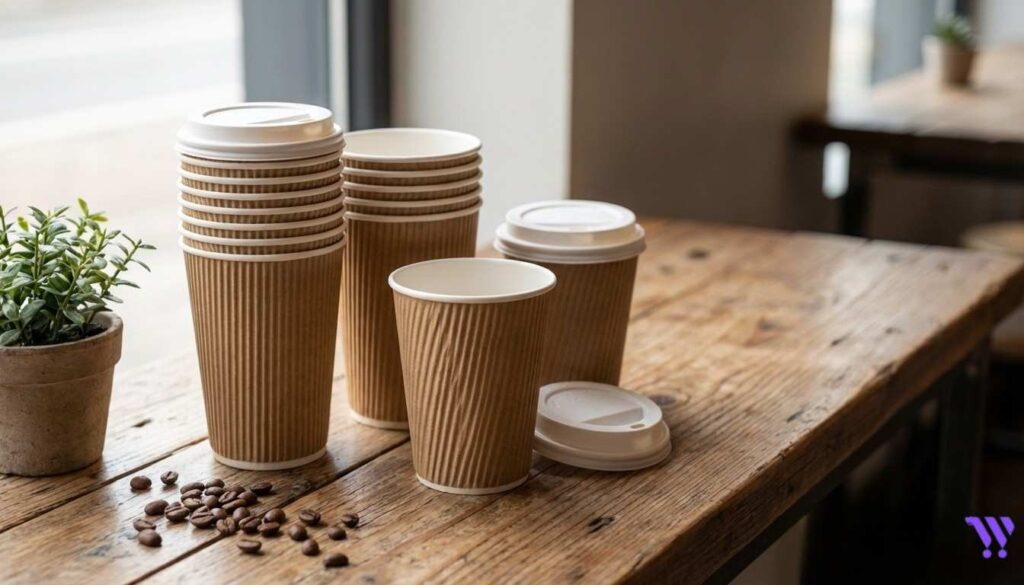
PLA lining is made from plant starch (usually corn) and marketed as compostable.
It performs similarly to PE in many hot drink applications.
Advantages
- Made from renewable resources
- Industrially compostable (EN 13432 certified)
- Aligns with eco-friendly branding
Limitations
- Requires industrial composting (55–60°C)
- Not suitable for home composting
- Not recyclable in paper streams
- Composting infrastructure in the UK is limited
Many compostable cups still end up in general waste due to disposal confusion.
Key takeaway: PLA cups are only environmentally beneficial if composted correctly.
What is an aqueous (water-based) coating?
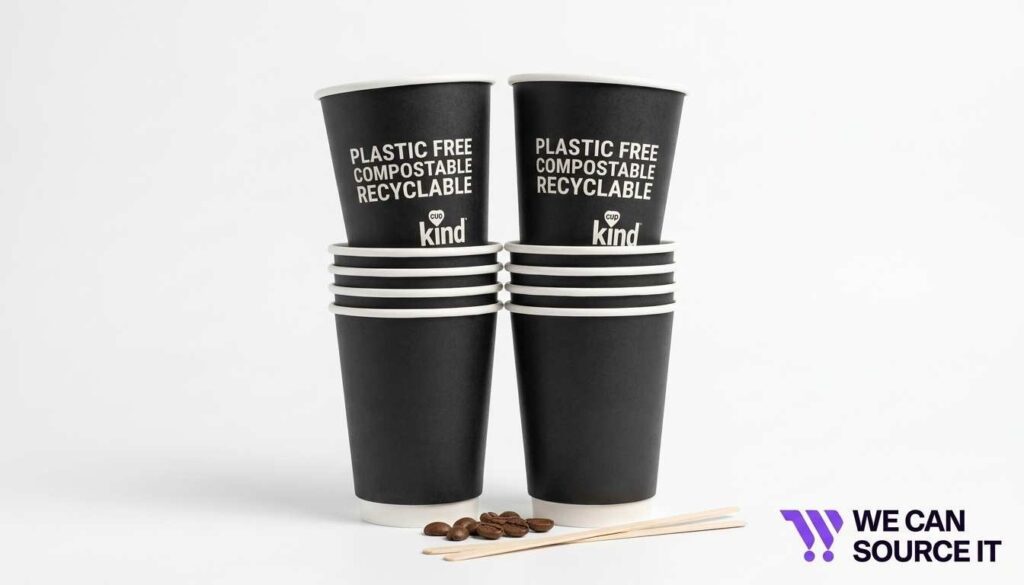
Aqueous coating is a newer cup coating designed to allow paper recycling compatibility.
Instead of plastic film, a mineral-based or polymer dispersion coating is applied.
Advantages
- Designed for standard paper recycling streams
- Reduces plastic content
- Easier consumer messaging
- Increasing UK adoption
Limitations
- Often slightly higher cost
- Performance varies by manufacturer
- Requires recyclability certification verification
This is currently the most promising option for truly recyclable paper coffee cups in the UK.
Key takeaway: Aqueous coating supports simpler recycling messaging, but verifies certification.
Which paper cup lining is best for UK coffee shops?
There is no universal best option. It depends on your priority.
| Priority | Recommended Lining |
| Lowest cost | PE lining |
| Compostable strategy (with infrastructure) | PLA lining |
| Recyclability of standard paper waste | Aqueous coating |
| Proven durability | PE lining |
| Sustainability messaging simplicity | Aqueous coating |
If you do not have access to industrial composting or dedicated cup recycling, aqueous-coated cups may offer the most practical solution.
How do cup materials affect durability and insulation?
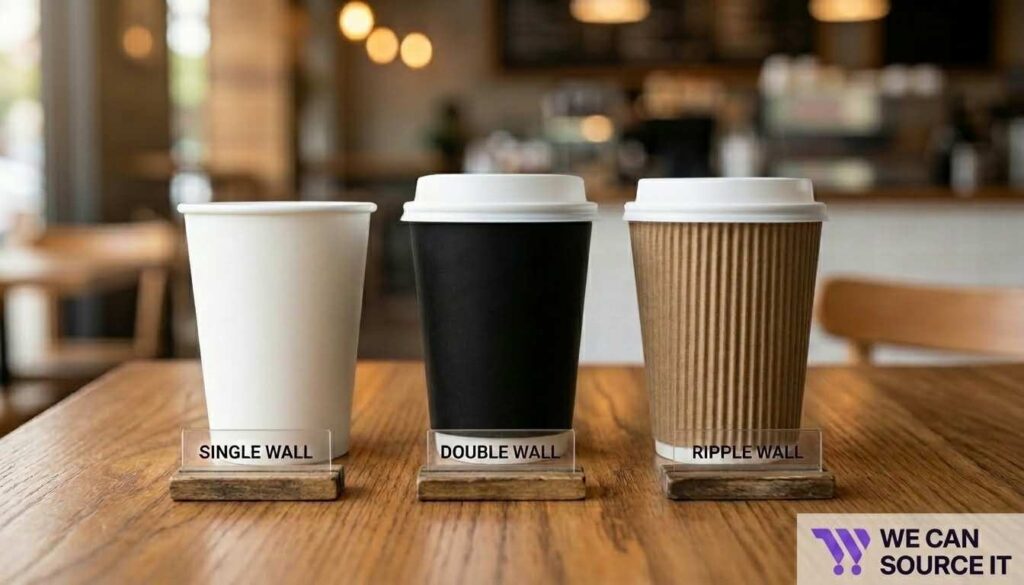
Material choice influences more than sustainability.
Structural durability
- Virgin board + PE = highest strength
- Double-wall cups improve insulation
- Ripple wall cup designs enhance grip and comfort
Heat performance
- PE handles high temperatures well
- PLA may soften under extreme heat
- Insulation comes primarily from wall construction (single-wall, double-wall, ripple wall cup)
Cup insulation is not determined by lining alone — wall type matters more.
Are compostable cups really compostable in the UK?
Only in industrial composting facilities.
Compostable cups:
- Require high-temperature composting
- Must be collected separately
- Cannot go into standard recycling
If placed in a landfill, they break down slowly due to oxygen restriction.
If placed in recycling, they contaminate paper streams.
Key takeaway: Compostable does not mean universally compostable. Infrastructure matters.
What should coffee shop buyers ask suppliers?
Before ordering disposable coffee cups, ask:
- What lining is used?
- Is it PE, PLA, or aqueous?
- Does it carry recyclability or compostability certification?
- Is it compatible with the UK recycling infrastructure?
- What is the rim diameter for lid compatibility?
- Is the cup suitable for hot drinks at 90°C?
- Are inks food-safe?
Never rely on marketing claims alone.
How do materials affect cost?
Lining choice impacts price:
- PE: lowest cost
- PLA: moderate to higher
- Aqueous: moderate premium
However, cost differences are often small compared to:
- Sleeve elimination (double-wall cups)
- Lid compatibility
- Volume-based purchasing
Focus on total packaging strategy, not unit cost alone.
FAQ
Are paper cups recyclable in the UK?
Most PE-lined cups are not recyclable in standard kerbside recycling. They require specialist recycling streams. Aqueous-coated cups are increasingly compatible with paper recycling.
Is PLA better than PE for the environment?
Only if it is sent to industrial composting. Without proper waste handling, the environmental advantage is reduced.
Do lining materials affect taste?
High-quality PE, PLA, and aqueous coatings should not affect taste. Always request samples and test with real drinks before bulk orders.