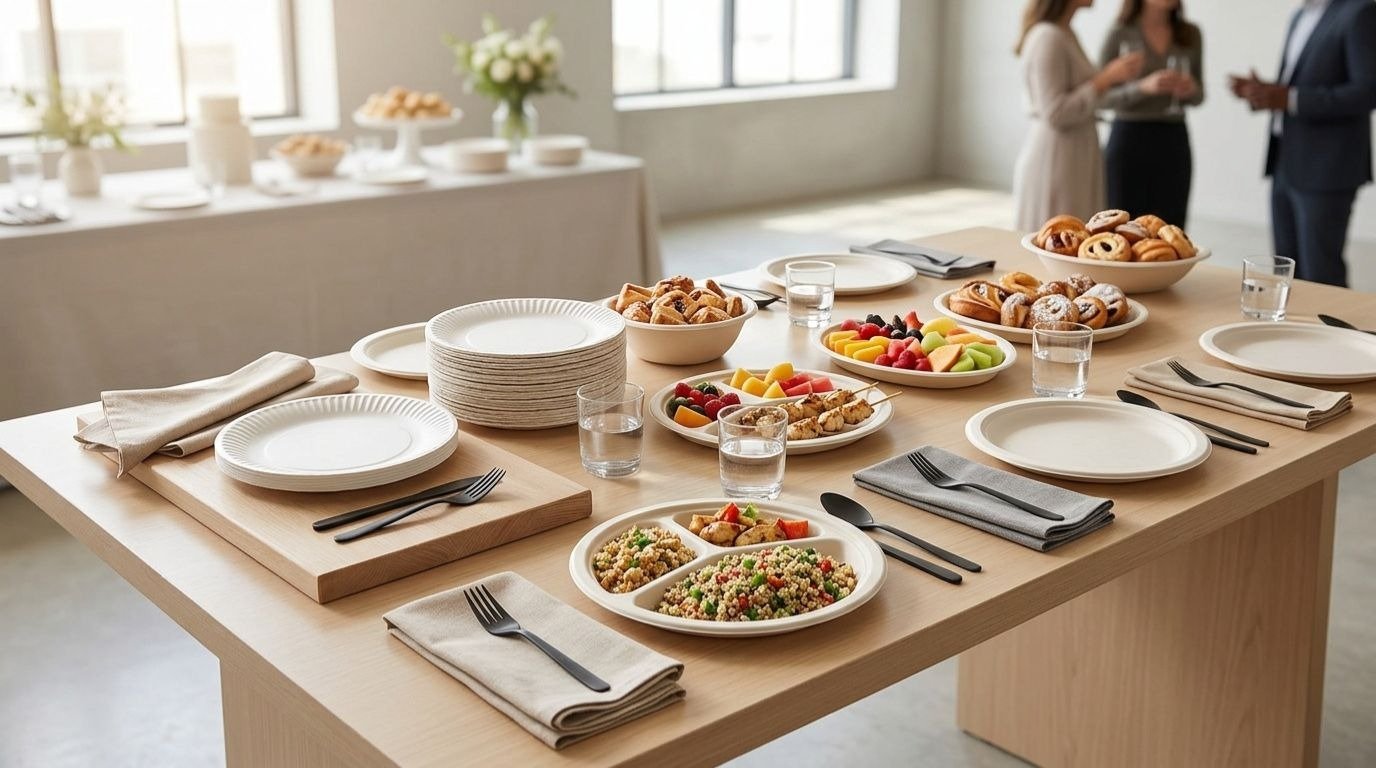
Choosing the right disposable plates for events can make a big difference in both the overall experience and convenience for your guests.
Whether you’re planning a wedding, birthday party, or corporate event, the type of plates you select plays a vital role in setting the tone, handling the food, and ensuring ease of cleanup.
Here’s everything you need to know about picking the right disposable plates for your upcoming event.
Why It Matters: The Role of Disposable Plates at Events
Disposable plates serve multiple purposes. They ensure convenience, hygiene, and ease of cleanup, especially at large gatherings where washing dishes may not be feasible.
But more than that, they can also contribute to the overall theme or ambience of your event. Choosing the right kind of disposable plates will not only enhance the food experience but also keep everything neat and organised.
However, with so many options available from plastic to paper to eco-friendly alternatives making the right choice can feel overwhelming. It’s essential to balance practicality with style while considering the type of food being served and the event’s theme.
Key Factors to Consider When Choosing Disposable Plates
1. Material: Plastic, Paper, or Compostable?
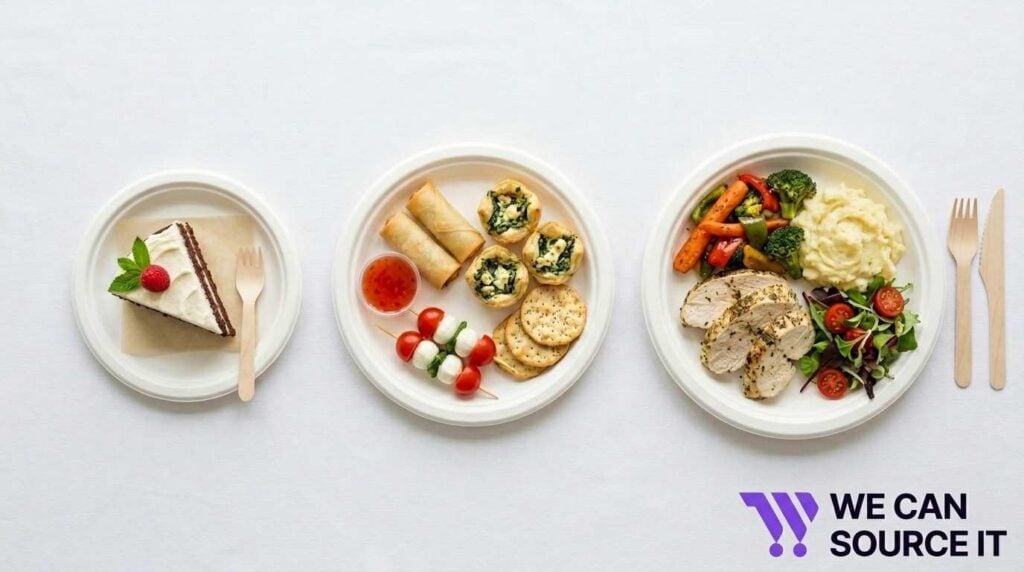
The first decision you’ll need to make is the material of the plates. Here’s a breakdown of common options:
- Plastic Plates: These are the most common choice for many events due to their sturdiness. They can hold a variety of food types without bending or cracking. However, keep in mind that plastic plates can be less eco-friendly unless they are made from recyclable or biodegradable plastic.
- Paper Plates: Paper is often seen as a more eco-friendly option, but it can be less durable, especially for heavier foods. If you’re serving lighter foods like salad or cake, paper plates can work well. Some premium paper plates are reinforced to handle heavier meals, but they can still get soggy if left too long with wet foods.
- Compostable Plates: If your event focuses on sustainability, compostable plates made from materials like sugarcane, bamboo, or palm leaves are a great option. These are biodegradable and environmentally friendly, offering a good balance between functionality and eco-consciousness.
2. Plate Size: What Works for Your Menu?
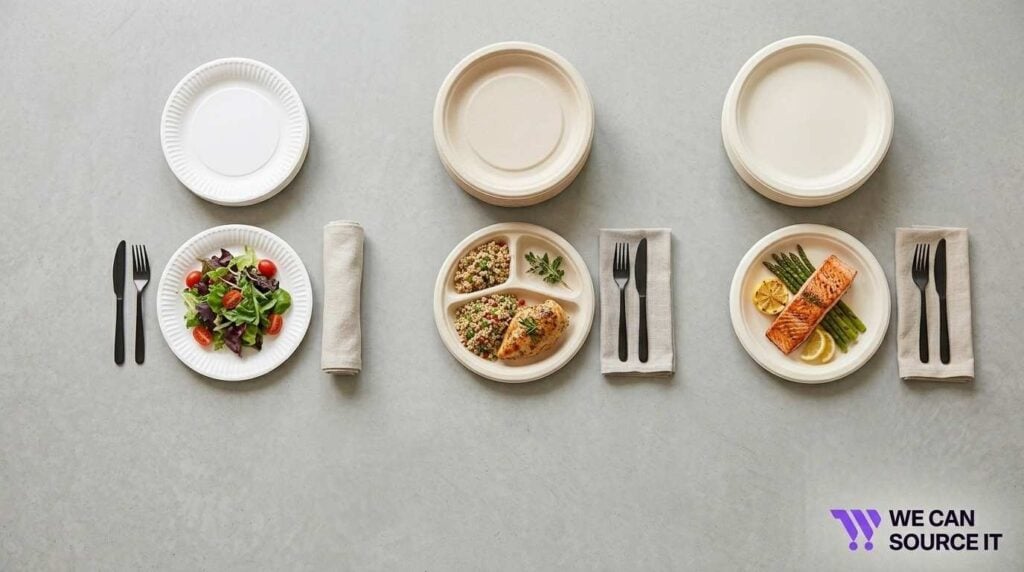
The type of food you’re serving should help determine the size of the plates. For a buffet or a formal meal with multiple courses, you may need larger plates to accommodate the variety of dishes. Conversely, for finger foods or small appetisers, smaller bagasse plates will suffice.
- Small Plates (6–7 inches): Ideal for appetisers, tapas, or snacks.
- Standard Plates (9–10 inches): Best for a main course or a full meal.
- Large Plates (12 inches or more): Typically used for large portions or a variety of food on one plate.
3. Durability: Will They Stand Up to the Food?
Not all disposable plates are created equal. While some are designed to hold heavy meals with multiple courses, others are more suited for light finger foods. It’s important to consider both the weight and texture of your menu when selecting plates. Here’s how to make sure your plates are up to the task:
- If you’re serving a hearty meal like pasta, meat, or salads with dressings, you’ll need plates that are sturdy enough to hold the weight without sagging. Plastic or premium paper plates tend to be a better option for these types of meals.
- If your event involves lighter snacks or appetisers, a basic paper plate can handle it just fine.
4. Style and Aesthetic: Matching Your Event’s Theme
Choosing plates that complement the theme and atmosphere of your event is another important consideration. Whether it’s a formal dinner, a casual get-together, or an outdoor barbecue, the style of your plates can impact the overall presentation.
Look for plates with elegant finishes, colours, or designs that match your decor. For instance, a rustic-themed wedding might benefit from eco-friendly palm leaf plates, while a more formal event might require sleek, white plastic plates with gold trim.
5. Convenience and Clean-Up
One of the main advantages of disposable plates is how easy they are to clean up after the event. That said, the right plate should align with how much time you’re willing to spend cleaning up. For example:
- Single-use plates: Most disposable plates are designed for one-time use, making them perfect for large events where cleanup time is limited.
- Microwave-Safe Plates: Some disposable plates can be used to heat food in the microwave, making them more convenient for guests who need to reheat their meals.
- Heavy-duty Plates: If you’re looking for extra durability to prevent spills, consider opting for thicker, sturdier plates.
6. Eco-Friendly Options
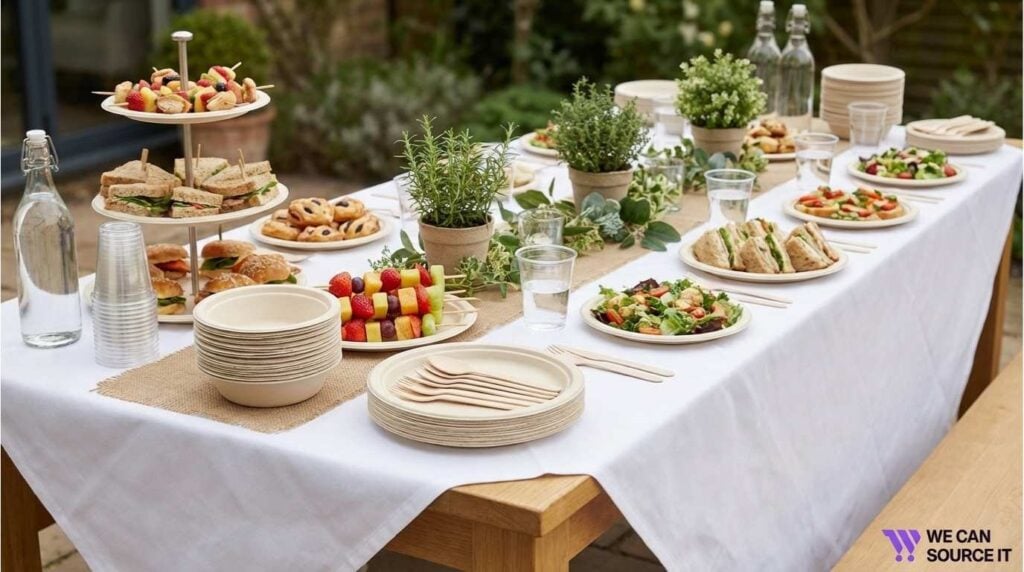
More people are becoming environmentally conscious, and many event planners are turning to eco-friendly disposable plates.
Compostable plates are an excellent choice for those who want to minimise their carbon footprint.
Not only are these plates biodegradable, but they are also often made from renewable resources like bamboo, palm leaves, and sugarcane.
Practical Tips for Choosing the Right Disposable Plates
- Consider the Food: Think about whether the food is likely to leak, become soggy, or require heavy-duty support. Select plates accordingly.
- Take the Guest Count into Account: Always order a little more than you think you’ll need, just in case.
- Look for Multiple-Use Plates: Some disposable plates can be reused for other events or picnics. This can be a great budget-friendly option.
- Check for Food Safety: Ensure that the materials used are food-safe and won’t affect the taste or texture of the food.
FAQs
1. What is the best type of disposable plate for a formal event?
For a formal event, premium plastic plates or compostable plates with elegant designs are ideal. Look for plates with a glossy finish or metallic trims for added sophistication.
2. Are compostable plates as strong as plastic ones?
Compostable plates can be as strong as plastic plates, especially when made from materials like palm leaves or sugarcane. However, they are often better suited for lighter meals compared to heavy, greasy dishes.
3. Can disposable plates be used for hot food?
Yes, many disposable plates are designed to handle hot foods. Look for plastic plates that are labelled as microwave-safe or choose sturdy paper plates that won’t warp or leak.
4. What is the most eco-friendly option for disposable plates?
Compostable plates made from materials like sugarcane, bamboo, or palm leaves are the most eco-friendly options. These plates are biodegradable and can break down quickly after disposal.
5. How do I know what size disposable plate to choose?
The plate size depends on the type of food served. For main courses, a 9–10-inch plate is ideal. For appetisers or finger foods, a smaller 6–7 inch plate will be more suitable.
6. Are there disposable plates that are microwave-safe?
Yes, many disposable plastic plates are microwave-safe, allowing guests to reheat their food. Be sure to check the packaging for microwave-safe labelling.
7. Can disposable plates be used for desserts?
Yes, smaller disposable plates (6–7 inches) are perfect for serving desserts like cake, pastries, or fruit. These plates are lightweight and convenient for single servings.
Making the Best Choice for Your Event
Choosing the right disposable plates for your event is crucial for both functionality and style. Consider the material, size, durability, and aesthetics to find the best fit for your menu and occasion.
Whether you’re prioritising convenience, sustainability, or elegance, the right plate can make a big difference in your event’s success. With the right planning, you can ensure that your guests enjoy their meals in style, without the hassle of cleanup afterwards.