I’ve worked with UK coffee shops and packaging suppliers on cup trials, recyclability claims, and waste contracts. From hands-on testing and supplier audits, aqueous-coated cups are the first viable route toward standard paper recycling, but only when certification and local acceptance align.
Aqueous-coated cups can be recycled in standard UK paper recycling streams if they are certified as recyclable and accepted by local facilities, but they are not universally accepted everywhere yet.
What are aqueous-coated cups, and how do they differ from standard cups?
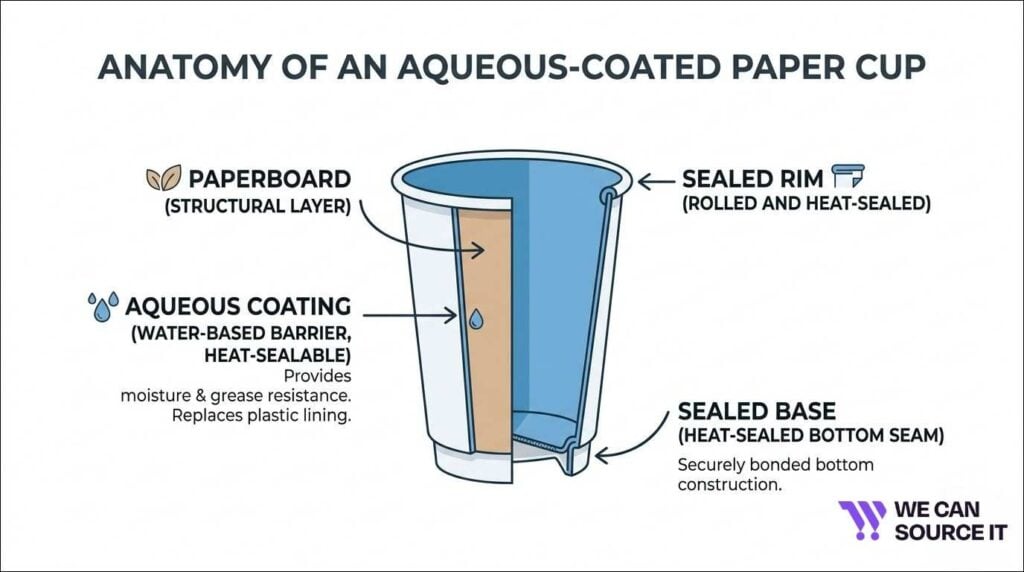
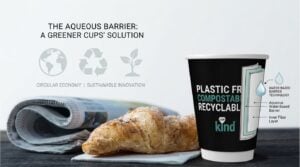
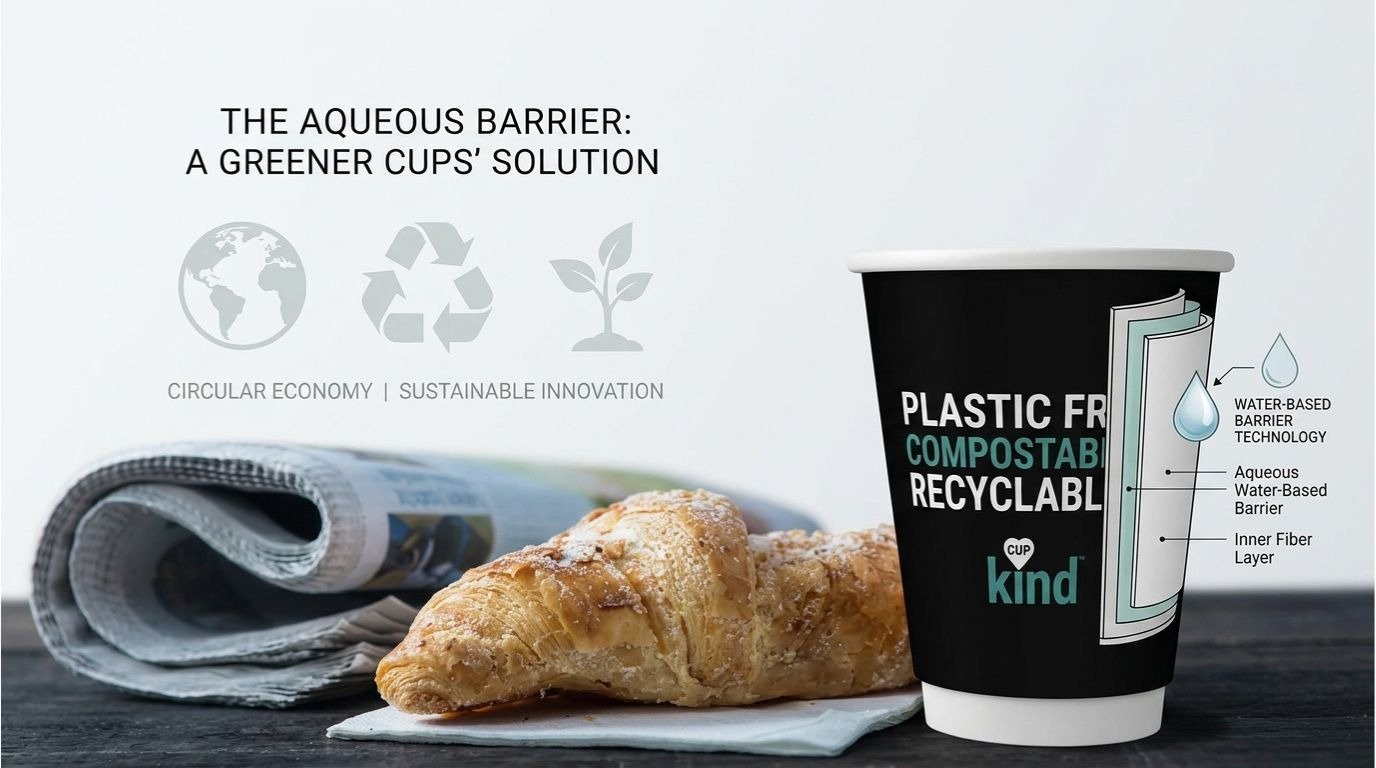
Aqueous-coated cups use a water-based barrier instead of a plastic lining.
Key components:
- ▸ Paperboard body: Structural layer
- ▸ Aqueous coating: Liquid-applied barrier that dries into a thin film
- ▸ Sealed base and rim: Maintains integrity
Key difference vs traditional cups:
- ▸ No PE (plastic) lining
- ▸ No PLA (compostable plastic)
Why it matters: The coating is designed to break down during the paper recycling process, unlike plastic linings.
Key takeaway: Aqueous coatings aim to make cups compatible with standard paper recycling.
Are aqueous-coated cups widely recyclable in the UK?
Increasingly yes, but not universally.
Current UK reality:
- ▸ Some paper mills accept aqueous-coated cups
- ▸Some councils include them in kerbside paper recycling
- ▸ Others still reject all coffee cups regardless of coating
What determines recyclability:
- ▸ Third-party certification (critical)
- ▸ Local council acceptance
- ▸ Waste contractor capability
Important: A paper coffee cup must be tested and certified as recyclable, not just labelled “eco” or “plastic-free.”
Key takeaway: Recyclability depends on both certification and local infrastructure.
How do aqueous-coated cups actually get recycled?
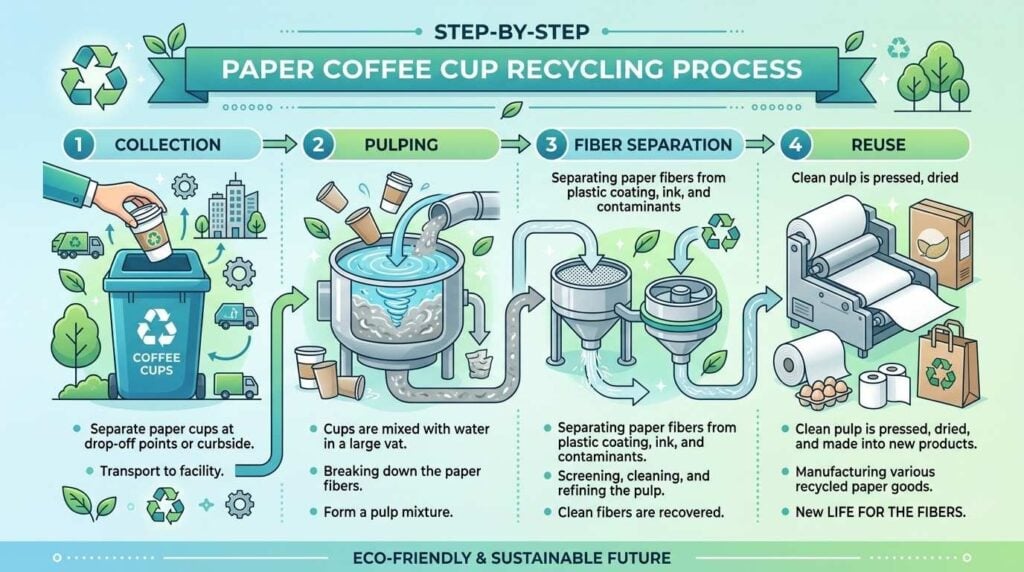
They are processed like standard paper when accepted.
Recycling process:
- Cups enter the paper recycling stream
- Mixed with water in the pulping process
- Fibres separate from the coating
- Paper fibres reused for new products
Why this works:
- ▸ The aqueous coating is designed to disperse or separate cleanly
- ▸ No plastic film to remove
Compared to PE-lined cups:
- ▸ No specialist separation required
- ▸ Lower contamination risk
Key takeaway: Aqueous-coated cups can follow the normal paper recycling pathway when approved.
What certifications should you look for in the UK?
Certification is the only reliable proof of recyclability.
Key certifications to check:
- ▸ OPRL “Widely Recycled” label
- ▸ Independent recyclability testing reports
- ▸ Paper mill acceptance documentation
What to ask suppliers:
- ▸ Has the cup been tested in UK paper mills?
- ▸ Is it accepted in kerbside recycling?
- ▸ Can you provide written certification?
Warning: Many products claim to be “recyclable” without verified testing.
Key takeaway: Never rely on claims; always verify certification.
How do aqueous-coated cups compare to PE and PLA cups?
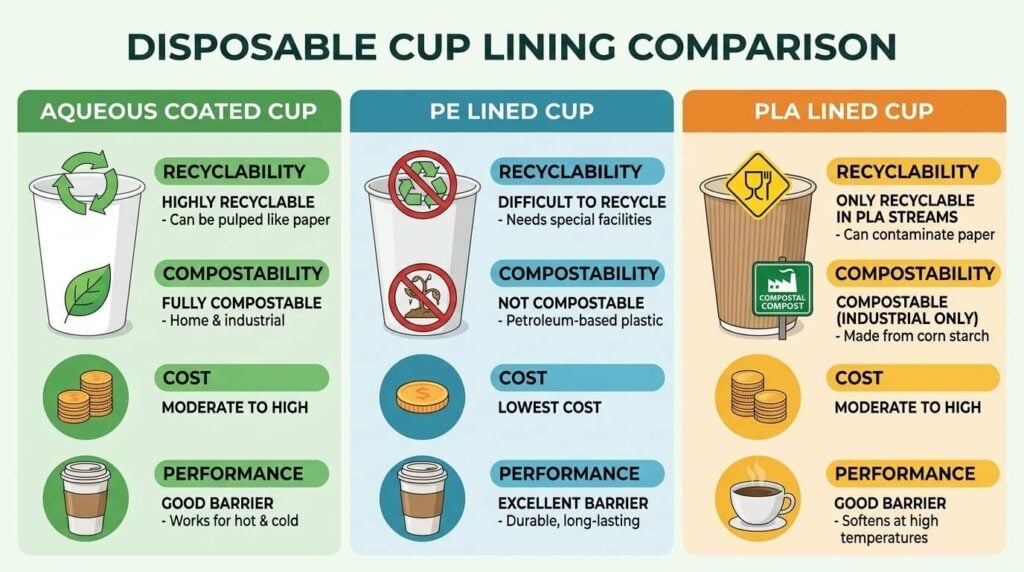
They offer the best alignment with UK recycling systems, but come with trade-offs.
Comparison table:
| Feature | Aqueous Coating | PE Lining | PLA Lining |
| Recyclability | Potentially high | Limited | None |
| Compostability | No | No | Industrial only |
| Cost | Medium–High | Low | Higher |
| Performance | Good | Excellent | Good |
| UK infrastructure fit | Improving | Low | Low |
Practical insight:
- ▸ Aqueous cups solve the recycling problem
- ▸ But it may cost more and vary by supplier
Key takeaway: Aqueous-coated cups are the most future-aligned option for UK waste systems.
Do aqueous-coated cups perform as well as standard cups?
Yes, in most cases, but quality varies by manufacturer.
Performance factors:
- ▸ Heat resistance
- ▸ Leak protection
- ▸ Structural strength
Real-world performance:
- ▸ Works well for standard hot drinks
- ▸ Slight variation in durability across suppliers
- ▸ Requires proper manufacturing quality
What to test:
- ▸ Seam integrity
- ▸ Heat retention
- ▸ Lid fit
Key takeaway: Performance is generally strong, but supplier quality matters more than coating type.
Are aqueous-coated cups more expensive?
Yes, typically more expensive than PE-lined cups.
Cost factors:
- ▸ Newer technology
- ▸ Lower production scale
- ▸ Certification and testing costs
Typical impact:
- ▸ Higher per-unit cost
- ▸ No need for composting infrastructure
- ▸ Potential savings via EPR compliance
Long-term view: As adoption grows, prices are expected to stabilise.
Key takeaway: You pay more upfront for better recyclability alignment.
When should UK coffee shops switch to aqueous-coated cups?
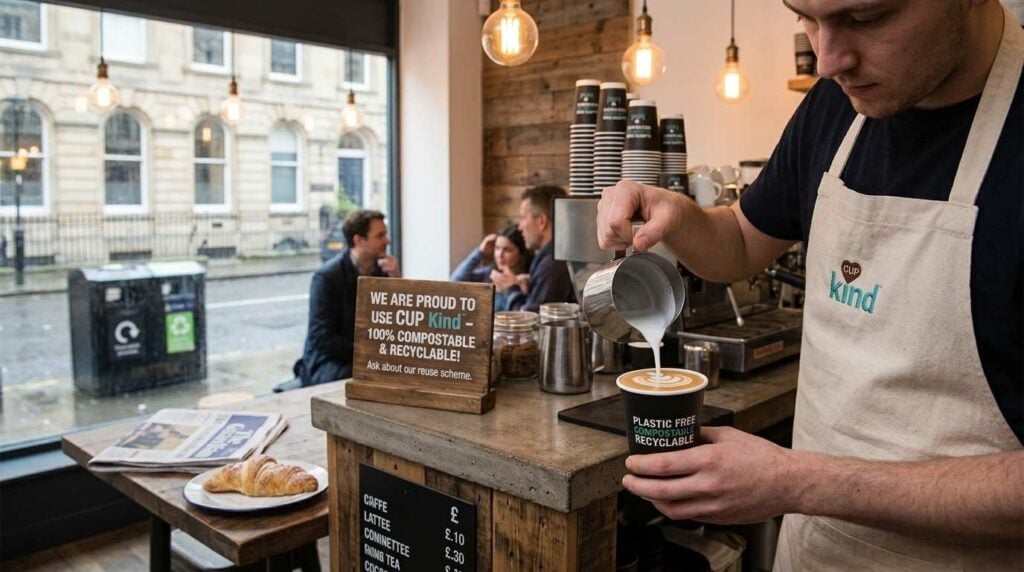
They are ideal when recyclability and compliance matter.
Best use cases:
- ▸ Shops promoting sustainability
- ▸ Locations with paper recycling access
- ▸ Businesses preparing for stricter regulations
When to wait:
- ▸ If the supplier cannot prove certification
- ▸ If local recycling does not accept them
- ▸ If cost is a major constraint
Real-world pattern: Forward-thinking cafés are adopting aqueous cups to stay ahead of regulation.
Key takeaway: Switch only when both supply and recycling systems are verified.
What can you honestly tell customers about these cups?
Clarity builds trust, especially with sustainability claims.
Accurate messaging:
- ▸ “Widely recyclable where facilities exist.”
- ▸ “Please recycle with paper if accepted locally.”
Avoid:
- ▸ “100% recyclable everywhere.”
- ▸ “Zero-impact” claims
Why it matters: Customers are increasingly aware of greenwashing.
Key takeaway: Be specific about recyclability conditions.
Are aqueous-coated cups the future of coffee cups in the UK?
They are the strongest candidate, but not fully standard yet.
Why they are gaining traction:
- ▸ Align with recycling systems
- ▸ Reduce plastic dependency
- ▸ Supported by regulatory direction
Current limitation:
- ▸ Not universally accepted
- ▸ Still dependent on local infrastructure
Industry direction: Major suppliers are investing heavily in aqueous technology.
Key takeaway: Aqueous-coated cups are likely the long-term direction for UK packaging.
Are aqueous-coated cups widely recyclable in the UK?
Partially, but adoption is growing.
- ▸ Recyclable in the right systems
- ▸ Requires certification and local acceptance
- ▸ Not yet universal
Aqueous-coated cups are the most realistic path to widely recyclable coffee cups in the UK—but only when backed by verified certification and compatible recycling infrastructure.
FAQ
Are aqueous-coated cups better than compostable cups?
Yes, in most UK scenarios. They align better with existing recycling systems, while compostable cups often lack infrastructure.
Can I put aqueous-coated cups in my home recycling bin?
Only if your local council accepts them. Always check local guidelines.
Do all “plastic-free” cups use aqueous coating?
No. Some still use hidden linings. Always verify materials and certification.