Most guides to starting a takeaway in the UK tell you how to write a business plan, register with Companies House, and sign up to a delivery platform. Useful, but not what you actually need when you are standing in a kitchen trying to figure out what to order before your first service.
This guide is different. It gives you an itemised supplies checklist with 2026 UK pricing, a breakdown of one-off versus ongoing monthly costs, and a Day One Box, the minimum viable set of supplies you need to legally open and serve your first order. By the end, you should be able to print the checklist, take it to a supplier, and know exactly what you are buying and what it will cost.
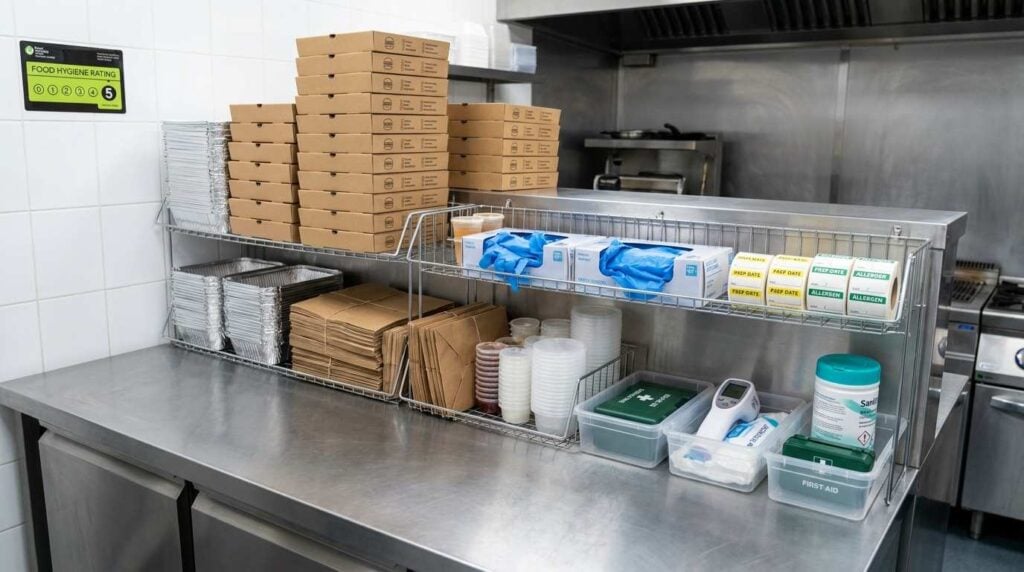
Starting a takeaway business in the UK is achievable at a lower upfront cost than most people expect. The supplies-only Day One cost for a home-based operation is approximately £350 to £550. For a small commercial premises at 150 orders per week, it rises to £600 to £950. The high costs are kitchen equipment, premises, and compliance, not packaging.
What Does It Actually Cost to Start a Takeaway in the UK?
The honest answer is that costs vary enormously depending on whether you are converting an existing premises, building from scratch, working from a licensed home kitchen, or taking on a dark kitchen unit. What most guides miss is the distinction between three very different cost types.
| Cost Category | One-Off or First Order | Monthly Ongoing |
| Kitchen equipment (basic setup) | £3,000 to £15,000 | Maintenance only |
| Packaging supplies (first order at MOQ) | £200 to £400 | £120 to £280 at 150 orders/week |
| Food safety consumables | £150 to £300 | £30 to £60 |
| Cleaning and hygiene supplies | £80 to £150 | £40 to £80 |
| Allergen labelling supplies | £100 to £400 | £20 to £40 |
| Waste bins (Simpler Recycling compliance) | £60 to £120 | £10 to £20 (bags and liners) |
| Insulated delivery bags | £50 to £200 | Replacement as needed |
| Food hygiene certificate (Level 2) | £20 to £35 | None |
| Public liability insurance | £150 to £400/year | Monthly direct debit |
Kitchen equipment deserves its own article. The supply costs above are the focus here; these are the recurring purchases that will shape your cash flow every month from day one.
The Complete Supplies Checklist
Packaging Supplies
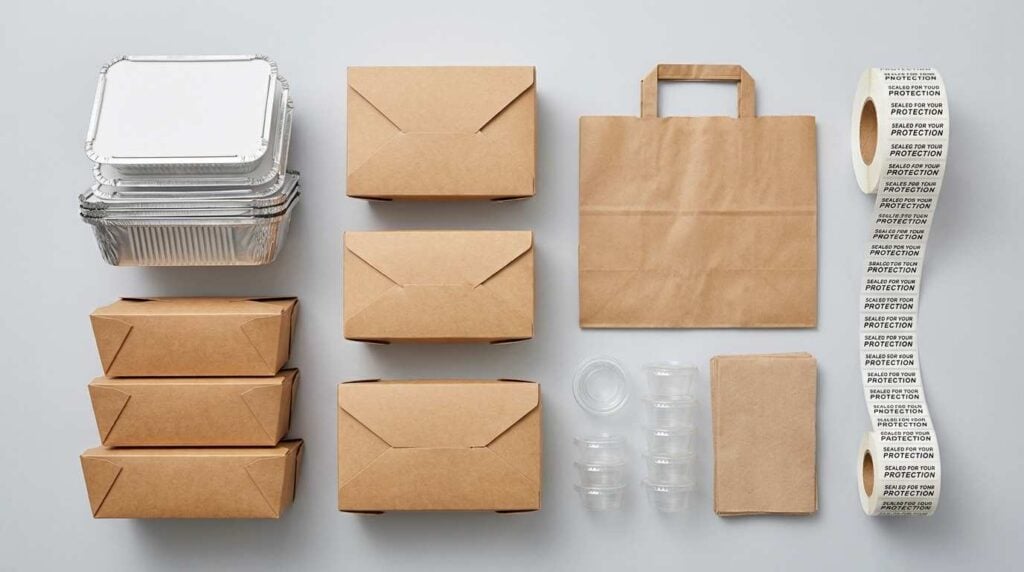
These are your highest-frequency recurring costs. The containers, bags, cups, and pots are left with every order and need constant replenishment.
| Item | Approx. Unit Cost | Weekly Cost (150 orders) |
| No 2 foil container (curry, rice, sides) | 4p to 6p | £9 to £14 |
| No 9 foil container deep (biryani, large portions) | 8p to 12p | £12 to £18 |
| Kraft takeaway box (burgers, snacks) | 8p to 14p | £12 to £21 |
| Paper carrier bag (medium) | 3p to 5p | £4.50 to £7.50 |
| 2oz sauce pot with lid | 2p to 3p | £6 to £9 |
| Hot cups (8oz to 12oz) | 5p to 9p | Varies by drink volume |
| Tamper-evident sticker | 1p to 2p | £1.50 to £3 |
| Napkins (pack of 500) | £2 to £4 per pack | £2 to £4 |
At 150 orders per week with a standard mixed menu, your weekly packaging spend sits at approximately £50 to £80. At 300 orders per week, expect £95 to £150.
Food Safety Consumables
| Item | Approx. Cost |
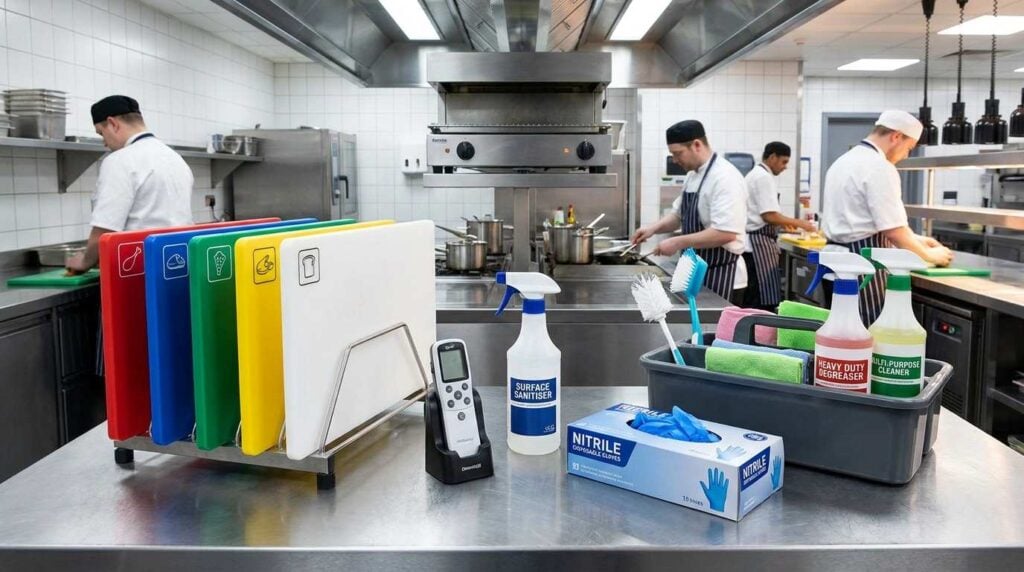
| Food probe thermometer | £30 to £80 |
| Probe wipes (box of 100) | £10 to £15 |
| Colour-coded chopping board set (6 boards) | £40 to £80 |
| Food-grade sanitiser spray (per litre) | £8 to £15 |
| Disposable gloves (box of 100) | £5 to £10 |
| Blue roll dispensers (x2) and stock | £15 to £25 for dispensers plus £8 to £12 per case |
| Temperature log book | £5 to £15 |
| HACCP document or food safety management plan | £10 to £30 premade; free templates at food.gov.uk |
Allergen and Labelling Supplies
Under Natasha’s Law (the Food Information Amendment Regulations 2019), any food packaged before a customer orders it requires full allergen labelling with all 14 major allergens clearly identified. For standard made-to-order service, this is less of an immediate issue. For any pre-packed items, grab-and-go products, or meal prep you prepare in advance, it applies from day one.
| Item | Approx. Cost |
| Label printer | £100 to £400 |
| Adhesive label stock (per roll) | £10 to £20 |
| Allergen reference poster (14 allergens) | £5 to £15; free download at food.gov.uk |
| Allergen information folder for staff | Free to create |
Cleaning and Hygiene Supplies
| Item | Approx. Monthly Cost |
| Food-grade surface sanitiser | £15 to £30 |
| Degreaser (kitchen equipment) | £10 to £20 |
| Antibacterial hand soap | £8 to £15 |
| Colour-coded cloths | £5 to £10 |
| Washing-up liquid and sponges | £5 to £10 |
Waste Management Supplies (Simpler Recycling – March 2025)
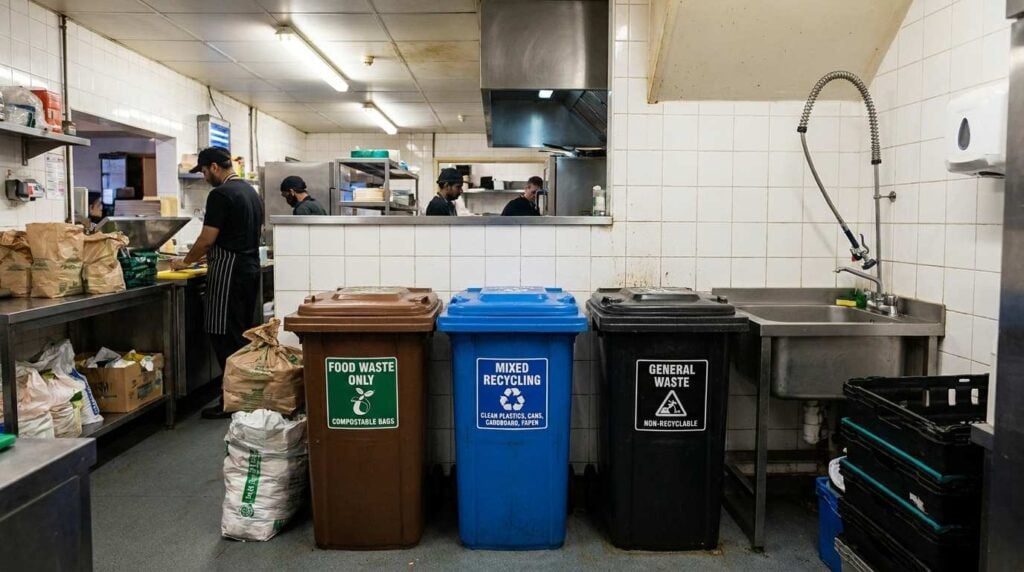
The Simpler Recycling legislation, which came into force on 31 March 2025 under gov.uk guidance, requires all businesses in England to separate waste into three streams before collection: food waste, dry recyclables, and residual general waste.
For a new takeaway, this means purchasing three clearly labelled bins before opening. This is a legal requirement, not optional.
| Item | Approx. Cost |
| Food waste caddy (small, kitchen) | £15 to £30 |
| Dry recycling bin (clearly labelled) | £20 to £40 |
| General waste bin | £20 to £40 |
| Compostable food waste bags (roll) | £5 to £15 per roll |
Packaging Supplies in Detail: Weekly Cost at Two Order Volumes
This is the cost breakdown that most guides do not provide. Here are the realistic packaging costs at two typical order volume levels.
At 150 Orders Per Week
| Item | Unit Cost | Weekly Units | Weekly Cost |
| No 2 foil container | 5p | 150 | £7.50 |
| Paper carrier bag | 4p | 150 | £6.00 |
| 2oz sauce pot + lid | 2.5p | 300 (2 per order) | £7.50 |
| Tamper-evident sticker | 1.5p | 150 | £2.25 |
| Napkins | 0.5p each | 300 (2 per order) | £1.50 |
| Total weekly packaging | approx. £25 to £35 |
At 300 Orders Per Week
| Item | Unit Cost | Weekly Units | Weekly Cost |
| No 2 foil container | 5p | 300 | £15.00 |
| Paper carrier bag | 4p | 300 | £12.00 |
| 2oz sauce pot + lid | 2.5p | 600 | £15.00 |
| Tamper-evident sticker | 1.5p | 300 | £4.50 |
| Napkins | 0.5p each | 600 | £3.00 |
| Total weekly packaging | approx. £50 to £70 |
These figures assume a curry or hot food operation. A burger or fried chicken operation using kraft boxes instead of foil containers will have slightly higher container costs but similar overall packaging spend.
A note on minimum order quantities: most UK packaging suppliers require minimum orders of 500 to 1,000 units per product line. Budget £200 to £400 for your initial packaging order to cover the MOQ on your core formats. Suppliers with lower entry quantities include Amazon Business and selected Nisbets lines, though unit prices at lower quantities will be higher.
Browse our full takeaway supplies range for foil containers, kraft boxes, paper bags, and sauce pots with bulk pricing from 25 units across most lines.
For the full context of takeaway packaging selection across all categories, see our complete UK takeaway supplies buying guide.
The Day One Box: 20 Items to Open Legally
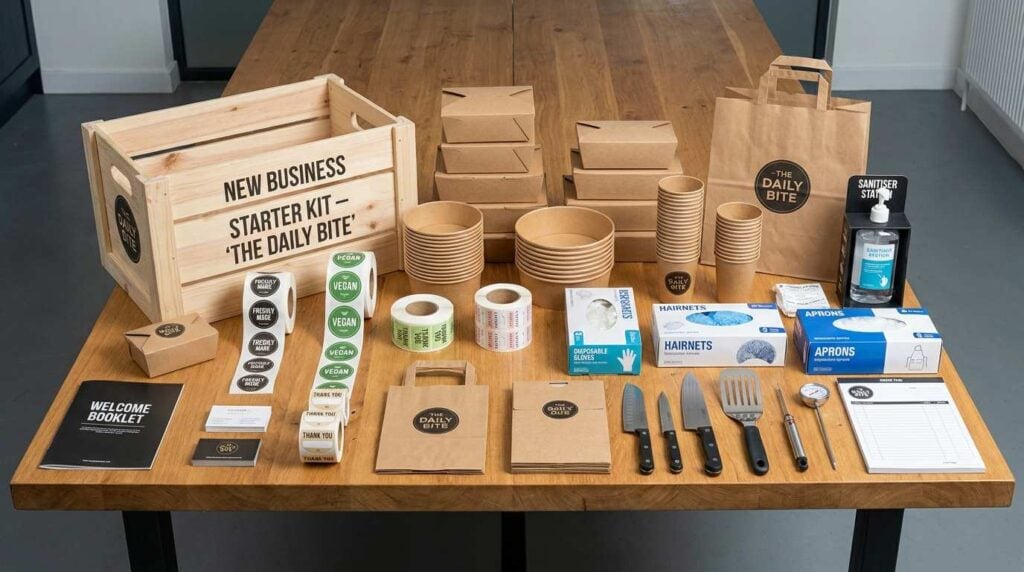
This is the minimum viable supplies kit for a new UK takeaway. It covers everything you need to legally open, pass an Environmental Health inspection, and serve your first delivery order.
Packaging (matched to your cuisine – see cuisine guide below):
- Main serving containers – 1,000 units at your primary format (e.g. No 2 foil or 650ml PP). Approx. £50 to £80.
- Secondary serving containers – 500 units at your secondary format (e.g. No 9 foil for larger portions). Approx. £50 to £70.
- Paper carrier bags – 500 units, medium size. Approx. £15 to £25.
- Sauce pots (2oz with lids) – 1,000 units. Approx. £25 to £40.
- Tamper-evident stickers – 500 units. Approx. £5 to £10.
- Napkins – 1 pack of 500. Approx. £2 to £4.
Food Safety:
- Food probe thermometer – 1 unit. Approx. £30 to £80.
- Probe wipes – 1 box of 100. Approx. £10 to £15.
- Colour-coded chopping board set (6 colours) – 1 set. Approx. £40 to £80.
- Food-grade sanitiser spray – 2 litres. Approx. £16 to £30.
- Disposable gloves – 2 boxes of 100. Approx. £10 to £20.
- Blue roll – 1 case. Approx. £8 to £12.
- Temperature log book – 1. Approx. £5 to £15.
- HACCP food safety management plan – 1 document. Approx. £10 to £30 or free from food.gov.uk.
Allergen and Labelling:
- Allergen poster (14 allergens) – 1 displayed in the kitchen. Approx. £5 to £15 or free from FSA.
- Label printer (if you pre-pack any food) – 1 unit. Approx. £100 to £400.
Waste Management:
- Food waste caddy. Approx. £15 to £30.
- Dry recycling bin. Approx. £20 to £40.
- General waste bin. Approx. £20 to £40.
Compliance:
- Food business registration – free at gov.uk/food-business-registration. Must be completed at least 28 days before opening.
Day One Box Cost Summary
| Scenario | Estimated Supplies Cost (excl. kitchen equipment) |
| Home-based, up to 50 orders per week | £350 to £550 |
| Small commercial premises, 150 orders per week | £600 to £950 |
| Commercial premises, 300 or more orders per week | £1,200 to £2,000 |
What Delivery Platforms Need You to Have in Place
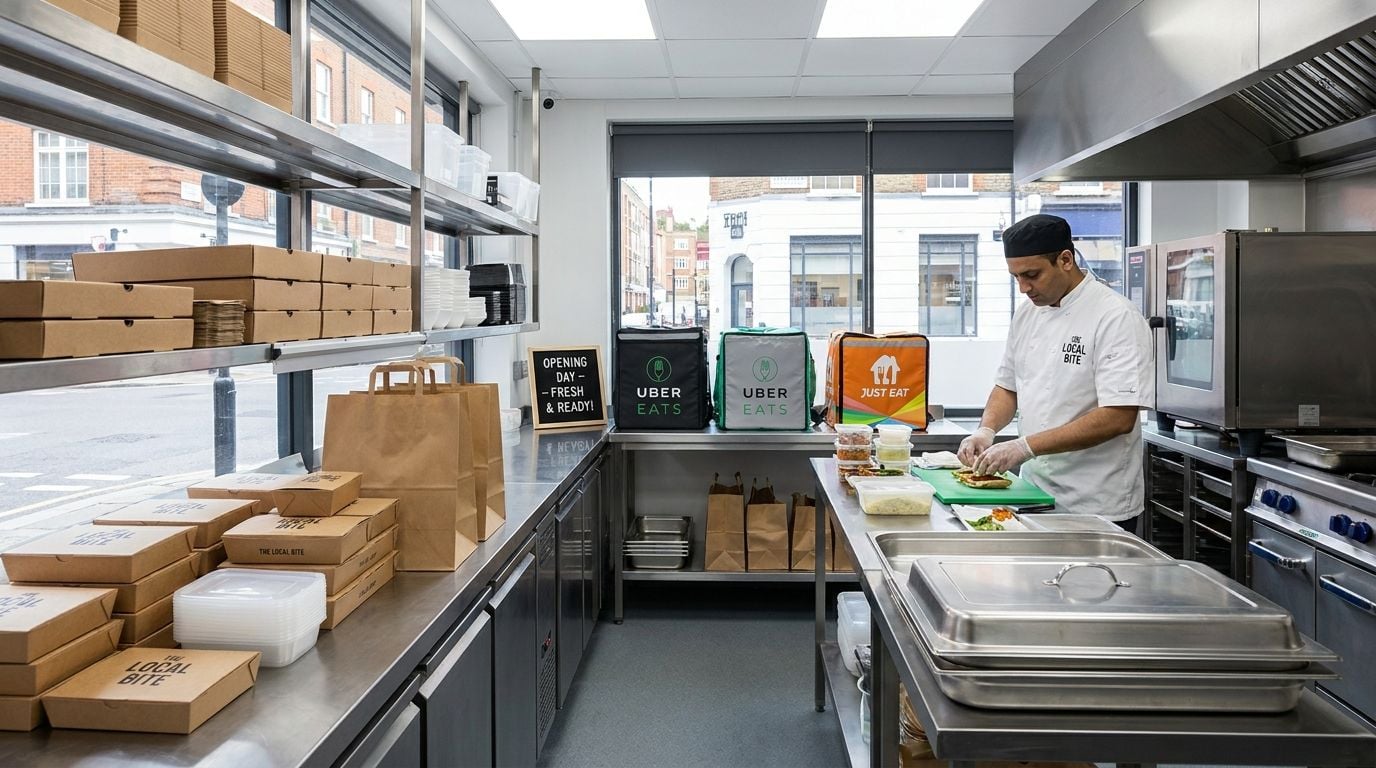
Before going live on Deliveroo, Just Eat, or Uber Eats, there are practical supply requirements beyond the legal minimum.
Tamper-evident packaging is recommended by all three major platforms and is increasingly expected by customers. A sticker label bridging the bag opening costs approximately £0.01 to £0.02 per order and removes any doubt about food integrity during transit.
Insulated delivery bags are essential for maintaining food quality across your delivery window. If you are self-delivering, budget £15 to £60 per bag for a commercial insulated format. If platform riders are collecting, the platform provides bags, but having your own for any self-managed orders is good practice.
Packaging quality affects your star rating. All three platforms surface packaging quality within customer reviews. Consistently soggy food, leaking containers, or missing cutlery generate the kind of specific negative reviews that are visible to future customers and affect platform algorithmic visibility. Getting the container right before going live is easier than recovering from a run of early negative reviews.
Platform commission rates (current as of June 2026):
- ▸ Deliveroo: typically 25 to 35% commission depending on contract tier
- ▸ Just Eat: typically 14% for orders through their own delivery; higher for Just Eat’s delivery service
- ▸ Uber Eats: typically 30% commission
Factor commission into your menu pricing before going live. At 30% commission on a £12 order, your net revenue is £8.40 before food cost and packaging. Packaging cost at £0.25 to £0.40 per order represents approximately 3 to 5% of that net figure.
Home-Based vs. Commercial Premises: Two Different Supply Lists
Starting from a home kitchen is a legitimate route for many new UK takeaway operators, but it requires council approval and some additional supplies that commercial premises already cover.
| Supply Item | Home-Based | Commercial Premises |
| Separate prep fridge (food-grade) | Required (£300 to £600) | Usually present |
| Dedicated food storage containers | Required – domestic storage not sufficient | Usually present |
| Separate waste bins (Simpler Recycling) | Required – must be additional to domestic bins | Required |
| Label printer | Required for any PPDS food | Required for any PPDS food |
| Commercial dishwasher or sanitisation protocol | Required for utensils | Usually present |
| EHO home inspection approval | Required before trading | Not applicable |
| Council planning permission or change of use | May be required | Usually covered by the premises |
For a home-based operator, the additional supply cost versus a commercial premises is typically £400 to £800 in upfront items, primarily the prep fridge and food-grade storage. The ongoing supply costs are the same once operating at similar order volumes.
Cuisine-Specific Supplies: Your List Depends on What You Cook
A generic supplies list does not work across all cuisines. Here is how the packaging and consumable requirements differ between three of the most common UK takeaway formats.
| Supply Item | Indian / Curry | Burger / Fried Chicken | Fish and Chips |
| Primary container | No 2 foil (smoothwall) | Kraft clamshell burger box | No 6a foil or paper bag |
| Secondary container | No 9 foil (deep, for biryani) | Small kraft box for sides | None typically |
| Lid type | Card lid (sealed) | Hinged clamshell | Vented board lid |
| Sauce pots | 4oz (curry sauce, gravy) | 2oz (ketchup, mayo, bbq) | 2oz (ketchup, mayo, vinegar) |
| Carrier bag | Large SOS kraft (heavy orders) | Medium SOS kraft | Greaseproof paper bag |
| Microwave label needed | Yes (foil containers) | No (kraft containers) | No |
| Oil management supplies | Not typically | Fryer filter papers, oil test strips | Fryer filter papers, oil test strips |
| Foil wrap | Not typically | Yes (for wrapping burgers) | Yes (traditional wrapping) |
For Indian takeaway operations, the foil container is the dominant format. Browse our aluminium foil containers range for No 2, No 9, and full gastro formats with matched card lids.
For burger and fried chicken operations, our takeaway supplies range covers kraft clamshell boxes, SOS bags, and sauce pots suited to fast food formats.
Compliance and Legal Supplies You Cannot Skip
These items are not optional. An Environmental Health Officer (EHO) inspection, which will typically happen within six to twelve months of opening, will expect to see evidence of all of them.
Food business registration – free at gov.uk/food-business-registration. Must be submitted at least 28 days before you open. Cannot be refused, but the 28-day requirement is firm. Do it early.
Level 2 Food Hygiene Certificate – required for anyone handling food. Available online for £20 to £35. Your local council may require evidence of this at inspection.
HACCP documentation – your food safety management plan. Covers the hazard analysis and critical control points for your operation. Free templates are available at food.gov.uk. Premade printed versions cost £10 to £30.
Public liability insurance – required before trading. Typical annual cost £150 to £400 for a small takeaway. Get a quote before you open, not after.
First aid kit – £15 to £30. Required in any workplace.
Fire extinguisher – a CO2 extinguisher for the kitchen costs £20 to £50. A wet chemical extinguisher for cooking oil fires costs £40 to £90. For any premises with a deep fat fryer, a wet chemical extinguisher is the correct type.
Gas safety certificate – if your kitchen uses gas appliances, an annual gas safety check by a Gas Safe registered engineer is required. Cost approximately £60 to £120.
A brief note on Plastic Packaging Tax and EPR for new operators: PPT applies at a rate of £217.30 per tonne (2026 rate) to plastic packaging with less than 30% recycled content, but only to businesses manufacturing or importing 10 tonnes or more of plastic packaging per year. EPR applies above £1 million annual turnover and 25 tonnes of packaging. Most new small takeaway operators are below both thresholds. Track your packaging volumes as you grow and check HMRC guidance when your turnover increases.
Where to Buy Takeaway Supplies in the UK
For Low Volumes and First Orders
Amazon Business – no formal MOQ on most listings, good for initial low-quantity orders while you confirm which formats work for your menu. Unit prices are higher than wholesale, but the flexibility is useful before you commit to large orders.
Nisbets – strong on food safety equipment, catering consumables, and kitchen hardware. Next-day delivery on most stock. Some packaging lines available at low quantities.
For Regular Wholesale Buying
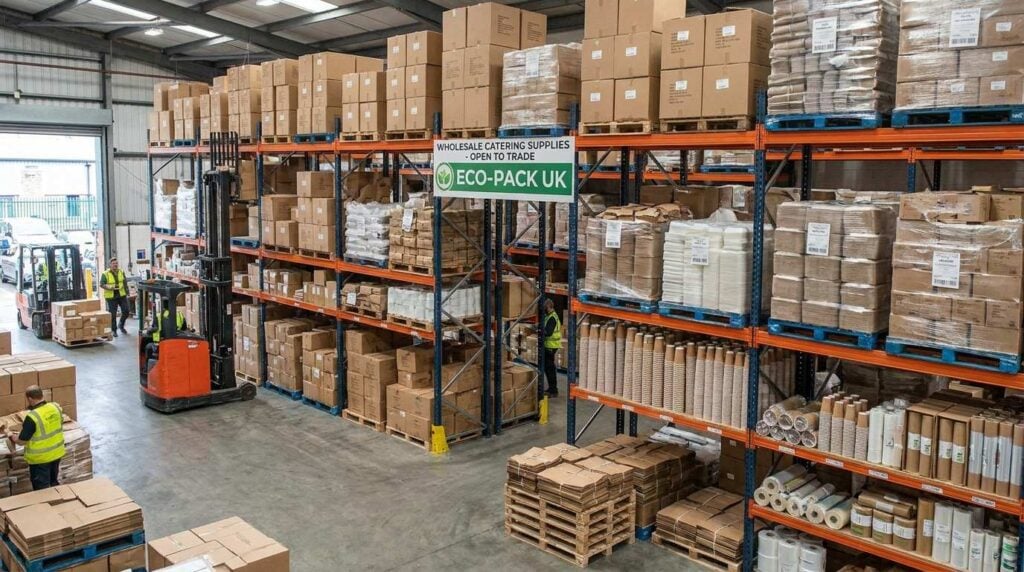
We Can Source It (wecansourceit.co.uk) – full range of foil containers, kraft boxes, paper bags, sauce pots, and catering supplies with bulk pricing and next-day delivery on orders before 4 pm. Our catering supplies range covers the full weekly consumable list for most UK takeaway formats.
Alliance Online – strong on toughened glass, packaging, and catering disposables. Good for mixed orders across formats.
Catering24 – competitive on foil container pricing at volume. Good for high-volume curry and Indian takeaway formats.
For Equipment (Second-Hand)
New kitchen equipment quotes look intimidating. Second-hand commercial equipment from Gumtree, eBay, Nisbets Clearance, and specialist second-hand catering dealers typically offers 30 to 70% savings on equivalent new equipment. A second-hand commercial refrigerator at £300 to £500 does the same job as a new one at £800 to £1,500. For non-electronic items like prep tables, shelving, and extraction canopies, second-hand is almost always worth considering.
Regulatory Checklist: What You Must Have Before Your First Order
Use this as your pre-opening tick list.
- ▸ [ ] Food business registered at gov.uk/food-business-registration (at least 28 days before opening)
- ▸ [ ] Level 2 Food Hygiene Certificate held by all food handlers
- ▸ [ ] HACCP food safety management plan completed and signed
- ▸ [ ] Allergen register completed and available for customer enquiries
- ▸ [ ] Colour-coded chopping boards in place
- ▸ [ ] Food probe thermometer and probe wipes in use
- ▸ [ ] Temperature log book started
- ▸ [ ] Simpler Recycling: three-stream waste bins labelled and in use
- ▸ [ ] Public liability insurance in place
- ▸ [ ] First aid kit stocked and accessible
- ▸ [ ] Fire extinguisher appropriate for the kitchen type installed
- ▸ [ ] Gas safety certificate current (if gas appliances are used)
- ▸ [ ] Business registered as a sole trader or limited company
- ▸ [ ] Food business rates confirmed with local council (small business rate relief may apply)
- ▸ [ ] Delivery platform accounts set up and packaging ready for first orders
FAQs
How much does it cost to start a takeaway in the UK?
The total startup cost depends heavily on premises and equipment. Kitchen equipment and fit-out run £3,000 to £15,000 for a basic setup. Your Day One supplies , packaging, food safety consumables, allergen supplies, and waste bins , cost approximately £350 to £950 depending on premises type and order volume. Public liability insurance adds £150 to £400 per year. The all-in figure for a new small commercial takeaway, excluding premises costs and major equipment, typically falls between £4,000 and £20,000.
Do I need a food hygiene certificate to open a takeaway?
Yes. A Level 2 Food Hygiene Certificate is the minimum standard required for anyone handling food in a UK food business. It is available online for £20 to £35 and takes approximately six hours to complete. An EHO inspector will check for this at their first visit.
What packaging do I need for a takeaway?
Your core packaging list covers: serving containers matched to your cuisine type (foil containers for curry and Indian food; kraft boxes for burgers and fried food; paper bags for fish and chips), paper carrier bags, sauce pots for condiments, and tamper-evident stickers for delivery orders. See the Day One Box section and the cuisine-specific table in this guide for the formats relevant to your menu.
How do I register a food business with the council?
Register at gov.uk/food-business-registration. It is free and must be submitted at least 28 days before you start trading. The registration cannot be refused, but you must submit it in advance. Your local authority’s Environmental Health team will receive the registration and may arrange an inspection within the first year.
What is the minimum order quantity for takeaway packaging?
Most UK wholesale packaging suppliers require minimum orders of 500 to 1,000 units per product line. Budget £200 to £400 for your initial packaging order. Suppliers with lower entry quantities, such as Amazon Business and some Nisbets lines, are useful for initial testing, but unit prices are higher than at wholesale quantities.
Do I need to register for the Plastic Packaging Tax?
Most new small takeaway operators are exempt. The Plastic Packaging Tax applies to businesses that manufacture or import 10 tonnes or more of plastic packaging per year. Check HMRC’s guidance as your business grows. Switching from plastic to kraft or foil containers reduces your exposure to PPT and improves your EPR position if you later meet the relevant thresholds.
What waste bins do I need under Simpler Recycling?
From 31 March 2025, all businesses in England with 10 or more full-time equivalent employees must separate waste into three streams: food waste, dry recyclables, and residual general waste. Micro-businesses with fewer than 10 FTE employees have until 31 March 2027 to comply. You need three clearly labelled bins in your kitchen area. Budget £60 to £120 for the bins and approximately £10 to £20 per month for bags and liners.
What is Natasha’s Law, and does it affect my takeaway?
Natasha’s Law (the Food Information Amendment Regulations 2019) requires full allergen labelling on any food packaged before the customer orders it. For standard made-to-order service, allergen information must be available on request but does not need to be on every container. For any pre-packed items grab-and-go products, batch-cooked food prepared in advance, or meal prep boxes full labelling with all 14 allergens is a legal requirement. Consult FSA guidance for your specific circumstances.
References
- ▸ gov.uk: Register a food business via gov.uk
- ▸ FSA: Safer Food Better Business (HACCP templates) via food.gov.uk
- ▸ FSA: Allergen labelling changes for PPDS food via food.gov.uk
- ▸ HMRC: Plastic Packaging Tax guidance via gov.uk
- ▸ Simpler Recycling: workplace recycling in England via gov.uk
- ▸ DEFRA: Extended Producer Responsibility for packaging via gov.uk
- ▸ Food Safety Act 1990 via legislation.gov.uk