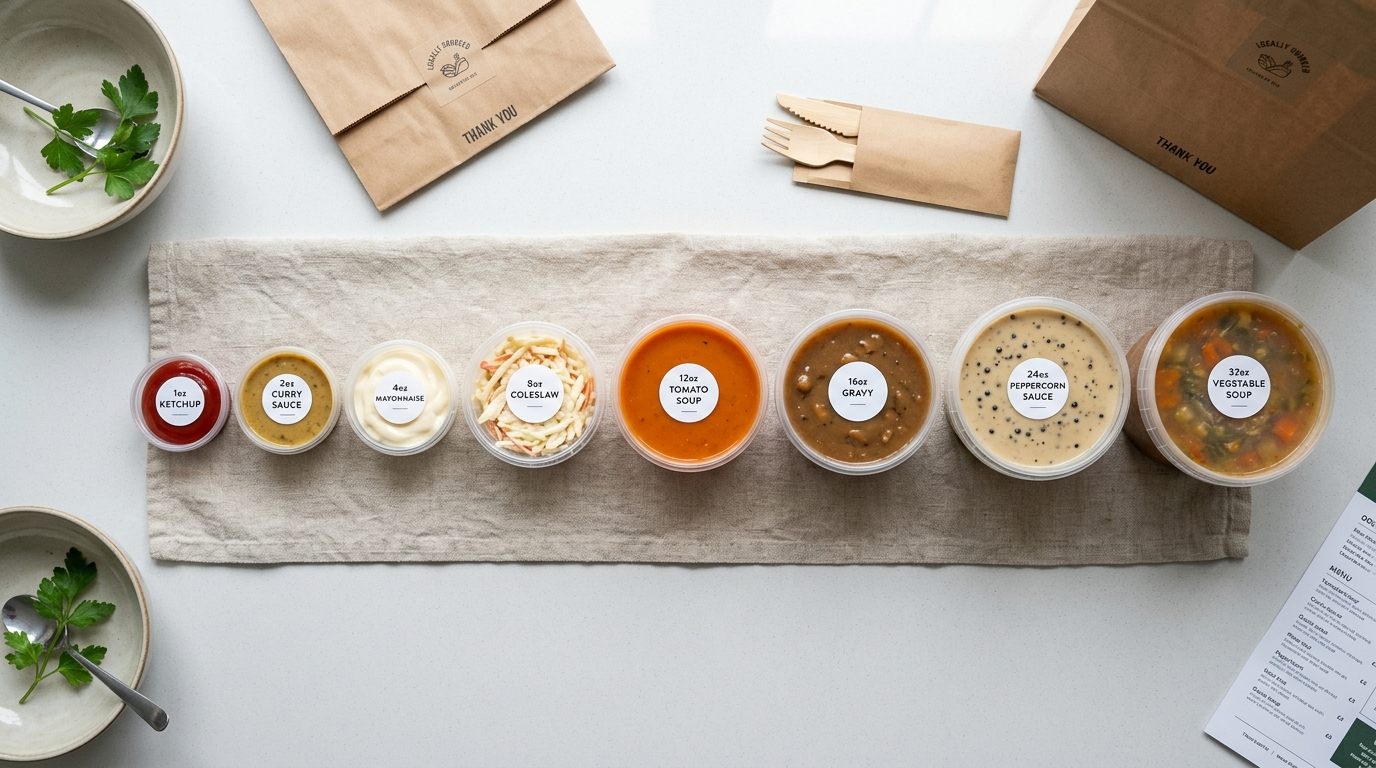
The word “actually” in this question is doing real work. Every supplier catalogue lists eight sizes of deli pots. Most UK food businesses need two or three of them. The rest take up storage space and create confusion at service because staff do not know which pot is for which sauce.
This guide cuts through the catalogue noise. It gives you the oz-to-ml reference table that nobody has published cleanly for UK buyers, maps each size to real use cases from UK takeaway and catering operations, explains how portion pot size affects your GP margin in a way no supplier will ever tell you, and finishes with a confident minimum kit recommendation for each business type.
Quick Answer: Minimum Kit by Business Type
| Business Type | Sizes You Actually Need | Sizes to Skip |
| Takeaway (curry / Indian) | 2oz (60ml), 4oz (120ml) | 1oz too small; 6oz+ too large for most sauce portions |
| Takeaway (fried chicken/burger) | 2oz (60ml), 4oz (120ml) | Same as above |
| Fish and chip shop | 2oz (60ml) | Most chip shop condiments fit 2oz |
| Sandwich/deli counter | 2oz (60ml), 4oz (120ml), 8oz (240ml) | Avoid 1oz; 12oz only if selling large salad dressings |
| Meal prep/batch catering | 8oz (240ml), 12oz (360ml), 16oz (480ml) | 1oz and 2oz too small for bulk prep |
| Restaurant (plated service) | 2oz (60ml), 4oz (120ml) | 8oz+ unnecessary for table service sauces |
| Catering/events | 4oz (120ml), 6oz (180ml) | Scale up for high-volume buffet use |
The oz to ml Reference Table Every UK Buyer Needs
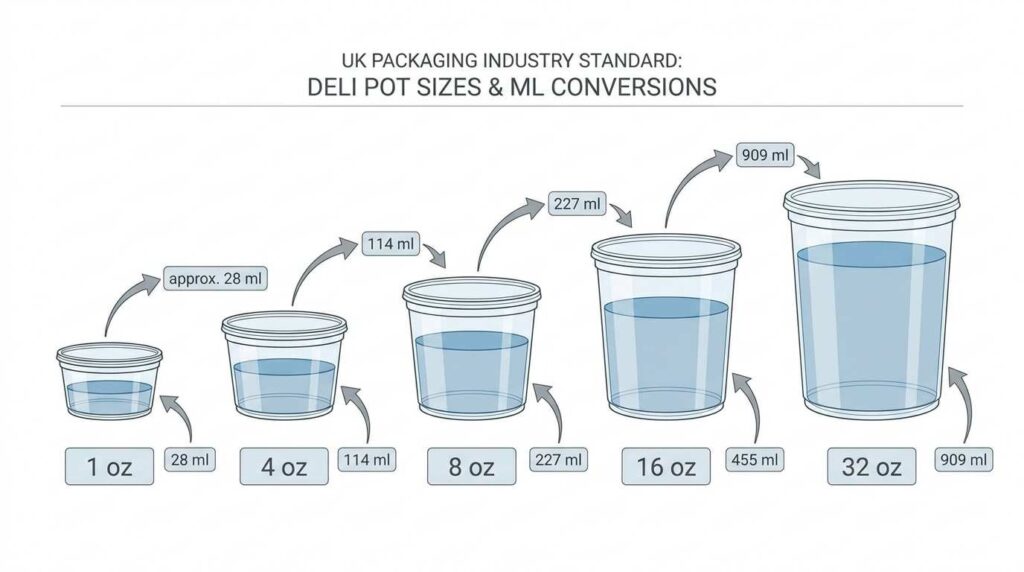
UK suppliers list deli pots in ml. US food content, recipe formats, and some wholesale catalogues use oz. Nobody has published a clean, practical reference that maps both systems with real-world use cases alongside them. Here it is.
| Size in oz | Size in ml | Physical Description | Most Common Use Case |
| 1oz | 28ml | Roughly two standard sauce sachets | Tasting samples, very small condiment portions, sampling events |
| 2oz | 60ml | A generous tablespoon and a half | Ketchup, mayo, sweet chilli, hot sauce, small dipping sauces |
| 3oz | 90ml | Three tablespoons | Large dip portions, hummus, guacamole, sour cream |
| 4oz | 120ml | Approx. half a standard yoghurt pot | Curry sauce, gravy, larger dips, salad dressings, and coleslaw |
| 6oz | 180ml | Approx. three-quarters of a small tin | Soup portions, porridge toppings, large sauce servings |
| 7oz | 210ml | Slightly larger than 6oz | Dressings, large sauce servings, side salads |
| 8oz | 240ml | Standard American cup measure | Small side dishes, soups, dessert portions, deli counter prep |
| 12oz | 360ml | Just over a standard can | Medium side dishes, large salad dressings, cold pasta sides |
| 16oz | 480ml | Standard US pint | Large deli portions, batch sauce storage, meal prep sides |
| 32oz | 960ml | Approx. one litre | Bulk condiment storage, professional prep, not for service |
Key takeaway: For most UK takeaway and catering operations, 2oz and 4oz cover the vast majority of daily use cases. Buy only the sizes your menu actually requires, not a sample of every size available.
What Each Size Is Actually For
1oz (28ml): Sampling and Minimal Portions
The 1oz pot holds the equivalent of approximately two standard sauce sachets. It is genuinely useful for one purpose: tasting samples and small condiment servings at sampling events, market stalls, or deli counters where you want customers to try a product without committing to a full portion.
For standard takeaway and delivery use, 1oz is almost always too small. A customer receiving a 1oz portion of mayo with a portion of chips will run out before the chips are half eaten. Order 1oz pots only if sampling is a specific part of your operation.
Our 1oz hinged clear plastic portion pots and 1 fl.oz sauce deli pots with separate lid cover both hinged and separate-lid formats at this size.
2oz (60ml): The Standard Condiment Size
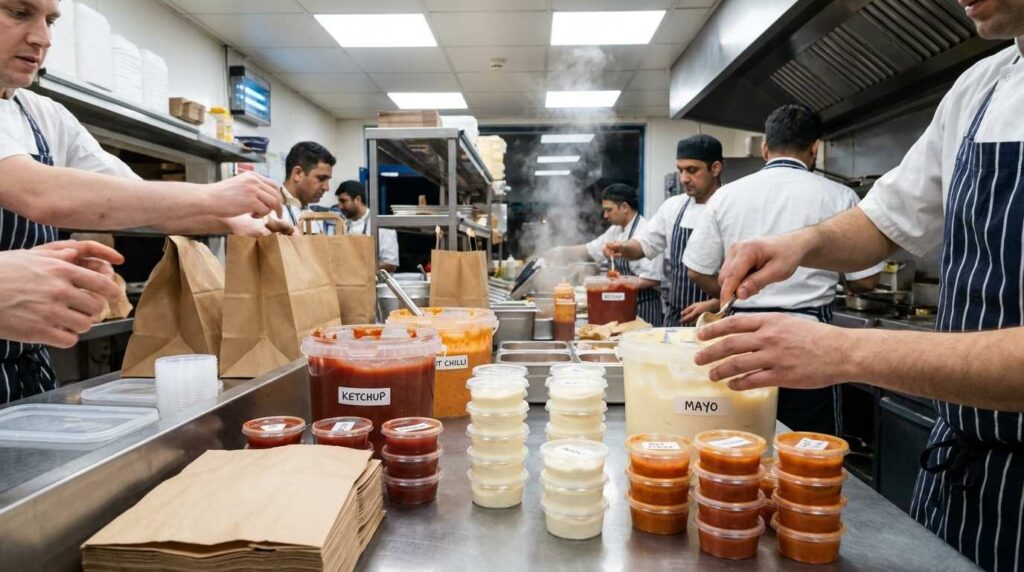
The 2oz pot is the workhorse of the UK takeaway and catering market. It holds enough ketchup, mayo, sweet chilli, hot sauce, or mustard for a single portion of fried food, a sandwich, or a salad without waste or shortage.
For most UK takeaway businesses, the 2oz pot covers 80% of daily sauce service requirements. If you are only going to stock one size, this is it.
Our 2oz hinged clear plastic portion pots have a folding lid that snaps shut – no separate lid to lose at service. Our 2 fl.oz sauce deli pots with separate lids offer the separate-lid format for operations that prefer it.
4oz (120ml): Curries, Gravy, Dressings, and Larger Dips
The 4oz pot bridges the gap between a condiment portion and a side sauce portion. It holds enough curry sauce, gravy, or salad dressing for a full main course portion without being wasteful.
Curry houses and Indian takeaways use the 4oz as their primary sauce pot for takeaway delivery. Sandwich and salad operations use it for coleslaw, potato salad, and larger dressing portions.
Our 4oz hinged clear plastic portion pots and 4 fl.oz sauce deli pots with separate lids cover both formats at this size.
6oz / 7oz (180 to 210ml): Larger Sauce Portions and Soups
The 6 oz and 7 oz sizes serve operations where a sauce or dressing is a significant part of the meal rather than a condiment. A 6oz pot of gravy alongside a roast dinner portion, a 7oz pot of tahini dressing alongside a large mezze plate, or a portion of soup as a side or starter all suit this size range.
These sizes are less commonly needed in standard takeaway operations and more relevant to catering, events, and restaurant preparation.
Our 6oz/7oz round kraft sauce pots with paper or plastic lids are available in eco-friendly kraft paperboard for operations that want a sustainable format at this size.
8oz to 16oz (240 to 480ml): Side Dishes, Deli Counter, and Meal Prep
Pots above 8oz move from condiment territory into side dish and deli preparation territory. An 8oz pot suits a single portion of coleslaw, a side salad, or a small dessert. A 12oz pot suits a medium deli counter portion. A 16oz pot is primarily a meal prep or batch preparation tool rather than a service vessel.
For delivery-focused takeaway operations, pots above 8oz are rarely needed as separate items – a food container at this volume typically performs better and costs comparably. Consider pots in this range if you run a deli counter, catering operation, or meal prep service.
Hinged Lid vs Separate Lid: Which Format to Choose
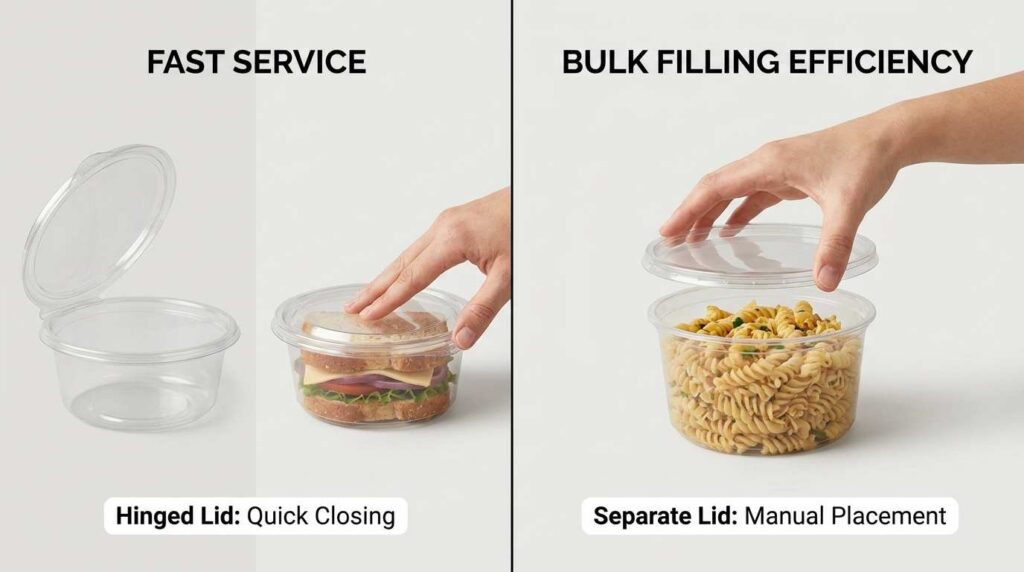
This distinction is rarely explained clearly, and it affects daily operational efficiency more than the size choice does.
Hinged Lid Pots
A hinged lid is permanently attached to the pot and folds over to snap shut. There is no separate lid to manage, lose, or misalign under service pressure.
Best for: High-speed takeaway service where staff are packing multiple orders simultaneously. The hinged lid reduces packing time and eliminates the fumble of matching pot to lid in a busy kitchen.
Limitation: Hinged pots are harder to fill on a production line because the lid attachment slightly restricts the opening angle. For operations filling pots from a jug or piping bag at speed, a separate-lid pot is slightly faster to fill.
Separate Lid Pots
A separate lid is supplied alongside the pot and pressed on at filling. It creates a slightly more secure seal than most hinged formats and allows faster filling at volume.
Best for: Deli counter operations, catering preparation, and any operation filling pots in bulk batches rather than individually at order time. The separate lid also allows neat stacking of pre-filled pots in a refrigerator.
Limitation: Lids and pots must be ordered together and in the correct matching size. A mismatch between lid and pot size creates leaks. Always confirm lid-pot compatibility when ordering.
Quick Format Comparison
| Format | Best For | Pack Speed | Fill Speed | Stacking |
| Hinged lid | Takeaway service, individual packing | Fast – one-handed close | Moderate | Good |
| Separate lid | Deli prep, batch filling, refrigerated storage | Moderate | Fast | Excellent |
Key takeaway: For takeaway delivery service, hinged lid pots reduce packing errors and save time under service pressure. For deli counter preparation and batch filling, separate lid pots offer faster filling and better stackability.
How Portion Pot Size Affects Your GP Margin
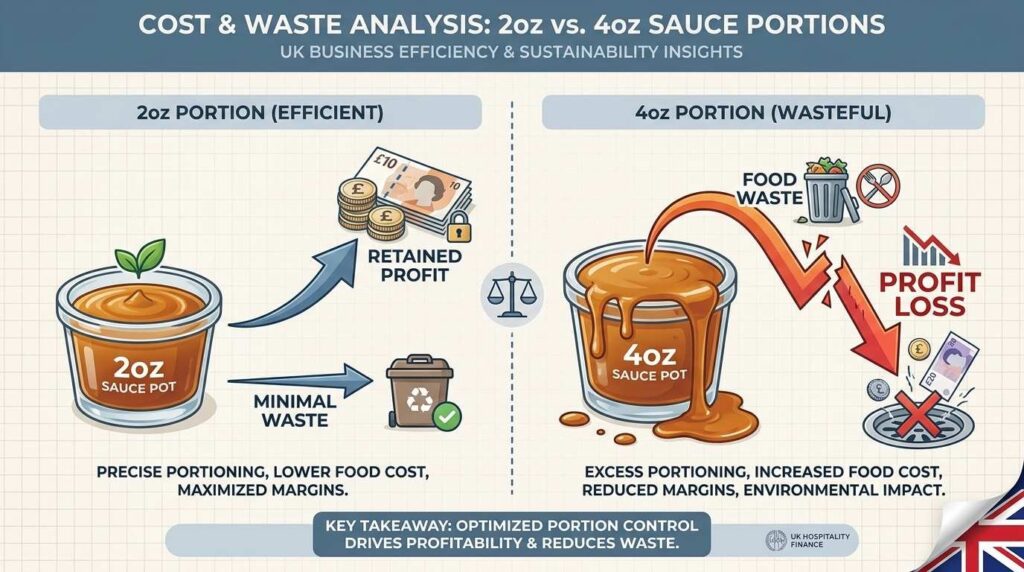
The Over-Portioning Problem
Every time a customer receives more sauce than they need, the excess either gets thrown away or returned. The food cost of that excess is a direct GP loss that accumulates across hundreds of orders per week.
Worked example – a curry house serving garlic sauce:
The sauce costs approximately £0.04 per 30ml at wholesale ingredient cost.
- ▸ Serving in a 2oz (60ml) pot: food cost = approximately £0.08 per pot
- ▸ Serving in a 4oz (120ml) pot: food cost = approximately £0.16 per pot
If the customer only uses 60ml regardless of what is served, the 4oz pot costs £0.08 more per order in food waste.
At 300 orders per week, that difference is £24 per week in waste – approximately £1,248 per year on a single sauce item.
The Under-Portioning Problem
The opposite risk is equally real. A customer who receives a 1oz ketchup pot with a large portion of chips will be dissatisfied. Under-portioning generates negative reviews and reduces repeat orders. The cost of a negative review far exceeds the food cost savings of a smaller pot.
The Right-Sizing Principle
Match the pot size to the realistic consumption of the specific sauce by a customer eating the specific dish it accompanies. This is an operational observation, not a theoretical calculation. If you are unsure, serve 20 portions in both size options over a week and note which generates more waste. The answer is usually clear within a few days.
Key takeaway: Even a 30ml over-portion per sauce serving across 300 weekly orders costs approximately £600 to £1,000 per year in wasted food at typical sauce ingredient costs. Right-sizing is a GP decision, not just a packaging decision.
The Minimum Kit Recommendation by Business Type
Fish and Chip Shop
Minimum kit: 2 oz (60 ml) hinged pot only.
Chip shop condiments – ketchup, mayo, vinegar – are all standard condiment volumes. A 2oz portion is adequate for a standard chips portion. Offering a 4oz option for customers who want extra sauce is a reasonable upsell but not essential stock.
Takeaway (Curry, Indian, Chinese, Asian)
Minimum kit: 2 oz (60 ml) and 4 oz (120 ml) hinged pots.
The 2oz covers small condiments – mango chutney, mint sauce, pickle. The 4oz covers curry sauce, gravy, and larger accompaniments. These two sizes handle the full sauce range of most Asian takeaway menus.
Takeaway (Fried Chicken, Burger, Kebab)
Minimum kit: 2 oz (60 ml) hinged pot.
Fried chicken, burger, and kebab sauces are standard condiment volumes. A 2oz pot covers ketchup, mayo, hot sauce, garlic sauce, and barbecue sauce for a single-portion serving. Stock 4oz only if you offer a branded house sauce as a main accompaniment rather than a condiment.
Sandwich Shop or Deli Counter
Minimum kit: 2 oz (60 ml) and 4 oz (120 ml) separate-lid pots.
Separate-lid pots suit deli counter pre-preparation better than hinged formats. The 2oz covers small condiments and dressings. The 4oz covers coleslaw, potato salad, and larger deli portions. Add 8 oz (240 ml) if you sell full side portions for lunch boxes or meal deals.
Restaurant (Table Service)
Minimum kit: 2 oz (60 ml) and 4 oz (120 ml) hinged pots.
Restaurant sauce service typically involves individual condiment portions at the table or with a shared starter. The 2oz covers most condiment needs; the 4oz covers dipping sauces, gravy, and accompaniments for sharing plates.
Catering and Events
Minimum kit: 4 oz (120 ml) and 6 oz (180 ml) – hinged or separate lid depending on service format.
Event catering typically involves larger portions per guest. The 4oz covers standard condiments at scale; the 6oz covers dressings, gravies, and larger accompaniments. For very high-volume buffet service, consider 8oz portions to reduce replenishment frequency.
Material Options: Plastic, Kraft Paper, Compostable
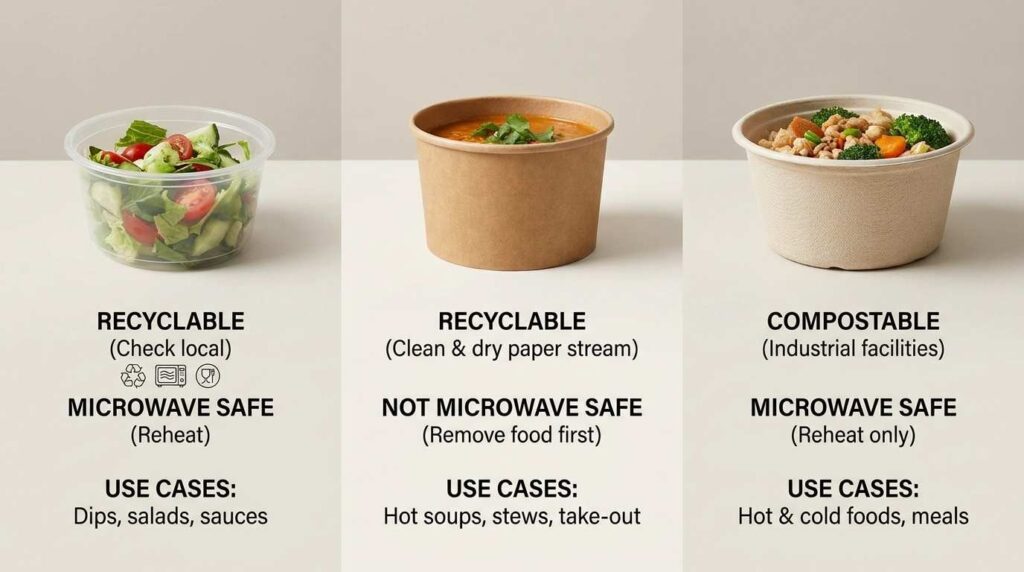
Clear Plastic (PP)
The most widely used format for UK deli pots. Polypropylene (PP) is BPA-free, food-safe, microwave-safe, freezer-safe, and available in hinged and separate-lid formats across all standard sizes. Clear visibility of contents supports consistent portioning at service.
PP deli pots are kerbside recyclable if rinsed clean before disposal.
Kraft Paper Pots
Kraft paper pots at the 6oz and 7oz sizes are available for operations wanting an eco-friendly presentation. The kraft format carries a natural sustainability signal at the customer’s door, is home compostable if uncoated, and performs well for cold and ambient sauces.
Kraft paper pots are not suitable for very thin liquid sauces in a delivery context – the paper absorbs moisture and can weaken over a 30 to 40-minute delivery window if the sauce is watery.
Compostable Formats
Compostable deli pots are available in CPLA or PLA formats. These are industrially compostable under EN13432 certification and require industrial composting conditions to break down correctly. They are not kerbside recyclable and are not home compostable without appropriate certification.
For operations making compostability claims about their packaging, confirm the specific certification of the product and the disposal route available to your customers before making that claim.
| Material | Microwave Safe | Recyclable | Compostable | Best For |
| PP plastic (hinged or separate lid) | Yes | Yes, if rinsed | No | Takeaway, delivery, all-round use |
| Kraft paper | Yes (if uncoated) | Yes (if uncoated) | Yes (if uncoated) | Premium presentation, cold sauces |
| PLA / CPLA compostable | Check product spec | No | Yes, industrially | Eco-focused operations with industrial composting access |
Where to Buy Deli Pots in the UK
We Can Source It supplies deli pots and portion pots across all major sizes in both hinged and separate-lid formats, with bulk pricing available from 25 units.
Key products:
- ▸ 1oz hinged clear plastic portion pots – for sampling and minimal condiment portions
- ▸ 1 fl.oz sauce deli pots with separate lid – 1oz separate-lid format
- ▸ 2oz hinged clear plastic portion pots – the standard workhorse condiment size
- ▸ 2 fl.oz sauce deli pots with separate lid – 2oz separate-lid format
- ▸ 4oz hinged clear plastic portion pots – for curry sauces, gravy, dressings
- ▸ 4 fl.oz sauce deli pots with separate lid – 4oz separate-lid format
- ▸ 6oz/7oz round kraft sauce pots – eco-friendly kraft format for larger sauce portions
- ▸ Full deli pots range – complete range across all sizes and formats with bulk pricing
For the full context of takeaway packaging across all supply categories, see our complete UK takeaway supplies buying guide.
For guidance on matching food containers to cuisine types, see our guide to the best food containers for takeaways in the UK.
FAQs
What size deli pot do I need for a takeaway sauce?
For most UK takeaway sauces – ketchup, mayo, hot sauce, sweet chilli, garlic sauce – a 2oz (60ml) hinged pot is the correct size. For larger sauce portions such as curry sauce, gravy, or coleslaw, a 4 oz (120 ml) pot is the right choice. Most takeaway businesses need only these two sizes for their full sauce and condiment range.
What is the difference between 2 oz and 4 oz portion pots?
A 2oz pot holds approximately 60ml – enough for a standard condiment serving alongside a single portion. A 4oz pot holds approximately 120ml – enough for a larger sauce serving such as curry sauce or salad dressing alongside a main course. The 4oz is double the volume and costs slightly more per unit, so use it only where the sauce volume justifies it.
Are deli pots microwave-safe?
PP (polypropylene) clear plastic deli pots are microwave-safe. Always check the specific product’s temperature rating. Kraft paper pots are microwave-safe if uncoated. Foil formats are not microwave-safe.
What is the difference between hinged and separate lid deli pots?
A hinged lid is permanently attached and folds over to close – no separate lid required, faster to close at service speed. A separate lid is supplied alongside the pot and pressed on at filling – slightly faster to fill in bulk, better for deli counter pre-preparation, and neater for stacking pre-filled pots in a refrigerator. Most takeaway businesses use hinged pots; most deli and catering operations prefer separate lid formats.
How many deli pots does a takeaway need per week?
This depends on how many sauces you offer per order and your weekly order volume. A takeaway sending one sauce pot per order at 300 orders per week uses approximately 300 pots per week. If you offer two sauce options per order, double that figure. Order at the 500 to 1,000 unit tier for standard weekly volumes to benefit from bulk pricing without tying up excessive storage.
Do deli pots need to be labelled under Natasha’s Law?
If a deli pot contains a pre-prepared sauce that is packaged before the customer orders – for example, a pre-filled condiment pot sitting on a counter before service – it may require allergen labelling under PPDS regulations (Natasha’s Law). If the sauce is portioned to order in direct response to a customer’s request, labelling is not required. Confirm your specific circumstances with the Food Standards Agency PPDS guidance.
What is the oz equivalent of a standard UK tablespoon in deli pot terms?
One UK tablespoon is approximately 15ml, which is just over half a fluid ounce. A 2 oz (60 ml) pot holds approximately four tablespoons. A 4 oz (120 ml) pot holds approximately eight tablespoons. This is a useful reference for chefs calibrating portion sizes from recipe measurements to pot size decisions.
What size deli pot is best for curry sauce?
A 4 oz (120 ml) pot is the correct size for a takeaway curry sauce portion. It holds enough sauce for a full main course portion without over-serving. For a smaller accompaniment such as mango chutney or mint raita, a 2 oz (60 ml) pot is sufficient.
Are portion pots recyclable in the UK?
PP (polypropylene) clear plastic portion pots are kerbside recyclable if rinsed clean before disposal. Kraft paper pots (uncoated) are kerbside recyclable and home compostable. PLA compostable pots are not kerbside recyclable – they require industrial composting conditions. Always check the specific product’s end-of-life credentials before making recyclability claims to customers.
What is the most common deli pot size used in UK takeaways?
The 2oz (60ml) hinged pot is the most widely used deli pot size in UK takeaway operations. It covers the vast majority of standard condiment portions. The 4oz (120ml) pot is the second most used, primarily for curry sauces, gravy, coleslaw, and larger dressings.
References
- ▸ Allergen labelling for prepacked for direct sale (PPDS) food – Food Standards Agency
- ▸ Food Hygiene (England) Regulations 2006 – legislation.gov.uk